MOGADISHU, Axmed Xassan Rubac was killed inside his home in the Suuq Bacaad area of Yaqshiid yesterday, and the killing is directly linked to the demolition campaign that has swept through the same district, while the family hold legal documents proving more than 50 years of ownership.
Reports differ on what Rubac was doing when he was attacked. Some accounts say he was sleeping in his bedroom. Others say he was praying. What is not disputed is that he was killed inside his own home, in the room where he had sought shelter, and that his family says the house was slated for demolition at the time. The district commissioner confirmed that the armed police/military who killed Axmed Xassan Rubac is arrested.
His relatives have stressed that they are not squatters and not recent arrivals. They say the family has lived on the property for more than five decades and holds the paperwork to prove it. This is confirmed bij the nieghbours. They are framing the demolition of their home as an illegal extension of the Tookiyo operation that has displaced residents across Yaqshiid district, and they are demanding that the killing be investigated as a crime rather than dismissed as an unavoidable consequence of urban clearance.
The Tookiyo Precedent
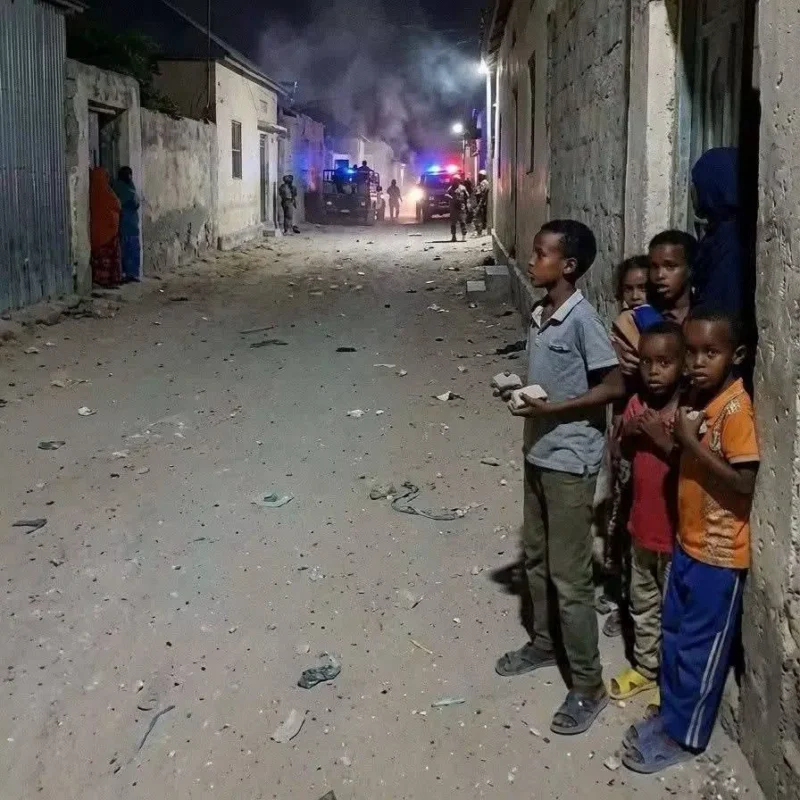
Rubac’s killing follows the violent demolition operation in the Tookiyo neighbourhood of the same district in August 2026. As reported in FTL Somalia’s coverage of the Tookiyo clashes, nearly 10 people were injured when government forces opened fire on residents protesting the demolition of their homes on land the government claimed as public property.
The Tookiyo operation was met with resistance from residents who said they had lived in the area for decades and held legitimate claims to their properties. Protesters burned tires in Yaqshiid district, and images circulating on social media showed injured young men being treated at Mogadishu hospitals. The Banadir regional administration and the federal government did not immediately issue detailed statements on the clashes, the extent of the damage, or responsibility for the reported deaths and injuries.
Rubac’s family is now making the same argument that Tookiyo residents made: that their home was legally owned, documented, and targeted for demolition despite their papers.
A Pattern of Displacement and Violence
The killing is the latest episode in a land crisis that has transformed Mogadishu’s urban landscape. A Heritage Institute for Policy Studies report published in October 2026 found that between 2017 and September 2026, 2,136,420 people were evicted across Somalia, with 64 percent of those evictions occurring in the Benadir region.
The report documented a shift in the nature of evictions: in 2021, only 11 percent of evictions from Mogadishu’s displacement camps occurred on government-owned land. By 2025, that figure had risen to 44 percent, with the state transitioning from bystander to evictor.
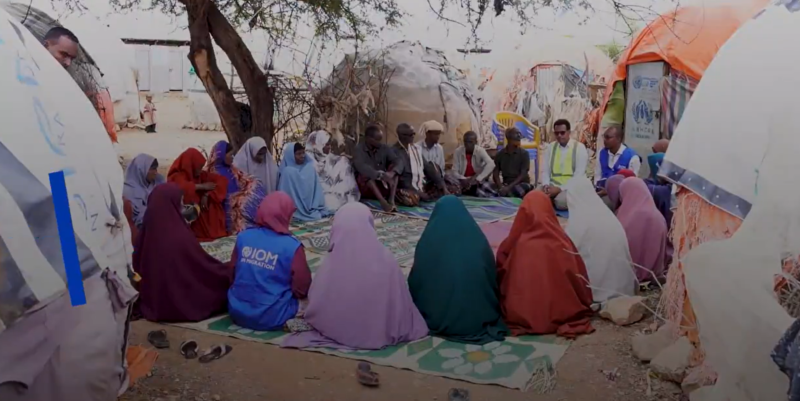
The United Nations has warned that more than 142,000 internally displaced people have been forcibly evicted from temporary shelters since the start of 2025, with the majority of those evictions taking place in urban settlements across Mogadishu, Baidoa, and Kismayo. The Protection Cluster reported that between January and June 2026, a total of 140,071 IDPs were displaced due to evictions, with April and May recording the highest monthly figures.
Former President Sheikh Sharif Sheikh Ahmed has warned that the country’s fragile statehood is “on the brink of collapse” due to what he called rampant and unlawful land seizures by politically connected elites, accusing influential businessmen and well-placed officials of orchestrating widespread land grabs across the capital. MP Abdirahman Abdishakur Warsame has warned that forced evictions could fuel extremism, saying the government’s campaign was “handing Al-Shabaab a powerful recruitment tool on a silver platter.”
The Question of Impunity
Rubac’s family has vowed to continue seeking answers until there is accountability for his death. But the record of accountability in Mogadishu’s land crisis is poor.
In October 2026, Garad Abukar Mohamed publicly warned Banadir Regional Police Commissioner Mahdi Omar Muumin, known as Moalim Mahdi, that if he does not rebuild the houses he demolished, the garad knows which properties the police commander owns in Mogadishu. The statement followed years of allegations that Moalim Mahdi has overseen a systematic campaign of forced evictions and land seizures in the capital, including a reported bank account linked to a company he allegedly owns receiving transfers totaling approximately $16.7 million, as reported in FTL Somalia’s coverage of the allegations against Moalim Mahdi.
The Garad’s threat to expose the police commander’s properties was a form of accountability from outside the formal system. It suggested that communities affected by evictions are no longer relying on courts or official investigations, but on public pressure and the threat of reciprocal exposure.
Rubac’s family has not made such threats. They have asked for the justice system to work. Whether it will is the question that their case poses to a government that has repeatedly promised accountability while presiding over a demolition campaign that has displaced hundreds of thousands.
Critical Note
The killing of Axmed Xassan Rubac is a tragedy for his family, and their demand for justice is both understandable and necessary. But the absence of basic information about the case is itself a problem. No details have been provided on who order the demolishing attempt, who (politician) was to gain from this illegal eviction. In a city where violent deaths inside private homes are rarely subject to rigorous public scrutiny, the silence surrounding this case is familiar.
The discrepancy in the accounts of what Rubac was doing when he was killed, sleeping or praying, matters less than the fact that he was killed in his own home. A man who is killed while sleeping and a man who is killed while praying are both men who were not posing a threat to anyone. The variation in reporting does not change the essential fact of the case: an unarmed civilian was killed inside his residence, and his family says the residence was legally theirs.
The connection to the Tookiyo demolitions is not yet legally established. But the context is impossible to ignore. Rubac was killed in the same district where government forces shot at residents protesting demolitions two months earlier. His family says they had papers. Tookiyo residents said they had papers. The government says the land is public. The courts have not adjudicated these claims, and the security forces have not been held accountable for the violence that has accompanied the demolitions.
The family’s vow to pursue accountability is a reminder that in Mogadishu, justice is not automatic. It must be demanded, and often it must be demanded repeatedly. Whether Rubac’s case receives the investigation it deserves will depend on whether the authorities treat his death as a crime to be solved or as one more incident to be forgotten. The family has made clear they will not let it be forgotten. The question is whether anyone in a position of authority is listening.
Share your story. FTL Somalia is continuing to follow this case and the broader land crisis in Mogadishu. If you have information or insights to share, contact us at info@ftlsomalia.com. Your identity will be protected.
Recommended Reading On ftlsomalia.com
- Violence Erupts in Mogadishu as Residents Protest Demolition of Homes in Tookiyo Neighbourhood
- ‘I Know Which Houses He Owns’: Community Leader Challenges Moalim Mahdi Over Demolitions
- Mogadishu Residents Protest Forced Evictions in Wabari District
- Religious Leaders Call on Government to Halt Land Grabs and Protect Property Rights in Mogadishu