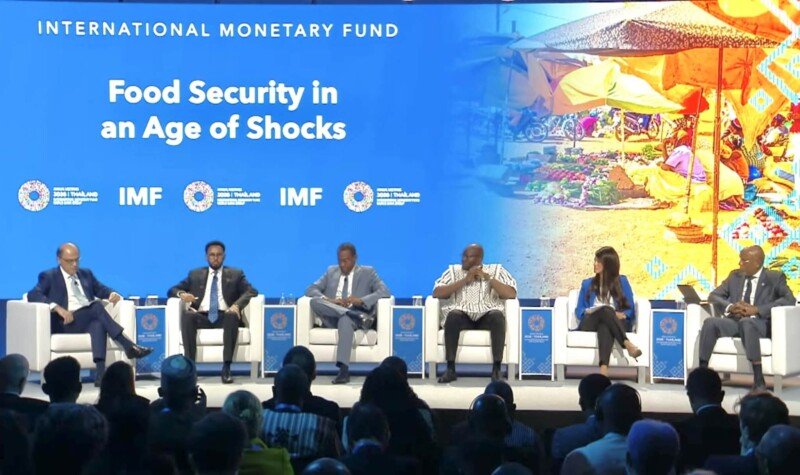
MOGADISHU — Somalia’s Minister of Finance, Bihi Egeh, participated in a high-level forum in Bangkok, Thailand, organized by the leadership of the International Monetary Fund (IMF), focusing on food security and the specific challenges populations face during food crises.
The forum brought together finance ministers from several countries, including Djibouti and Burkina Faso, alongside financial experts. The discussions centered on the systemic vulnerabilities that drive food insecurity and the policy responses needed to build resilience.
Strengthening Food Systems and Reducing Import Dependence
Minister Egeh said strengthening food systems plays a critical role in increasing domestic production, protecting community livelihoods, and reducing dependence on imported food.
He emphasized the importance of productive investment in agriculture, food production, and the economic infrastructure that supports the food supply chain. The focus on domestic production is particularly relevant for Somalia, where food imports account for a significant share of total merchandise imports, leaving the country exposed to global price shocks and supply disruptions.
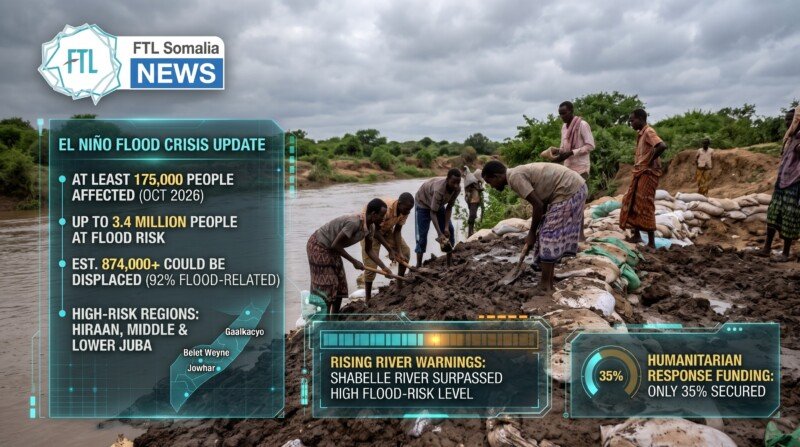
The forum comes as Somalia’s economy faces mounting pressures from climate shocks, including the ongoing El Niño-induced floods that have displaced thousands and threatened agricultural livelihoods. As reported in FTL Somalia’s coverage of the SWALIM forecast, record Deyr rains have already submerged farmland and disrupted planting in the agropastoral belt, while drought persists in the Juba valley and Gedo.
The IMF Program and Economic Reforms
Minister Egeh’s participation in the IMF forum follows the successful completion of the fifth review of Somalia’s Extended Credit Facility arrangement in March 2026, which unlocked a further $9.4 million in disbursements. As reported in FTL Somalia’s coverage of the IMF Article IV consultation, the Fund has cut Somalia’s 2026 economic growth forecast to 2.3 percent, down from earlier projections of 2.6 percent, citing sharp foreign aid cuts, severe climate shocks, and spillovers from the Middle East conflict.
The IMF noted that these challenges “have weighed on economic activity, raised inflation and food insecurity, pressured public finances, and dampened the near-term outlook.” Inflation is projected to reach 6.5 percent in 2026, driven by drought conditions and global trade disruptions that more than doubled domestic fuel prices earlier this year.
Despite these headwinds, Somalia has made significant progress on its reform agenda. In July 2026, the country secured a $4.5 billion debt write-off from global lenders, reducing its external debt from a high of $5.2 billion to approximately $600 million. The debt relief has opened space for concessional financing, but the country must use that space wisely to build productive capacity and governance systems.
A Broader Conversation on Food Security
The Bangkok forum is part of the IMF’s broader engagement with member countries on food security, an issue that has become increasingly urgent in the wake of the COVID-19 pandemic, the war in Ukraine, and climate-related shocks. The IMF has emphasized that food insecurity is not only a humanitarian issue but also a macroeconomic one, affecting inflation, fiscal balances, and social stability.
For Somalia, the forum provided an opportunity to share its experience and learn from other countries facing similar challenges. The participation of Djibouti and Burkina Faso reflects a recognition that food insecurity is a regional and continental problem that requires coordinated responses.
Critical Note
Minister Egeh’s participation in the IMF forum is a welcome sign that Somalia is engaging with international financial institutions on the economic dimensions of food security. But the forum’s focus on investment in agriculture and food systems raises a question that Somalia has struggled to answer: where will the money come from?
The debt relief has reduced Somalia’s external obligations, but the country’s fiscal space remains severely constrained. Capital expenditure in the first quarter of 2026 was just $7 million, equivalent to 3 percent of the approved annual capital budget. The government is operating under a financing gap of $65.1 million. Domestic revenue mobilization is improving, but it cannot fund the scale of agricultural investment that the forum’s agenda envisions.
Moreover, the structural drivers of Somalia’s food insecurity, drought, floods, conflict, and weak infrastructure, are not easily addressed through investment alone. They require a comprehensive approach that includes climate adaptation, peacebuilding, and regional cooperation. The IMF forum provides a platform for dialogue, but it is not a substitute for the sustained, long-term investment that Somalia’s agricultural sector needs.
Recommended Reading On ftlsomalia.com
- IMF: Somalia’s Growth to Slow to 2.3% Amid Aid Cuts and Drought
- Shabelle River at Jowhar Above High Flood-Risk Level and Likely to Reach Bankfull This Week
- Somalia’s Currency Reform: New Shilling to Be Backed by Currency Board Arrangement
- UN: Baidoa Conflict Risks Famine Among Displaced as Aid Funding Dwindles
- Somalia’s Payment System Processes 337,788 Transactions Worth US$593 Million in Q1 2026
- Somalia Holds Ebola Preparedness Coordination Meeting