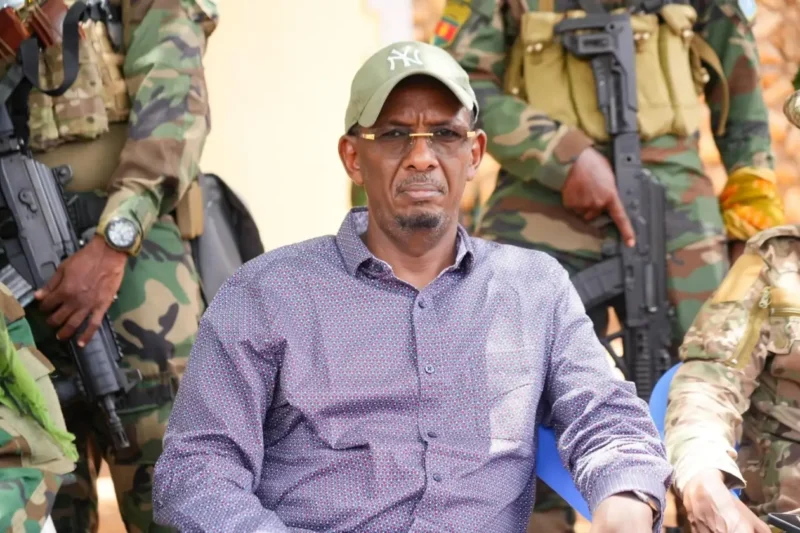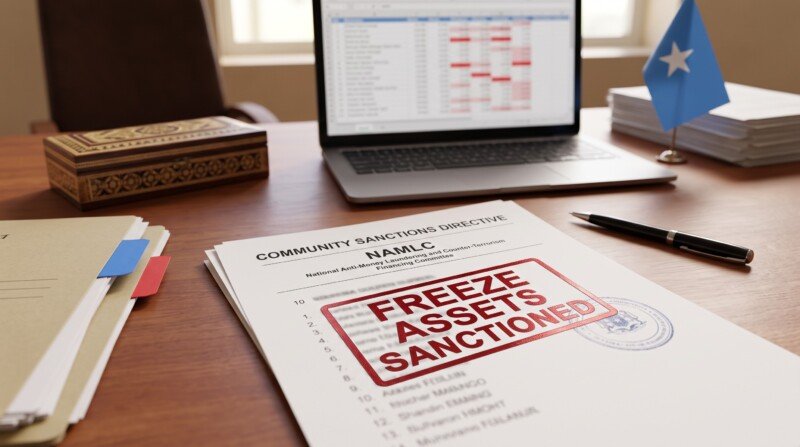
MOGADISHU — Somalia’s National Anti-Money Laundering and Counter-Terrorism Financing Committee (NAMLC) has issued a financial sanctions list naming ten individuals, including former South West State President Abdiaziz Hassan Mohamed Laftagareen, accusing them of ties to or support for Al-Shabaab.
The directive, dated 13 October 2026 and signed by the NAMLC, states that the committee assessed intelligence and evidence indicating that the listed individuals are members of, linked to, or cooperating with Al-Shabaab, and are involved in providing or facilitating financial support used for terrorist financing, carrying out terrorist acts, or supporting terrorist organizations.
The Full Sanctions List
The ten individuals named in the financial sanctions list are:
1. Abdiaziz Hassan Mohamed “Laftagareen”
2. Hassan Abdulkadir Mohamed
3. Mahad Abdirahman Adan “Shub”
4. Ibrahim Adan Ali “Najah”
5. Hassan Abdi Mohamed “Ugaas Hassan”
6. Abdullahi Ali Watiin
7. Abdifatah Mahad Abdirahman
8. Abdimajid Mowlid Hassan
9. Amiin Mad Daruur
10. Abshir Aden Isak
The NAMLC said the decision was made under Article 6 of the Financial Sanctions Law and Article 7 of its implementing regulations, which govern the identification and designation of individuals linked to terrorism and its financing, and the freezing of their funds and assets.
Obligations for Somali Institutions and Citizens
The directive imposes several obligations on Somali financial institutions, citizens, and other individuals or entities operating in Somalia:
1. All are prohibited from engaging in any transactions with the individuals on the list.
2. All are required to freeze any assets belonging to the listed individuals.
3. All are required to report any transactions involving these individuals immediately to the Financial Reporting Center (FRC).
The NAMLC warned that any Somali citizen who engages in any financial dealings with or facilitates transactions for the listed individuals will be held accountable under applicable counter-terrorism laws.
Political Context
Laftagareen’s inclusion on the sanctions list is a significant escalation in the long-running confrontation between the former South West State president and the federal government. Laftagareen was removed from office in 2025 after opposing federal constitutional reforms, and federal forces took control of Baidoa on 30 March 2026. He subsequently left the country, but militias aligned with him have continued to launch attacks on the city from multiple directions.
As reported in FTL Somalia’s coverage of the Baidoa clashes, the federal government has previously accused Laftagareen-aligned forces of fighting alongside Al-Shabaab, while Laftagareen’s group has denied links to the militant group and says its forces are fighting to restore what it considers the legitimate South West State administration.
The security situation in Baidoa remains fragile. As detailed in FTL Somalia’s coverage of the UK’s call for restraint, the United Kingdom urged all parties to exercise restraint in Baidoa amid plans by Ethiopia to withdraw its troops from the region, raising further concerns about the security vacuum that could emerge. South West State authorities have also held security meetings to address the constitutional and political disputes underlying the violence, as reported in FTL Somalia’s coverage of the security meeting.
The sanctions list comes amid heightened political tensions in Mogadishu. The federal government has been engaged in a standoff with former President Sharif Sheikh Ahmed and other opposition figures, and the Future Council opposition alliance has accused President Hassan Sheikh Mohamud of targeting political opponents. As detailed in FTL Somalia’s coverage of Sharif’s statement, the former president has documented what he describes as a siege of his residence and warned against the use of state institutions to settle political disputes.
Critical Note
The NAMLC’s decision to sanction Laftagareen and nine other individuals represents a formal legal escalation in the government’s campaign against its political opponents. By designating them under counter-terrorism financing laws, the government is not merely accusing them of political opposition but of material support for Al-Shabaab, a designation that carries severe legal and financial consequences.
The timing is significant. The sanctions list was issued on the same day that the political crisis in Mogadishu continues to escalate, with the Future Council warning of armed clashes and the government maintaining a security siege around Sharif’s residence. The inclusion of Laftagareen, a former federal member state president, signals that the government is prepared to use its counter-terrorism apparatus against political rivals.
The evidence supporting the designations has not been made public. The NAMLC states that it “assessed intelligence and evidence” but does not provide details. This lack of transparency is problematic. Financial sanctions are serious measures that can freeze assets, restrict travel, and effectively criminalize any association with the designated individuals. In the absence of public evidence, the designations are vulnerable to the charge that they are politically motivated rather than grounded in credible counter-terrorism concerns.
Laftagareen’s case is particularly contentious. His removal from office and the subsequent military confrontation in Baidoa were framed by the federal government as necessary to restore stability and uphold constitutional order. Laftagareen’s supporters, and some independent observers, described the intervention as an attempt to impose a political outcome on South West State by force. The sanctions list now adds a counter-terrorism dimension to that dispute, effectively characterizing Laftagareen and his associates as terrorist financiers.
Whether that characterization is accurate, or whether it is a political weapon, may determine the trajectory of the crisis. If credible evidence exists, it should be presented. If it does not, the designations risk undermining the integrity of Somalia’s counter-terrorism framework and deepening the political divisions the government claims to be addressing.
Share your story. FTL Somalia is continuing to investigate the use of financial sanctions in Somalia’s political disputes and the implications for due process. If you have information or insights to share, contact us at info@ftlsomalia.com. Your identity will be protected.
Recommended Reading On ftlsomalia.com
- South West State Puts Forces on High Alert After Baidoa Clashes
- UK Urges Restraint in Baidoa as Ethiopia Plans Troop Withdrawal from South West State
- South West State Leader Chairs Security Meeting Amid Constitutional Title Dispute
- President Sharif Documents Siege of His Home, Denies NISA Claims, Warns Against Justifying Opposition Bloodshed and Urges International Community to Act