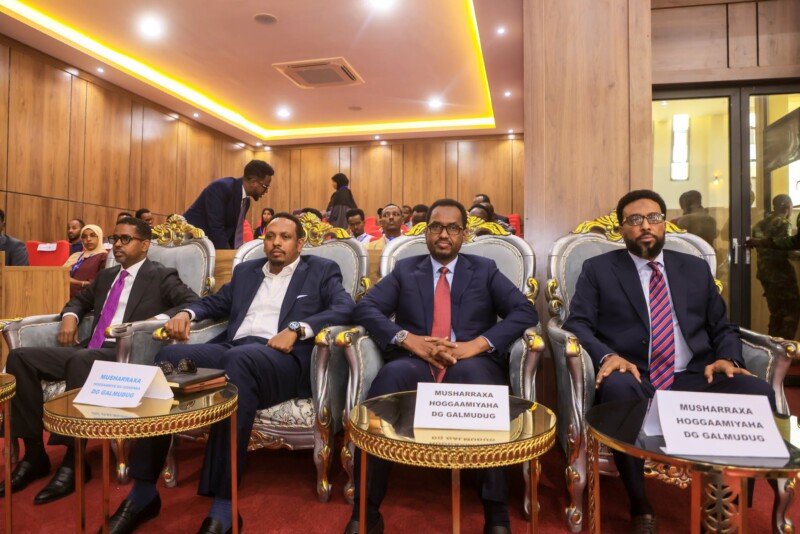
DHUSAMAREB, Candidates for the Galmudug presidency and vice-presidency delivered their campaign speeches before the regional parliament on Wednesday, making their final appeals to lawmakers ahead of Thursday’s vote in Dhusamareb.
According to reports from Somali media, two candidates are contesting the presidency and two are contesting the vice-presidency. Each addressed the House of Representatives, outlining their policy priorities and urging members to support their bids.
The election is scheduled for October 22, following the timetable announced by the National Independent Electoral and Boundaries Commission (NIEBC). As reported in FTL Somalia’s coverage of the electoral schedule, the NIEBC set the candidate speeches for October 21 and the final vote for October 22.
The Candidates and the Contest
The presidential race is headed by Liban Ahmed Hassan, the sole candidate nominated by the Justice and Solidarity Party (JSP), and Abduqadir Abdullahi Diriye Adawe of the SINCAD Party.
Liban Hassan received his candidate certificate earlier this week, clearing the final procedural hurdle before the vote, as reported in FTL Somalia’s coverage of his certification [citation:2]. He has pledged to prioritise transparency, security, economic development, and inclusive governance. During his campaign, he outlined a three-point agenda that included ridding Galmudug of Al-Shabaab within six months, spearheading reconciliation, and delivering rapid development, as reported in FTL Somalia’s coverage of the JSP campaign.
Adawe was nominated by SINCAD in July 2026, promising to focus on security, reconciliation, and economic development. He said his administration would seek to improve access to education and healthcare, develop infrastructure, and create opportunities for young people, women, and businesses, as reported in The Standard’s coverage of his nomination.
A Vote Overshadowed by Exclusion
While the candidates made their pitches, the political context of the election remains deeply contested. The parliament that will decide the presidency was elected in a court-ordered rerun on September 30, after the Supreme Court annulled the original July 30 vote for procedural and constitutional violations.
The rerun excluded the Towfiiq political organisation, the party that had successfully brought the legal challenge leading to the annulment. The NIEBC stated that Towfiiq had failed to meet the deadline for submitting candidate lists, a decision the party has contested.
The JSP holds 67 of the 89 seats in the assembly, and its candidates also hold the Speaker and both Deputy Speaker positions, as reported in SONNA’s coverage of the parliamentary leadership vote. With that majority, Liban Hassan’s election is widely expected, making Adawe’s candidacy a symbolic challenge rather than a competitive threat.
Critical Note
The candidate speeches are a required procedural step in Galmudug’s electoral calendar, and the fact that multiple candidates are contesting the presidency and vice-presidency provides at least a veneer of competition. But the outcome of Thursday’s vote is not in doubt. The JSP’s two-thirds majority in a parliament elected without its principal challenger means that Liban Hassan’s path to the presidency is effectively assured.
The deeper problem is not who wins on Thursday. It is whether the winner will govern with a mandate that extends beyond the JSP’s parliamentary bloc. The exclusion of Towfiiq, the controversy surrounding the NIEBC’s neutrality, and the federal government’s overt backing of the JSP candidate have all been documented. These are not minor procedural complaints. They speak to the legitimacy of the entire process.
Liban Hassan has promised to heal clan divisions and defeat Al-Shabaab within six months. Those are ambitious commitments for any leader. They will be particularly difficult to fulfill for a president whose election will be seen by significant constituencies as the product of a process from which meaningful competition was removed. The speeches on Wednesday offered visions of reform and development. Whether those visions can be realized will depend on whether the new president can reach beyond the chamber that elected him and address the grievances that made this election so contested in the first place.
Recommended Reading On ftlsomalia.com
- Sole Contender Liban Hassan Certified for Galmudug Presidency as Parliament Prepares to Vote
- Galmudug Presidential Election Set for 22 October as NIEBC Publishes Schedule
- JSP Respects Supreme Court Decision, Prepares for Fresh Galmudug Elections
- Tawfiq Party Chairman Sheikh Shakir Launches One-Person-One-Vote Campaign in Hobyo