DHUSAMAREEB — Galmudug’s Ministry of Energy and Water Resources, through its Hydrometeorology Department, has issued a weather forecast for the period from October 4 to 11, 2026, projecting varying rainfall across parts of the region as El Niño conditions strengthen.
According to the forecast, parts of Galgaduud, particularly areas near Abudwak, Adado, Dhusamareb and Galdogob, are expected to receive rains ranging from light to moderate, with some areas receiving more than others. Parts of Mudug, including Galkayo, Hobyo and Harardhere, also have varying chances of rain during the forecast week.
The forecast map indicates that parts of western and northwestern Galmudug may receive more rain than areas closer to the coast. Meanwhile, parts of El Buur, El Dheer and Harardhere are expected to receive little or no rain during the forecast period.
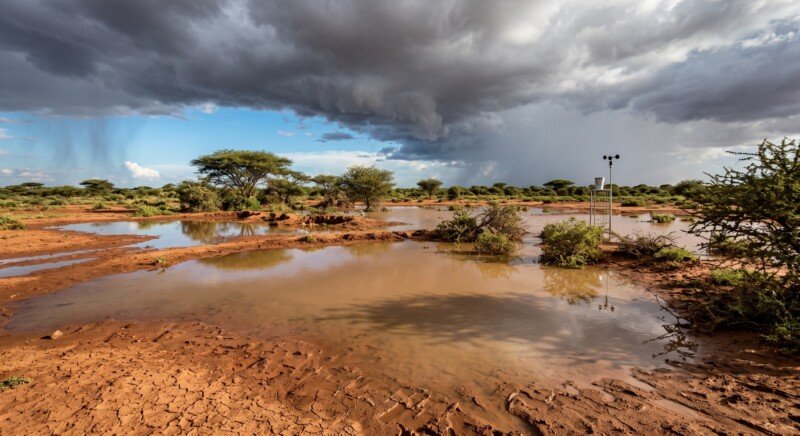
The expected rains could be important for improving soil moisture, pasture recovery and supporting agricultural and livestock activities, particularly in areas that receive sufficient rainfall. However, heavy or short-duration rains could cause flooding and water runoff in vulnerable areas, making it important for communities and agencies to closely monitor weather reports and warnings.
The Ministry urged farmers, pastoralists and the general public to regularly follow hydrometeorological forecasts and data to take advantage of rainfall opportunities and guard against the effects of heavy rains.
Rains Already Falling Across Somalia
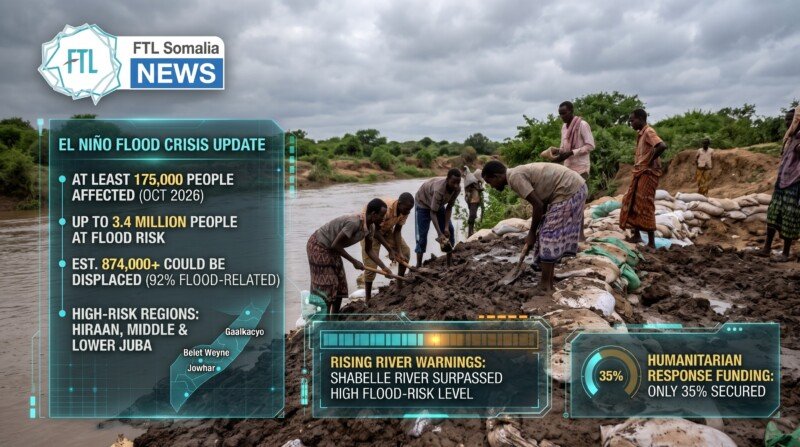
The warning comes as rains have already begun in several parts of the country. Flash flooding has already struck ahead of the Deyr season: in the Togdheer region, floods in Buuhoodle killed two people, injured 25 others, and displaced more than 250 families. In the Galgaduud region, floods killed approximately 6,000 livestock and affected some 500 pastoralist families in Baraag Abdille.
These early incidents confirm what forecasters have been warning for months: the 2026 Deyr season carries an exceptionally high risk of flooding. The IGAD Climate Prediction and Applications Centre has indicated a 90 percent probability of above-normal rainfall across central and southern Somalia, with parts of the region likely to receive more than 400 mm of rain.
The climate conditions developing ahead of Deyr 2026 bear important similarities to 1997 and 2023, both of which produced severe flooding in Somalia. The 1997 floods caused more than 2,300 deaths, while the 2023 Deyr displaced up to 2 million people and affected 2.48 million.
Compounding Humanitarian Crisis
The flood risk comes as Somalia continues to face high levels of hunger and malnutrition. According to the latest IPC analysis, 5.4 million people will face crisis levels of hunger or worse between October and December 2026, including 1.5 million people facing emergency levels. Nearly 1.92 million children under five will require treatment for acute malnutrition, including 433,000 with severe acute malnutrition.
The Somalia Disaster Management Agency estimates that 2.5 to 3.5 million people could be exposed to flooding, with 1 million likely to be displaced from areas where they farm and graze livestock.
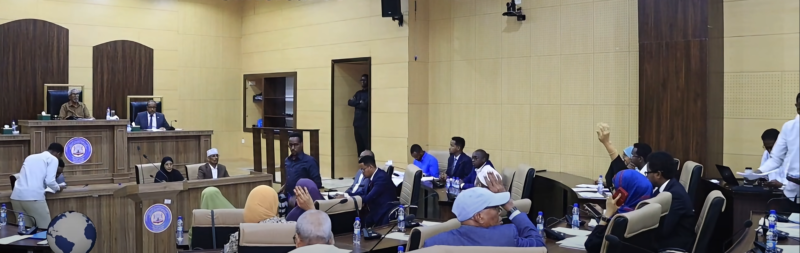
The Ministry’s warning reflects a broader effort by federal and state authorities to prepare for the anticipated floods. The government approved a National El Niño Preparedness Plan in September 2026, consolidating efforts across federal institutions, Federal Member States and local authorities to strengthen early warning and risk monitoring systems. Interior Minister Ali Yusuf Ali (Xoosh) has also chaired meetings of the High Committee for the National Disaster Risk Management Fund to review preparedness proposals, including clearing waterways and strengthening early warning systems.
SoDMA has also signed a two-year cooperation agreement with the World Food Programme focused on risk forecasting, preparedness, early warning systems, anticipatory action and emergency response. The agency has also participated in the IGAD High-Level Forum on El Niño Preparedness in Addis Ababa, as part of regional coordination efforts ahead of the anticipated rains.
Critical Note
The Galmudug Hydrometeorology Department’s forecast is a necessary early warning, but it also highlights the gap between warning and action. The rains have already begun, and flooding has already killed people and livestock in Togdheer and Galgaduud. The question is not whether communities will be affected, but whether they have the resources and support to cope.
The forecast for Galmudug shows a mixed picture: some areas may benefit from improved pasture and soil moisture, while others face little rain or potential flooding. This variability is characteristic of El Niño-driven rainfall, but it also complicates preparedness. Communities need clear, localized information to know whether to expect relief or risk.
The broader context is one of compounding crises. Somalia is facing its worst hunger crisis in years, with 5.4 million people projected to face crisis levels of food insecurity. The floods will destroy crops, kill livestock, and displace families who have already exhausted their coping mechanisms. The Ministry’s call for communities to monitor forecasts is important, but monitoring alone does not protect people. Early action, funded and coordinated before the floods peak, is what will save lives. The window for that action is narrowing.
Recommended Reading On ftlsomalia.com
- Deputy PM Chairs Ministerial Meeting as Government Approves National El Niño Preparedness Plan
- Interior Minister Chairs Super El Niño Preparedness Meeting in Mogadishu
- SoDMA and WFP Sign Two-Year Deal to Strengthen Somalia’s Disaster Preparedness
- SoDMA Chief Joins IGAD High-Level Forum on El Niño Preparedness in Addis Ababa