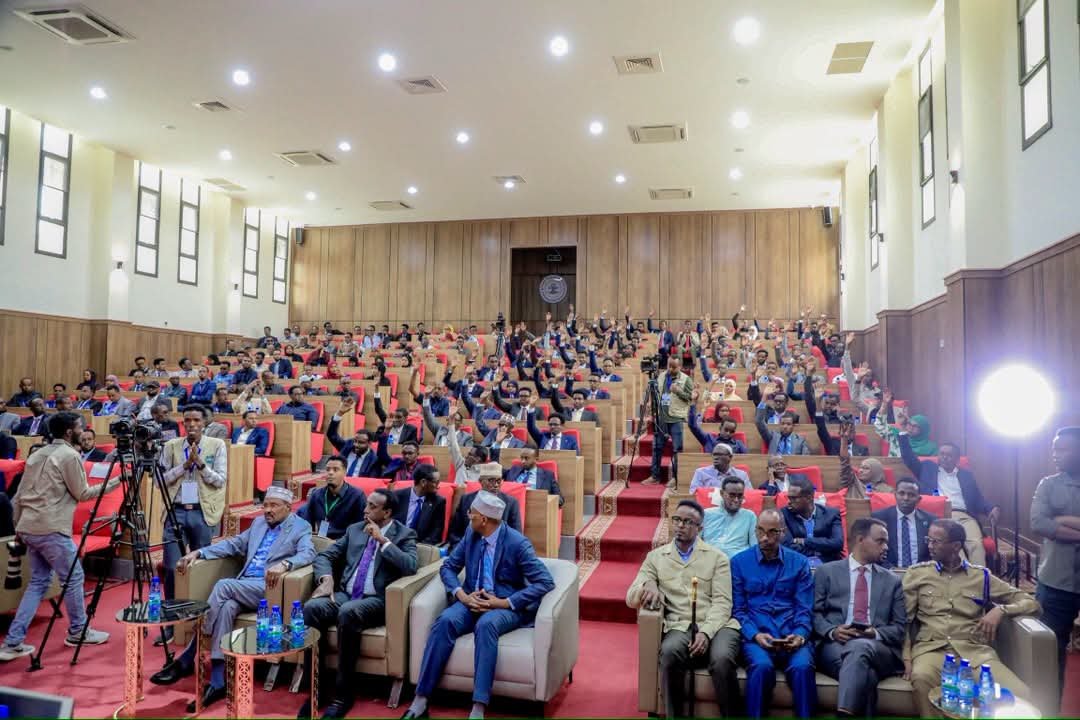
DHUSAMAREB — Members of the Galmudug House of Representatives are voting today to elect the Speaker and two deputy speakers of the regional assembly, with candidates contesting the three leadership positions under the supervision of the National Independent Electoral and Boundaries Commission (NIEBC).
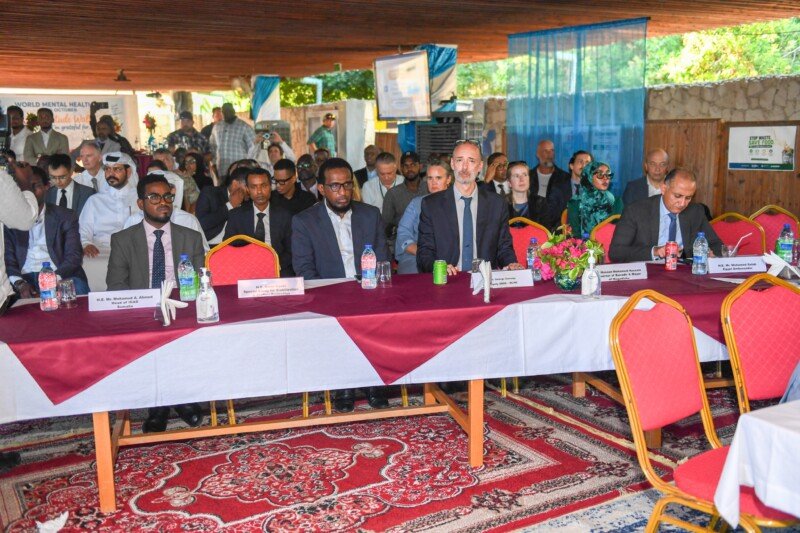
The candidates have delivered their speeches before the members of parliament. Senior federal officials, electoral commission representatives, Galmudug state officials and other distinguished guests are present at the voting hall, and the vote is expected to begin shortly.
The election is being administered by the NIEBC, which has overseen the entire Galmudug electoral process from the parliamentary rerun to today’s leadership vote. As reported in FTL Somalia’s coverage of the Supreme Court ruling, the court ratified the rerun results on 13 October 2026, confirming the allocation of all 89 seats in the Galmudug House of Representatives. The ruling party Cadaaladda iyo Wadajirka secured 67 seats.
The Road to Today’s Vote
The parliamentary leadership election follows a contentious process. The original election held on 30 July 2026 was annulled by the Supreme Court in August, which found that the vote had not been administered in accordance with constitutional and electoral requirements for free, fair and impartial elections. A rerun was ordered and held on 30 September 2026.
However, the rerun was itself marred by controversy. As reported in FTL Somalia’s coverage of the Towfiiq exclusion, the NIEBC excluded the Towfiiq party, the very organization that had successfully challenged the July results in court, from participating in the rerun. The commission did not provide a detailed public explanation for the exclusion.
The new 89-member parliament was sworn in on 16 October, with Mohamed Sheikh Ahmed, the oldest member, serving as interim Speaker until today’s vote, as reported in FTL Somalia’s coverage of the swearing-in ceremony.
Next Steps: Liban Ahmed Hassan as Sole JSP Candidate
Once the permanent Speaker and deputies are elected, the assembly will proceed to the presidential election, scheduled for 22 October 2026 under the NIEBC timetable. President Hassan Sheikh Mohamud designated Liban Ahmed Hassan as the sole candidate for the ruling Justice and Solidarity Party (JSP). He is the only presidential candidate put forward by the ruling party and is widely expected to win.
As reported in FTL Somalia’s coverage of Hassan’s campaign, the candidate has pledged to defeat Al-Shabaab within six months and heal clan divisions.
Critical Note
The election of the Speaker and deputies is a procedural step, but it carries weight in a parliament whose legitimacy has been contested. The 89 members were elected in a rerun that excluded the party that had successfully challenged the original vote. The JSP’s overwhelming majority, 67 of 89 seats, means that the outcome of today’s leadership vote is unlikely to be in doubt, and the presidential election is even more predetermined: Liban Ahmed Hassan is the sole candidate the ruling party has put forward, and no credible challenger has emerged.
The deeper problem is the NIEBC itself. Its chairman, Abdikarim Ahmed Hassan, has been accused of partiality toward the JSP and its candidate. In June 2026, Galmudug’s regional administration publicly questioned his neutrality, alleging he had been involved in activities linked to a prospective Galmudug presidential candidate. The same month, Kaab TV reported that the chairman had attended a meeting in Mogadishu that reportedly focused on rallying support for Liban Ahmed Hassan, with witnesses describing the presence of NISA Director Mahad Salad and the display of NISA flags at a gathering described as clan-based political mobilization. The NIEBC has not publicly addressed these allegations.
The Supreme Court’s annulment of the July election was a judicial finding that the process had failed the constitutional test of transparency, freedom and fairness. That ruling did not declare the commission partisan, but it did establish that the commission had administered an election that was legally flawed. The commission’s response was to exclude the party that had brought the successful challenge from the rerun. Whether that exclusion was procedurally justified or politically motivated, the commission has not explained it in public.
Opposition figures have also raised concerns about the commission’s information technology systems, with questions about a previously requested IT audit that was not made public. The NIEBC’s own strategic plan acknowledges the need for robust data security and systems control, but the transparency of its operations has not matched the scale of its responsibilities.
For Galmudug, the new parliament inherits a region facing serious challenges: flood risk, food insecurity, and the ongoing fallout from the political conflict between the federal government and Laftagareen. Whether the new Speaker and deputies can address those challenges, or whether they will be consumed by the political disputes that dominate Mogadishu, remains to be seen. But the credibility of the process that produced them will continue to shadow their work.
Share your story. FTL Somalia is continuing to investigate Somalia’s electoral process. If you have information or insights to share, contact us at info@ftlsomalia.com. Your identity will be protected.
Recommended Reading On ftlsomalia.com
- Galmudug Election Finalized as Supreme Court Certifies Rerun Results
- Towfiiq Party Barred from Galmudug Rerun Despite Having Successfully Challenged Earlier Results
- Galmudug’s New Parliament Sworn In as Interim Speaker Takes Office
- Galmudug Candidate Pledges to Defeat Al-Shabaab and Heal Divisions in Six Months
- Somalia’s Electoral Commission Announces Timetable for Parliamentary and Presidential Elections in 2027