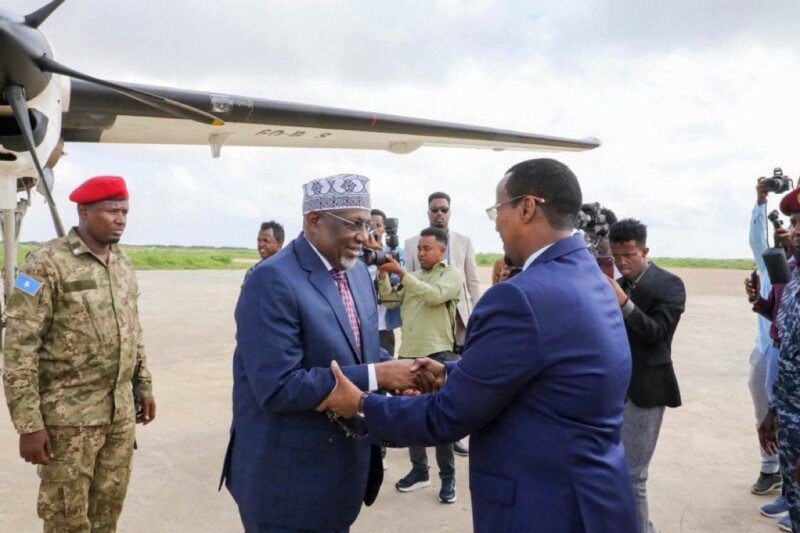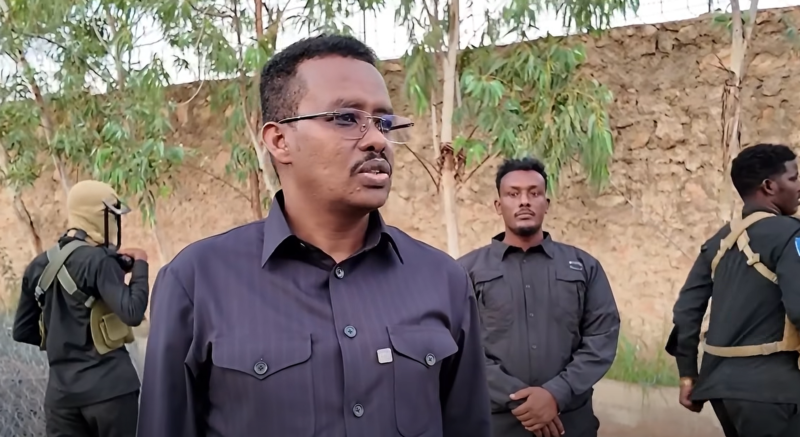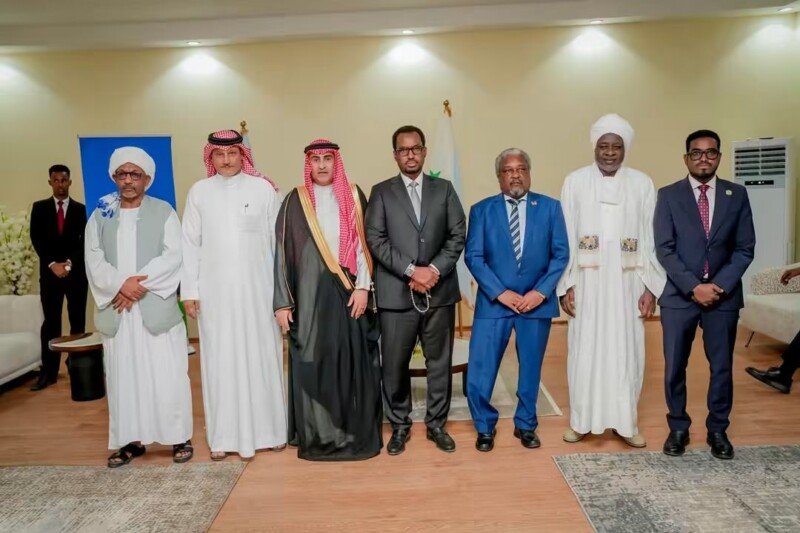
DHUSAMAREB, Galmudug’s new President, Liibaan Ahmed Hassan, welcomed a large delegation from the international community at Dhusamareb Airport on Thursday, as ambassadors, heads of international organizations, and diplomats arrived to attend his inauguration ceremony.
The delegation included ambassadors from various countries accredited to Somalia, representatives of international agencies, and diplomats from multiple nations and organizations. Their presence underscores the significance that international partners have attached to the leadership transition in Galmudug, a state that sits at the center of Somalia’s security architecture and the campaign against Al-Shabaab.
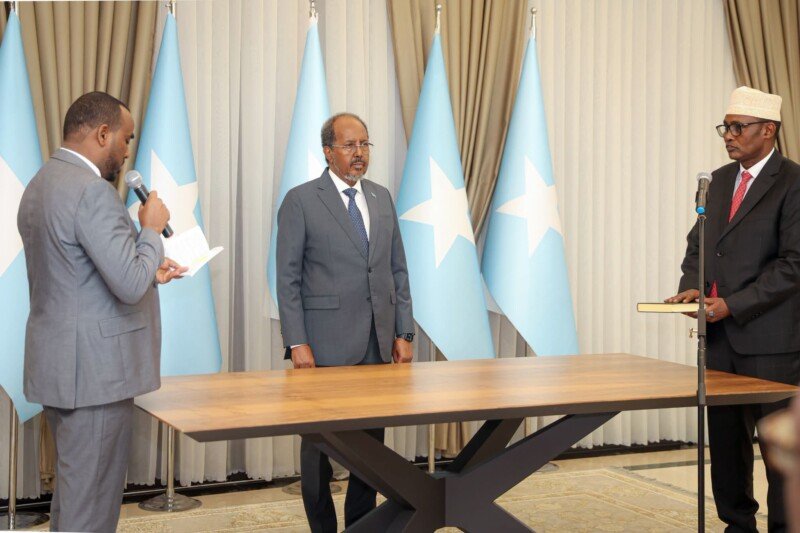
The inauguration follows Liibaan’s formal assumption of office on Wednesday, when outgoing President Ahmed Abdi Kariye (Qoor Qoor) handed over power in a ceremony at the regional presidential palace. Liibaan was elected by the Galmudug House of Representatives on October 22, securing 72 of 89 votes, as FTL Somalia reported on the parliamentary vote.
The international attendance is notable, given the contested nature of the electoral process that produced Liibaan’s presidency. The Supreme Court annulled the initial parliamentary elections, and the party that won that court challenge was excluded from the rerun. As FTL Somalia reported on the JSP’s landslide, the party secured 179 of 243 council seats in the repeat election, consolidating its dominance ahead of the presidential vote.
A Transition Under Scrutiny
Liibaan’s rise to the presidency was shaped by federal endorsement. President Hassan Sheikh Mohamud endorsed him as the JSP’s sole candidate in May 2026, and outgoing President Qoor Qoor withdrew from the race in June after talks with federal officials, as FTL Somalia reported on his withdrawal.
The new president inherits a state with significant security and governance challenges. Galmudug faces persistent threats from Al-Shabaab, clan disputes over land and resources, and the economic pressures of drought and displacement. Liibaan has pledged to rid Galmudug of Al-Shabaab within six months and to spearhead community reconciliation efforts, as outlined in coverage of his campaign promises to defeat Al-Shabaab and heal divisions.
The international delegation’s presence is a signal that Galmudug’s partners are invested in the transition’s success. It also places the new administration under scrutiny, as the same partners who attended the inauguration will be watching to see whether Liibaan can translate his political mandate into tangible improvements in security and governance.
The Federal Dimension
The inauguration comes at a delicate moment in federal-state relations. Puntland and Jubaland have rejected the federal government’s electoral process, and Puntland President Said Abdullahi Deni has called on President Mohamud to resign and dismissed the November consultative forum as a waste of time. As Puntland has dismissed the federal election plans as “predetermined and undemocratic”, the absence of the two most powerful member states from the national dialogue raises questions about whether the federal government can claim to speak for the whole country.
Galmudug, by contrast, has completed its leadership transition with the federal government’s blessing and the international community’s attendance. The contrast between Galmudug’s managed transition and the impasse with Puntland and Jubaland is a reminder that Somalia’s federal project remains uneven. Some states are moving forward. Others are refusing to participate. The international community’s presence in Dhusamareb signals its support for the former. Whether it will use its leverage to address the latter is another question.
Critical Note
The international delegation’s arrival in Dhusamareb shows that Somalia’s partners are paying attention to the leadership transition in Galmudug and are prepared to invest diplomatic capital in its success. For a state that has often been overshadowed by Mogadishu and the larger federal member states, that attention matters.
But the presence of ambassadors and diplomats does not change the underlying challenges. Liibaan’s mandate was produced by a contested electoral process. His promises are ambitious. The security threats are real. And the federal government’s relationship with Puntland and Jubaland remains broken. The international community can attend the inauguration. It cannot govern Galmudug.
The test of the international community’s engagement will not be its attendance at the ceremony. It will be whether it provides the resources and political support that Liibaan’s administration needs to deliver on its promises. It will be whether it holds the new leadership accountable for the commitments it has made. And it will be whether it uses its influence to encourage a broader national dialogue that includes the states that are currently refusing to participate. The ambassadors came to Dhusamareb. The question is what they will do now that they are here.
Recommended Reading On ftlsomalia.com
- Liban Ahmed Hassan Elected President, Abdiweli Garyare Vice President as Galmudug Completes Leadership Transition
- JSP Wins Landslide in Galmudug Local Council Repeat Election
- Galmudug President Qoor-Qoor Withdraws from Presidential Race After Talks with Federal Government
- Galmudug Candidate Pledges to Defeat Al-Shabaab and Heal Divisions in Six Months
- Deni Tells Mohamud to Resign, Dismisses November Forum as a Waste of Time