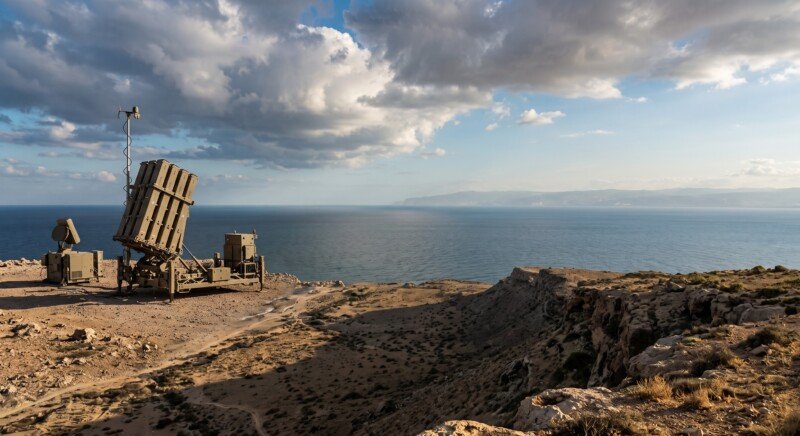
HARGEISA — Somaliland officials say their diplomatic normalisation with Israel was motivated in part by the need to counter Turkey’s growing military footprint in Somalia, and they want Israel to provide air defence systems to offset Turkish drones and warplanes deployed in Mogadishu, according to interviews conducted by Middle East Eye.
In an investigation published by Middle East Eye on 2 October 2026, officials and analysts in Hargeisa said they believe Somalia, backed by Turkey’s military, can be countered through closer security ties with Israel. “We need air defence systems,” Mohamed Osman Fadal, a senior foreign affairs advisor to Somaliland’s president, told Middle East Eye. “Turkey has F-16s in Mogadishu, and it wants to build a drone base in Somalia. We want Israel to support us against Turkey.”
Israel Recognition as a Counterweight to Turkey
Mohamed Abdirahman Hassan, Director General of Somaliland’s Ministry of Foreign Affairs and International Cooperation, told Middle East Eye that Somaliland had “no choice but to get involved in regional rivalries” after decades of failed outreach to Arab and Muslim states. “We had been reaching out to Arab and Muslim countries for recognition since 1991. We had to move on. Israel recognised a gap here. We are proud to partner with the Israelis,” he said.
Hassan said Somaliland has “a good army, but lack materials and equipment,” which the government hopes Israel will supply. According to Middle East Eye, posters of President Abdirahman Mohamed Abdullahi shaking hands with Israeli President Isaac Herzog were still visible in Hargeisa weeks after the visit to Jerusalem.
Hassan told Middle East Eye that the Houthis are not the primary threat in Hargeisa’s view. “The Houthis are not terrorists like Al-Shabaab. We reject that label. We are against confrontation in Yemen. The Houthis need to be engaged,” he said. According to the report, Somaliland officials identified Turkey, not the Houthis, as the common adversary they share with Israel.
Proxy Competition in the Horn of Africa
A former senior Western diplomat in the region told Middle East Eye that the Horn of Africa could become a testing ground for the Israel-Turkey rivalry. “A lot of people think Israel and Turkey are gearing up for a fight, but there are too many eyes on Syria. The Horn could be where they test each other because it’s so out of the way. A big reason Israel has come to Somaliland is because of Turkey,” the diplomat said.
The report also noted that Turkey has emerged as Somalia’s most important external backer since 2011, when then-Prime Minister Erdogan became the first non-African leader to visit Somalia in two decades. Turkey has built hospitals and roads, gained outsized influence over Somalia’s economy and security institutions, and now operates its largest overseas military base in Mogadishu. As reported in FTL Somalia’s coverage of Türkiye’s military role, Ankara has trained Somali commandos, coordinated strikes on Al-Shabaab, and deployed TB2 Bayraktar drones, F-16 fighter jets and ATAK attack helicopters.
Ahmed Muse, an academic and government advisor in Hargeisa, told Middle East Eye that Turkey’s model of combining aid and security had transformed Africa’s relationship with rising powers. “After the Cold War, the West only saw Africa through the prism of aid. Turkey saw a land with a lot of potential that had been neglected. It approached aid and security together. The Gulf states came and copied Turkey. The UAE was the first,” he said.
Turkey has formally rejected Israel’s recognition of Somaliland and reaffirmed its support for Somalia’s sovereignty and territorial integrity. As reported in FTL Somalia’s coverage of Turkey’s position, President Erdogan stated during a visit to Egypt that any future actions regarding Somaliland’s status must align with the will of all Somali people, describing the recognition as a clear violation of Somalia’s sovereignty.
Risks of Aligning With Israel
Middle East Eye noted that Somaliland’s alignment with Israel carries significant risks, including the possibility that hosting Israeli air defences could make it a target in a wider regional conflict. The report noted that Ethiopia, which has close ties to Israel and the UAE, is battling rebel groups it says are backed by Egypt and Eritrea, while the Houthis have taken control of the Arabian Gulf side of the Bab el-Mandeb.
Somaliland is aligned with the UAE, which is expanding its air and naval bases in Berbera. As reported in FTL Somalia’s coverage of the Le Monde investigation, satellite imagery shows extensive construction and excavation at Berbera Airport, with at least 18 deep holes dug into the sandy soil that European security sources described as potential storage facilities for ammunition, weapons, or fuel tanks. The project is being carried out by the UAE under a defence agreement signed with Somaliland in 2017, but sources cited by Le Monde said the work is ultimately intended to support U.S. and Israeli interests.
Israel and the UAE have deepened their cooperation in the wake of the US-Israeli war on Iran, while Saudi Arabia, Pakistan and Turkey have signed a joint defence agreement seen as a rival bloc.
As reported in FTL Somalia’s coverage of Israel’s intelligence presence, reports have indicated that Israeli military and intelligence personnel have visited Berbera, and that Somaliland intelligence officers have received training in Israel. President Irro has publicly stated that “at the moment, Israel has no troops in Somaliland, but I cannot say what may happen in the future,” as detailed in FTL Somalia’s coverage of the denials.
Middle East Eye also reported that Somaliland remains bitter at Turkey for brokering a compromise that blocked Ethiopia from recognising Somaliland in exchange for access to the port of Berbera and a military base in the Gulf of Aden. Visiting Addis Ababa in February, President Erdogan said Israel’s recognition “does not benefit Somaliland or the Horn of Africa.”
The report also noted that Somalia’s turn of fortune has come with Turkey entrenching itself in the country’s security and defence institutions. In 2024, Turkey signed a 10-year defence bill to build and train a Somali navy. The agreement places Somalia’s territorial waters, which include unrecognised Somaliland, under Turkey’s security umbrella. Turkey has also secured a twenty-year lease to manage Mogadishu’s seaport and airport, and Somalia has pledged Turkey 30 percent of the revenue from any marine resources found in its exclusive economic zone.
Hassan told Middle East Eye that Somaliland has no issue with Turkey as a newcomer to the region. “They have exploited Mogadishu’s resources,” he said. “But Mogadishu is thinking of an invasion, and Turkey would back them. We need to position ourselves for the future.”
Critical Note
The Middle East Eye investigation provides the most detailed account to date of Somaliland’s strategic rationale for aligning with Israel. The officials quoted are explicit: the primary motivation is not Israel’s ability to strike the Houthis, but Israel’s potential to counter Turkey’s military dominance in Somalia. This reframes the recognition debate in important ways.
The strategy carries obvious risks. Inviting Israeli air defences into Somaliland would make it a target in a wider regional conflict and could jeopardise the very stability Hargeisa prides itself on. Somaliland is now surrounded by regional wars whose battle lines have descended into rival blocs that include Israel. Ethiopia, which has close ties to Israel and the UAE, is battling rebel groups it says are backed by Egypt and Eritrea. The Houthis have taken control of the Arabian Gulf side of the Bab el-Mandeb. Israel still has a score to settle with the group.
It is also worth noting that the fear of a military campaign to force Somaliland back into union does not match the public position of the Somali government. Mogadishu has said repeatedly that it has no intention of resolving the dispute by force, and it has framed its opposition to Israel’s recognition and its rejection of the January 2024 memorandum with Ethiopia in legal and diplomatic terms, not military ones. The federal government has consistently emphasised dialogue, federalism and Somalia’s territorial integrity under its constitution. Whatever threat Somaliland officials perceive, the Somali state has not publicly committed to an armed campaign to bring Somaliland back under its authority.
For Somalia, the Middle East Eye report confirms that the Israel-Somaliland relationship is not merely a bilateral matter. It is part of a broader competition between Turkey and Israel for influence in the Horn of Africa and the Red Sea. Mogadishu has deepened its own partnerships with Turkey, Egypt and Eritrea, but those relationships carry their own risks. The competition for influence in the Red Sea is intensifying, and Somalia risks becoming a proxy battleground if it cannot manage these competing interests.
Recommended Reading On ftlsomalia.com
- Israel Opens Somaliland Intelligence Base
- President Cirro of Somaliland: No Israeli Troops in Somaliland for Now
- Le Monde Reports UAE Building Secret Military Base in Berbera for U.S. and Israel
- Israel Recognizes Somaliland as Independent State
- President Irro of Somaliland Meets Israeli Ambassador at UN as Recognition Strategy Faces Growing Doubts
- Erdogan Rejects Israel’s Somaliland Recognition