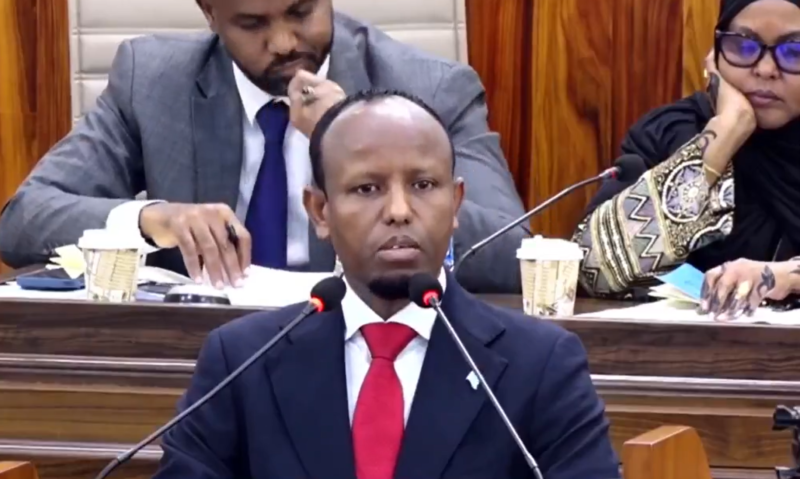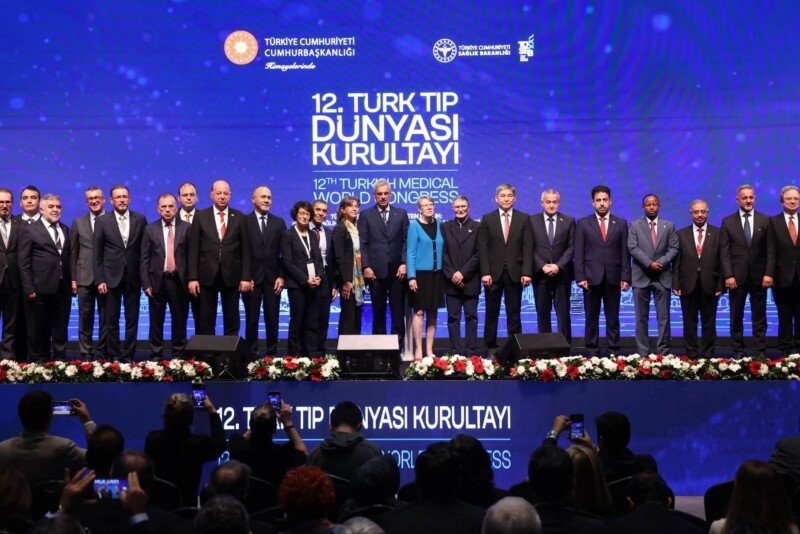
MOGADISHU, Somalia’s Minister of Health, Dr. Ali Haji Adam, attended the 12th Turkish Medical World Congress in Istanbul this week, accepting an official invitation from his Turkish counterpart, Prof. Dr. Kemal Memişoğlu.
The minister delivered an address at the opening ceremony, emphasizing the importance of strengthening international health cooperation, improving healthcare services, and enhancing the capacity of health professionals. He also underscored the “brotherly relations and strategic cooperation” between Somalia and Türkiye, particularly Ankara’s role in supporting Somalia’s healthcare sector.
The congress, held from October 29 to 31, brought together health ministers, experts, and researchers from various countries to discuss medical advancements and international cooperation.
A Relationship With Depth
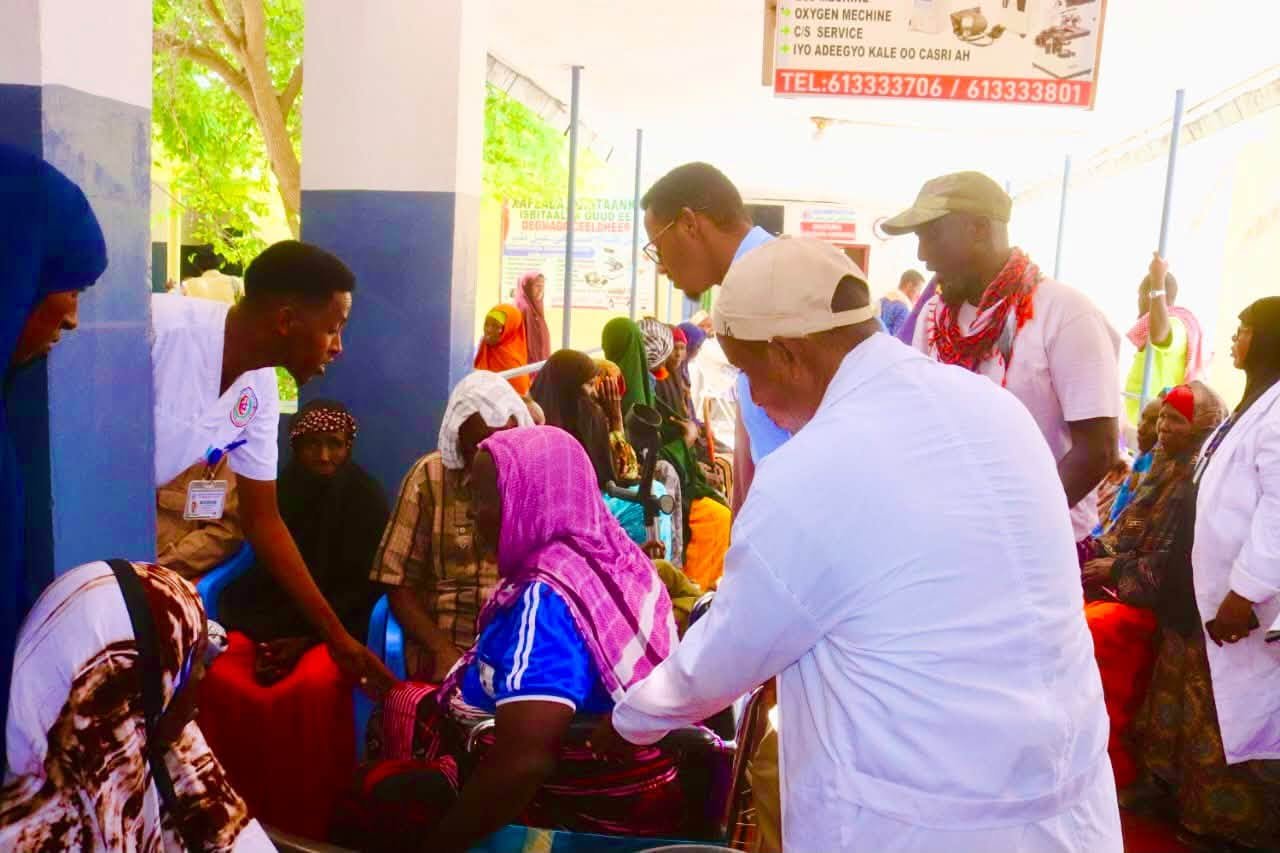
The ministerial visit is the diplomatic surface of a much deeper engagement. Türkiye’s health footprint in Somalia is anchored in the Recep Tayyip Erdoğan Training and Research Hospital in Mogadishu, a 250-bed facility that has operated since 2015 and serves as the largest dialysis center in the country. The hospital has provided specialized treatment across multiple fields while training Somali medical staff, with Turkish doctors transferring clinical expertise to local healthcare workers.
The financial commitments are ongoing. In October 2026, the Turkish Red Crescent provided $150,000 in cash support to 300 Somali kidney patients receiving dialysis at the hospital, covering treatment costs, transport, and medication. The project is planned to continue for three months with a total support target of $450,000, providing patients with ten free dialysis sessions per month.
Ankara’s engagement also extends to infrastructure. In May 2026, the Turkish Cooperation and Coordination Agency equipped the Warsheikh Hospital with comprehensive medical equipment, including incubators, laboratory devices, ultrasound and X-ray machines, strengthening maternal and child health services in a strategically significant region.
As FTL Somalia reported when the minister attended the same congress in previous years, the Turkish Medical World Congress has become a recurring platform for showcasing the bilateral health partnership, with Somali officials regularly invited to speak alongside their Turkish counterparts.
The Minister’s focus on international cooperation comes as Somalia’s domestic health system remains overwhelmingly dependent on external financing, with an estimated 95 percent of its budget coming from foreign donors, as FTL Somalia reported. That dependence has been tested repeatedly as donor funding for health programs has contracted.
A Ministry Managing Crises at Home
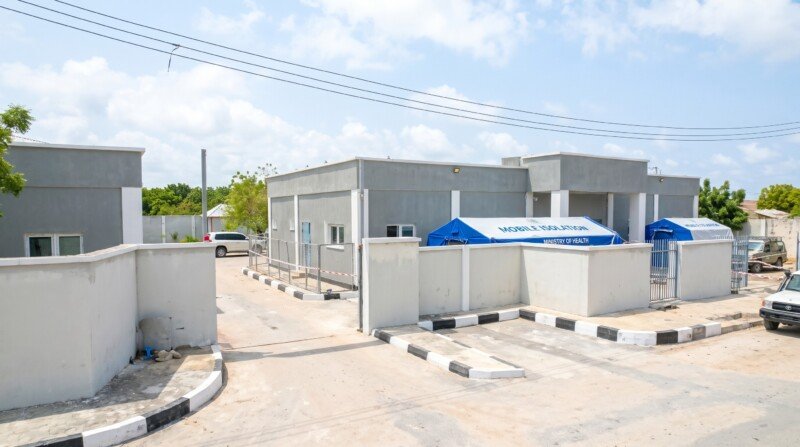
While the minister was in Istanbul, his ministry was managing a real-time public health threat. Kenya’s confirmation of an Ebola case in October prompted Somali authorities to activate screening measures at Mogadishu’s Aden Adde International Airport and other points of entry. As FTL Somalia reported, Somalia’s points of entry had been assessed at roughly 20 percent operational capacity for outbreak preparedness before the alert, and the ministry moved to reinforce screening protocols in response.
That scramble follows earlier preparedness efforts, including a national coordination meeting in May 2026 convened to assess readiness and align response plans. As FTL Somalia reported, the meeting brought together health officials and partners to review surveillance, laboratory capacity and cross-border coordination, though the gap between planning and operational readiness remained a concern.
The contrast is difficult to avoid. The minister’s speech in Istanbul emphasized resilience and modern technology, while his ministry’s frontline staff were implementing emergency screening at the airport with limited resources. Both are part of the same portfolio, but only one was the subject of a public address.
A Partnership of One Direction
The broader Türkiye-Somalia relationship follows a similar pattern. Türkiye maintains a military training mission in Somalia, and Ankara’s parliament debates and approves the extension of that mission with a transparency that Mogadishu has not always matched. As FTL Somalia reported, the Turkish parliament approved a two-year extension of its military mission in Somalia, with the terms debated publicly in Ankara, while Somali legislators have at times been kept in the dark about the details of bilateral security agreements.
The pattern extends across sectors. Türkiye builds hospitals, provides equipment, funds dialysis, trains troops, and debates the terms of its engagement in its own legislature. Somalia receives, hosts, and depends, with limited public scrutiny of what it has agreed to in return.
Critical Note
The ministerial speech in Istanbul is a familiar ritual in the Somalia-Türkiye relationship. The two governments have cultivated a partnership that is genuinely rare in its depth and consistency, and the health sector is one of its clearest success stories. The Erdoğan Hospital is not a temporary project. It is a permanent institution that has trained Somali doctors, treated hundreds of thousands of patients, and maintained operations through periods when other international actors scaled back.
But the relationship has a structural asymmetry that deserves acknowledgment. Türkiye builds, funds, equips, and staffs. Somalia receives, hosts, and depends. The minister’s speech praised the “brotherly relations” and Türkiye’s “support,” language that reflects gratitude but not reciprocity. There is no comparable Somali health investment in Türkiye, no Somali-funded hospital in Ankara or Istanbul, no Somali medical professionals training Turkish staff. And there is no parallel to the Turkish parliament’s public debate of its Somalia mission in Mogadishu’s legislature.
The Ebola screening at Aden Adde airport is a reminder of what the partnership does not cover. Türkiye’s support is concentrated in a flagship hospital and specific projects, not in the routine surveillance and border health systems that determine whether an outbreak is detected early. Those systems remain underfunded and dependent on declining donor support, which is why the ministry was scrambling in October rather than operating from a position of prepared strength.
This is not a criticism of Türkiye, whose contributions are substantial and sustained. It is a question about what “strategic cooperation” means when one side provides and the other receives, and when the receiving side is not always transparent with its own public about the terms. The long-term test of the health partnership will not be the number of congresses attended or the size of equipment deliveries. It will be whether Somalia can eventually staff and fund its own institutions at a level that makes external support a supplement rather than a foundation, and whether its government can be as open with its citizens as Ankara is with its parliament.
Recommended Reading On ftlsomalia.com
- Somalia’s Health System Struggles as Donor Cuts Deepen Crisis
- Somalia Screens Mogadishu Airport Arrivals After Kenya Ebola Case
- Somalia Holds Ebola Preparedness Coordination Meeting
- Turkish Parliament Approves Two-Year Extension of Military Mission in Somalia
- Somali Health Minister Joins Turkish Medical World Congress