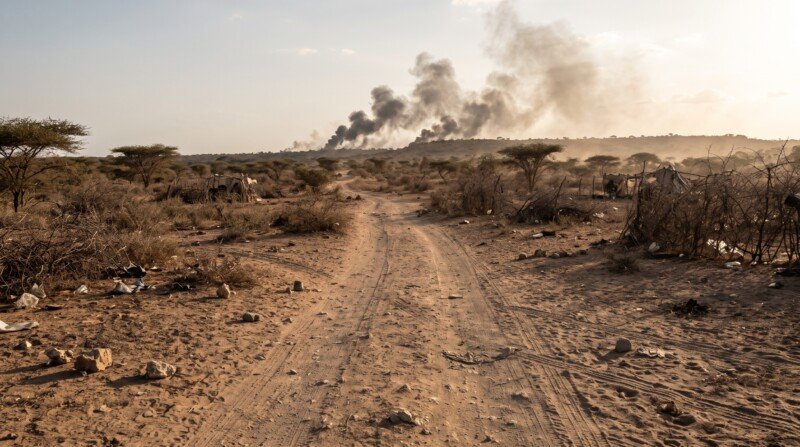
BAIDOA, Heavy fighting has erupted in the Burijeed area on the outskirts of Baidoa, with forces loyal to former South West State President Abdiaziz Hassan Mohamed Laftagareen attacking positions held by federal and regional government troops, according to local sources.
Reports indicate that both sides used various types of weapons in the clashes, and that F16 aircraft were involved in strikes on the area. The exact casualty figures remain unclear, but local sources described the losses as significant on both sides. Neither the federal government nor Laftagareen’s office has issued a detailed statement on the Burijeed fighting.
The renewed violence comes as Laftagareen’s forces have been expanding their control across the Bay and Bakool regions in recent weeks, capturing several districts and strategic areas. As reported by Hiiraan Online, Laftagareen-aligned Dervish forces took Qansahdheere, seized Buurhakaba after heavy fighting, and entered Berdaale, Diinsoor and Awdiinle after government-aligned troops withdrew.
A Strategic Encirclement
The capture of Buurhakaba was particularly significant. The town lies on the main road between Baidoa and Mogadishu, and its loss severed the federal-backed administration’s primary supply and access route to the regional capital. According to ACLED’s analysis of the conflict, opposition forces took more than 200 soldiers prisoner during the Buurhakaba clashes and have since adjusted their strategy to surround and isolate Baidoa by capturing key surrounding districts.
The fighting has also drawn in federal reinforcements. As reported by Al Mayadeen, at least three planes carrying Harmacad and Gorgor units departed Mogadishu for Baidoa and Wajid in mid-October, with reports of Turkish officers on board one of the flights. The federal government has not confirmed the Turkish presence, but local actors have accused Ankara of interfering in the confrontation.
The Political Roots of the Conflict
The fighting in South West State is not a spontaneous eruption. It is the product of a political rupture that began in March 2026, when the federal parliament passed constitutional amendments extending the presidential term. Laftagareen, who had governed South West since 2018, sided with Puntland and Jubaland in rejecting the amendments and withdrew his support for President Hassan Sheikh Mohamud’s electoral roadmap.
When South West’s regional parliament moved to re-elect Laftagareen under its own timeline, the federal government declared the vote illegal. Federal troops entered Baidoa alongside armed groups aligned with Laftagareen’s regional opponents, forcing him from power. Sheikh Aden Mohamed Nur Madobe was installed in his place in June.
Since then, Laftagareen’s supporters have mounted repeated attacks against federal and regional forces. The federal government has accused Laftagareen and some of his allies of maintaining links with Al-Shabaab, allegations they deny. Somalia’s National Anti-Money Laundering and Counter-Terrorism Financing Committee placed Laftagareen and nine others on a financial sanctions list over suspected links to the militant group, though it did not publicly disclose the evidence against each individual.
The Humanitarian Dimension
Baidoa is home to hundreds of thousands of displaced people, many of whom fled conflict and drought in other parts of Somalia. The renewed fighting threatens to compound an already dire humanitarian situation. As reported by Wararka, some 26,000 people in Baidoa are at the highest level of food insecurity, and aid agencies have warned that the fighting is disrupting access to health facilities and humanitarian assistance.
Critical Note
The fighting in Burijeed is the latest chapter in a conflict that has been escalating for months. Laftagareen’s forces have demonstrated a capacity to capture territory and isolate Baidoa, while the federal government has responded with reinforcements and airstrikes. The involvement of F16 aircraft, if confirmed, would represent a significant escalation in the use of air power against domestic political opponents, a development that raises serious questions about the conduct of the federal government’s campaign.
The root cause of this crisis is political, not military. The federal government’s decision to remove Laftagareen by force, rather than through negotiation, created the conditions for the armed resistance that now threatens Baidoa. The installation of a new administration that relies on federal troops rather than local political consensus has alienated key clan networks and weakened the regional government’s control. As ACLED noted, the current trajectory depends on whether the government-allied South West administration pursues political dialogue or an escalating military campaign.
The danger is that the conflict in South West State will become a permanent feature of Somalia’s political landscape, a running sore that drains federal resources, displaces civilians, and creates openings for Al-Shabaab. The militant group has already exploited the chaos, targeting SNA troop movements with IEDs along the Afgooye-Wanla Weyn route. Every day that the political dispute remains unresolved is a day that Al-Shabaab benefits. The fighting in Burijeed is not just a battle between Laftagareen and Mogadishu. It is a battle for the future of South West State, and the longer it continues, the more likely it is that the losers will be the civilians of Baidoa.