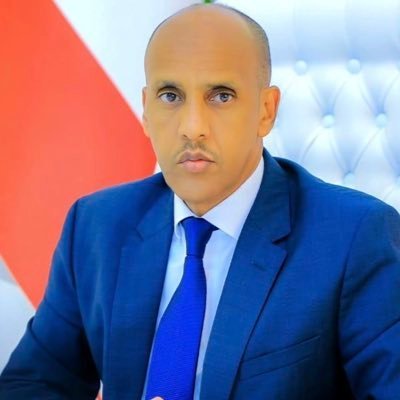
JOWHAR — Hirshabelle State Minister of Information Abdikarim Hassan Nuur (Doobyare) has stated that no one can prevent the regional election from proceeding, even as the state’s Vice President announced the suspension of the process and accused federal officials of interfering in the selection of the next regional leadership.
“There is an election happening in Hirshabelle, and no one can stop it,” Doobyare said in an interview with Kulmiye Radio, adding that voting would take place at all designated polling stations and that police forces would secure the sites.
Doobyare also addressed grievances from the Hiiraan region, saying the issues would be resolved through dialogue and consensus, and that parties opposing the electoral process would be persuaded to participate.
Vice President Suspends Election Process
His remarks came as Hirshabelle Vice President Yusuf Ahmed Hagar (Dabageed) announced the suspension of the regional election process and launched an unusually sharp attack on Somali President Hassan Sheikh Mohamud over alleged interference in the selection of the state’s next leadership.
Speaking on Friday, Dabageed accused the federal president of acting unreasonably during discussions held on Wednesday night. He described Hassan Sheikh as “an abnormal person” and said the treatment Hirshabelle representatives received during the meeting was not what they would expect from a national leader.
“We have suspended the Hirshabelle election, and we will do whatever we cannot avoid,” Dabageed said, without explaining what further measures the regional authorities might take.
Federal Interference and Clan Dynamics
The confrontation follows reports that President Hassan Sheikh had decided in advance to support incumbent Hirshabelle President Ali Gudlawe for another term. Critics argue that such a decision would undermine the regional electoral process by preventing lawmakers and other political stakeholders from freely choosing the state’s leadership.
The dispute reflects the underlying power-sharing formula in Hirshabelle, where the presidency has alternated between the Abgaal and Hawadle communities. President Hassan Sheikh Mohamud met with Hawadle traditional leaders in August 2026 to discuss the next leadership, asking them to agree on a single candidate. The leaders instead authorized the president to choose the community’s candidate, an agreement that now appears to have been interpreted as endorsing Gudlawe rather than a Hawadle figure.
Vice President Dabageed, who hails from the Hawadle community, said he was informed the seat was no longer reserved for him and was told another candidate had been chosen. His account suggests that the federal government’s decision has deepened existing fractures within the clan over who should represent it in the regional leadership.
JSP Candidate and Electoral Credibility
Gudlawe has held the Hirshabelle presidency since 2020 and had already declared that he wanted another term. He and President Hassan Sheikh Mohamud come from the same clan, which is why critics in Beledweyne read the endorsement as preference dressed as party procedure.
Hirshabelle’s transition to one-person, one-vote elections was formally launched in July 2025, when President Gudlawe inaugurated voter registration in Jowhar, describing the initiative as a turning point for inclusive governance. The elections will take place across 12 districts in the Hiiraan and Middle Shabelle regions.
Critical Note
The competing statements from Hirshabelle’s information minister and vice president expose the deep fractures within the regional administration over the electoral process. Doobyare’s insistence that the vote will proceed regardless of opposition stands in stark contrast to Dabageed’s declaration that the process is suspended. The disagreement is not merely procedural but reflects a fundamental split over who has the authority to determine Hirshabelle’s next leadership.
The federal government’s role in selecting regional candidates is not new, but the scale of JSP’s dominance in recent state elections has drawn scrutiny. If the party’s victories are perceived as products of federal influence rather than genuine contests, the credibility of the electoral process and the legitimacy of the resulting administrations will be undermined. The Macawisley fighters who attacked the voter registration centre in Beledweyne have already signaled their rejection of the process, and the counter-protests show that the political dispute is far from resolved.
For the NIEBC, the challenge is to conduct a vote that is credible and inclusive despite these tensions. For the federal government, the test is whether it can secure its preferred outcome without alienating the Hawadle community and fueling further resistance. The coming weeks will determine whether the September 30 election can proceed peacefully or whether the political dispute escalates into a crisis that could destabilize the region.
Recommended Reading On ftlsomalia.com
- FGS President Mohamud Backs JSP Candidate as Hirshabelle Electoral Tensions Escalate
- NIEBC Sets September 30 as New Polling Day for Hirshabelle State Elections
- Hirshabelle Election Polling Stations Announced Across 12 Districts
- National Electoral Commission Meets Political Parties to Discuss Elections