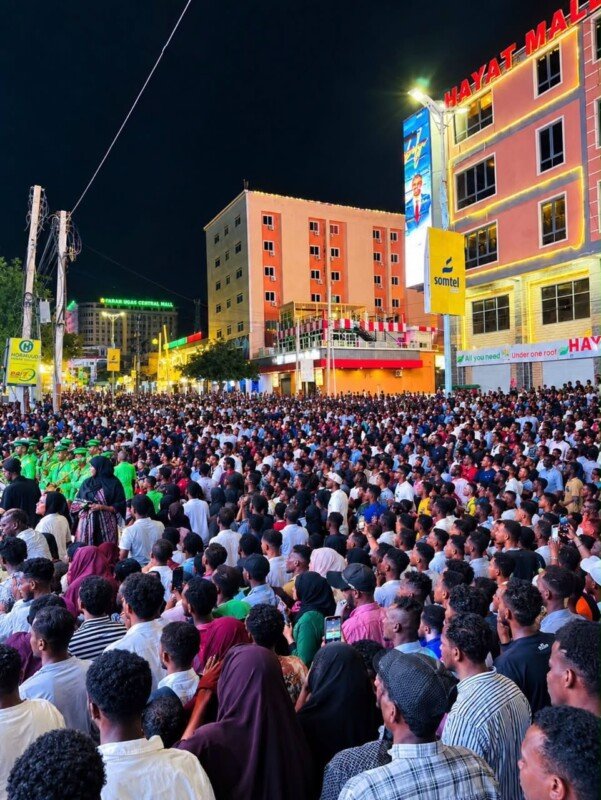
MOGADISHU, Crowds gathered across Mogadishu on Saturday night to celebrate the conclusion of Hirshabelle’s leadership elections, with residents flooding public squares in the Taleex and Boondheere districts to mark what many described as a historic step in Somalia’s democratic transition.
According to reports from the capital, the celebrations brought together women, children, and elderly residents, alongside musicians and young social media personalities. The crowds voiced their support for the “one person, one vote” system that produced Hirshabelle’s new parliament, and congratulated the re-elected regional leader, Ali Abdullahi Hussein Guudlaawe, and his vice president, Abdifatah Hassan Afrah.
The mood in Mogadishu reflects a broader public appetite for direct elections, which the federal government has positioned as a departure from the clan-based indirect model that has governed Somali politics for more than two decades. The September 30 parliamentary vote in Hirshabelle saw 114,633 ballots cast across 10 districts, with the Justice and Solidarity Party (JSP) securing 78 of the 99 seats. That result set the stage for Saturday’s leadership vote in Jowhar, where Guudlaawe secured 81 votes against 13 for his rival, Nur Ilmi Halane.
A Contested Process, Not a Consensus
However, the celebrations in Mogadishu do not reflect a unanimous political consensus. The electoral model that produced the Hirshabelle result, and the similar outcome in Galmudug days earlier, remains deeply contested by the opposition Somali Future Council, which includes the Puntland and Jubaland administrations.
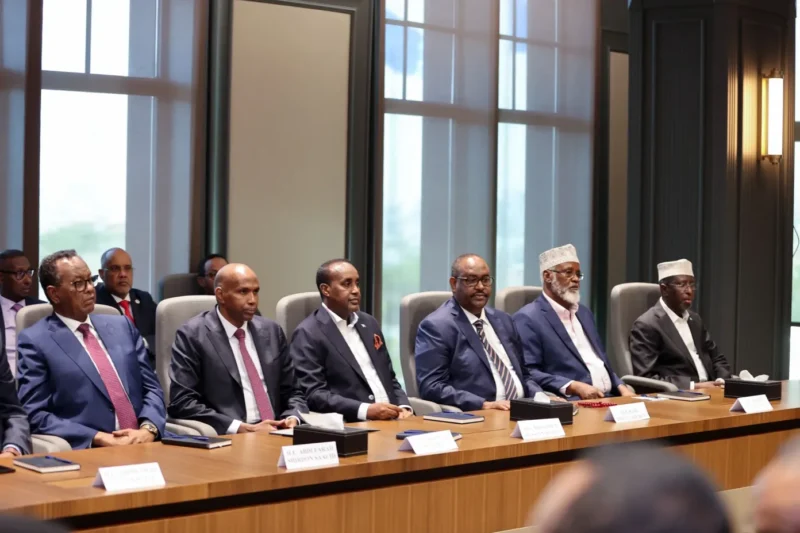
The opposition’s posture is nuanced and often contradictory. Prominent opposition figures, including former Prime Minister Mohamed Hussein Roble and former Galmudug President Abdikarim Hussein Guled, publicly congratulated Galmudug’s new president, Liibaan Ahmed Hassan, despite having criticized the electoral process that produced him. Similarly, some have extended congratulations to Guudlaawe in Hirshabelle.
But these congratulatory messages do not signify an endorsement of the electoral model. The congratulations extended to the new regional leadership do not amount to an explicit endorsement of the wider electoral process or a withdrawal of the opposition’s objections to the federal timetable. The opposition’s willingness to engage with the winners is pragmatic: they depend on these regional administrations to secure seats in the federal parliament, and a complete boycott would marginalize them from the political process entirely.
The opposition’s fundamental objection is to the model itself. The Somali Future Council has rejected the federal government’s party-based system, instead proposing a transitional model that would retain the 4.5 clan-based power-sharing formula while allowing citizens to directly elect parliamentary representatives. They have also demanded that the United Nations mediate the electoral dispute and provide international oversight, a request the government has resisted as an infringement on Somali sovereignty.
The Hiiraan Dispute and the Limits of Celebration
The Hirshabelle election was also marred by unresolved grievances in the Hiiraan region, where the Hawadle community and its political representatives argued that the presidency should rotate to their region under the power-sharing arrangement that created Hirshabelle in 2016. Outgoing Vice President Yusuf Ahmed Hagar Dabageed rejected the Jowhar process, stating before the vote that “any result from that sham does not apply to Hiiraan.”
Protests were reported in Beledweyne in the weeks before the election, with demonstrators demanding a political agreement before voting proceeded. While the polls went ahead, the underlying grievances remain unresolved, and the new administration will inherit a region where significant constituencies feel excluded from the process that produced its leadership.
The JSP’s decision to renominate Guudlaawe, an Abgaal from Middle Shabelle, deepened the Hawadle’s sense of exclusion. The selection of Afrah, a former Hiiraan governor, as vice president was intended to balance the ticket, but it does not satisfy the community’s demand for the presidency itself. As reported in FTL Somalia’s coverage of the election, the opposing candidates from Ramaas and Iftiin Qaran were widely viewed as a malxiis, a token opposition serving to provide a veneer of democratic competition for a contest whose outcome was already decided by the JSP’s two-thirds majority.
The National Context
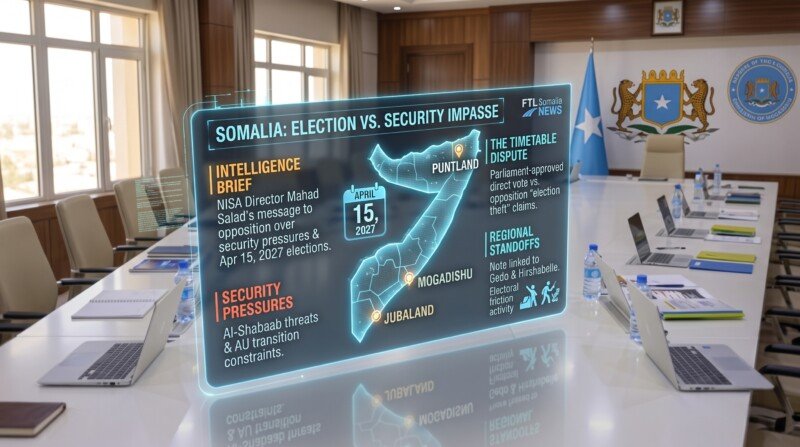
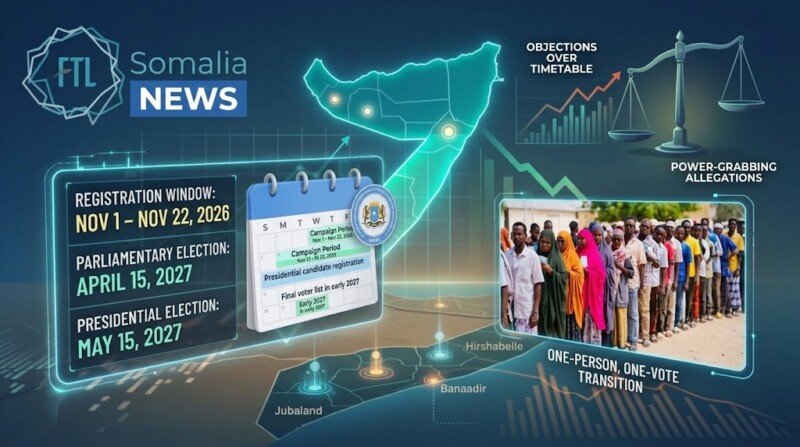
The Mogadishu celebrations also unfold against a contested national electoral calendar. The National Independent Electoral and Boundaries Commission has scheduled federal parliamentary elections for April 2027 and a presidential vote for May, but the opposition Somali Future Council has rejected the timetable as lacking an inclusive political agreement.
Former President Mohamed Abdullahi Farmaajo has called the unilateral process a “dangerous threat to Somalia’s statehood and future,” while former President Sharif Sheikh Ahmed has warned that a “contested process could lead to parallel elections” and even “civil conflict.” Political analyst Samira Gaid told AFP that “there’s no political agreement to hold those elections,” adding that the government’s initiatives are “leading to further fragmentation.”
The government, for its part, argues that party-based direct elections will give citizens a greater voice and replace a system dominated by clan representatives. Saturday’s celebrations in Mogadishu suggest that this message resonates with at least some segments of the urban public, even as the political opposition continues to challenge the process. As reported in FTL Somalia’s coverage of the federal and regional reactions, leaders from Villa Somalia and across the Federal Member States have publicly endorsed the outcome, underscoring the government’s investment in the process.
Critical Note
The scenes in Mogadishu are genuine, and the public enthusiasm for the outcome is not manufactured. For a generation of Somalis who have only known indirect, clan-based selection of leaders, the ability to cast a ballot for a party and a representative is a meaningful change. The residents who gathered at Taleex and Daljirka Daahsoon were celebrating not just a particular result, but the idea that their voices matter in the selection of their leaders.
But public celebration is not the same as political legitimacy. The Hirshabelle election produced a clear winner, but it did not resolve the Hiiraan dispute, and it did not address the opposition’s rejection of the federal electoral timetable. The JSP’s dominance in Hirshabelle, as in Galmudug, reflects a political landscape in which the ruling party’s organizational strength and its control of federal institutions translate directly into regional victories.
The opposition’s decision to congratulate the winners while rejecting the process is not hypocrisy. It is a calculated strategy born of political necessity. By engaging with the new administrations, opposition figures preserve their access to federal parliamentary seats and maintain a foothold in the political system. But their objections to the model remain, and the gap between the government’s electoral agenda and the opposition’s demand for a negotiated settlement has not narrowed.
For the residents who danced in the streets, the election represents progress. For the Hawadle leaders who rejected the process, and for the opposition coalition that continues to challenge the federal timetable, it represents exclusion. Both realities exist simultaneously, and the new administration’s ability to govern will depend on whether it can bridge them. The jubilation in Mogadishu is a start. It is not a resolution.