WASHINGTON — Hudson Institute Senior Fellow Joshua Meservey has said that Somaliland has not been able to consistently make the case for why recognition is necessary, offering an assessment of Hargeisa’s diplomatic strategy following President Abdirahman Mohamed Abdullahi (Irro)’s visit to Washington.
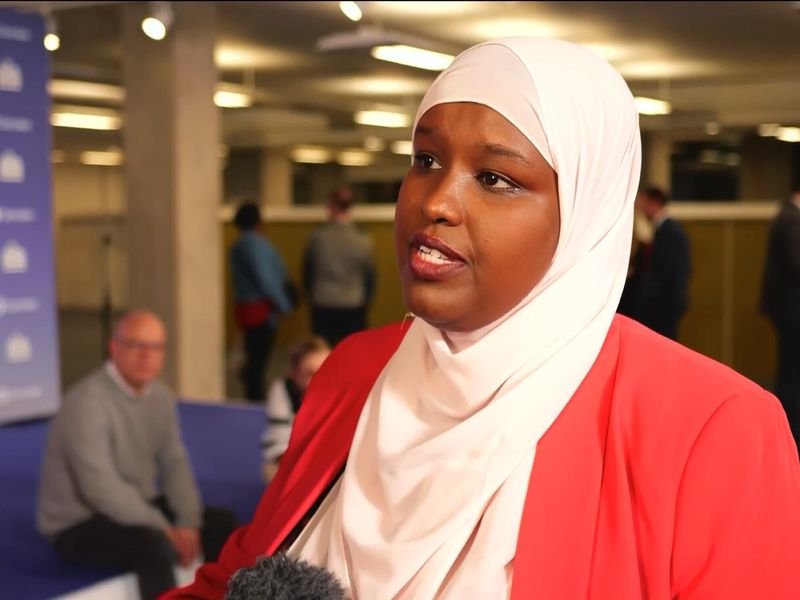
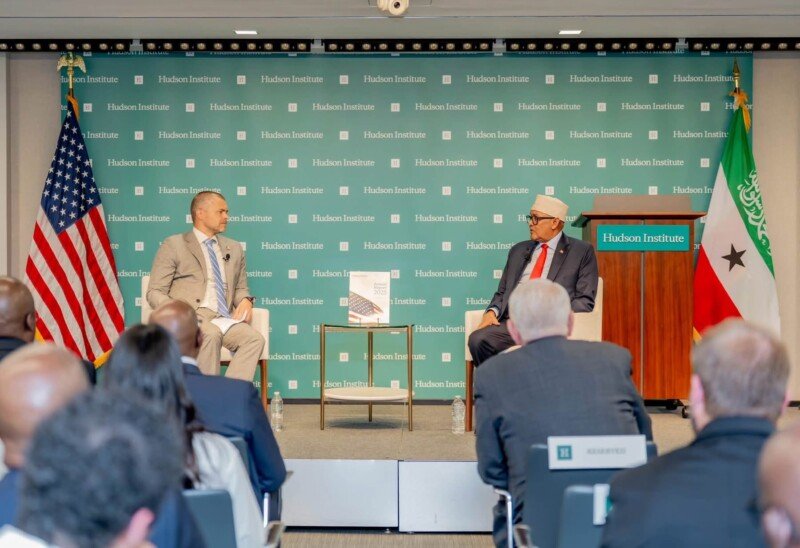
Meservey made the comments in an interview with i24NEWS after moderating a fireside discussion with Irro at the Hudson Institute on September 14. The event was titled “Somaliland as a Strategic Partner in the Horn of Africa.”
Irro used the appearance to present Somaliland as a stable and democratic partner for the United States, focusing on security cooperation, economic ties, and the Port of Berbera .
Social Media Reactions Highlight Concerns Over Preparation
The Hudson Institute appearance generated significant criticism on social media, with analysts and observers questioning Irro’s preparedness for the event and his handling of key questions.
According to posts circulating on X, Irro struggled to provide substantive answers to several questions. When asked why Somaliland lacks international recognition, he reportedly said “I don’t know” and laughed. Asked what minerals Somaliland could offer the United States, he said “I’m not a geologist, I don’t know, maybe everything.” When questioned about how Somaliland secured its coast from piracy, he said “I don’t know, our coastguard don’t have any equipment” .
Commenting on the Sudan question, Irro reportedly said it was “too far” before laughing, rather than using the opportunity to discuss South Sudan’s secession as a precedent for Somaliland’s case.
Analyst Cameron Hudson, a senior fellow at the Center for Strategic and International Studies, wrote on X that the event was not “Irro providing humorous quips” but rather “a frail and aging leader not fully able to deliver the brief that he came here to deliver to a skeptical Washington audience” .
“He did himself and his country a major disservice by being unprepared or incapable of being able to respond convincingly to serious topics that will determine his country’s future,” Hudson wrote. “Irro had no strong arguments and gave no neutral observer any reason to back his vision and his leadership”.
One social media user described it as “easily the worst interview by a Somaliland president, probably ever,” adding that Irro “seemed entirely unprepared to advocate for Somaliland’s core interests”.
US Policy and Regional Context
Washington’s position on Somaliland has remained unchanged despite the diplomatic outreach. AFRICOM Commander General Dagvin Anderson has stated that the United States has no plans to establish a military base in Somaliland, reaffirming Washington’s longstanding policy of supporting the sovereignty, unity, and territorial integrity of the Federal Republic of Somalia.
President Donald Trump said in December 2025 that he did not back recognizing Somaliland. He later indicated that “everything is under study” and that the United States would review the issue before making any decision.
During his visit, Irro also attended an event hosted by the Institute for Black Solidarity with Israel at the residence of Israeli Ambassador to the United States Dr. Yechiel Leiter, where the organization urged the US administration to follow Israel’s lead in recognizing Somaliland’s sovereignty.
Critical Note
Meservey’s assessment and the social media reactions to Irro’s appearance highlight a significant challenge for Somaliland’s diplomatic campaign. The criticism was not limited to hostile observers; it included analysts and commentators who have previously been sympathetic to closer US engagement with Hargeisa.
The specific questions Irro struggled with, the core rationale for recognition, Somaliland’s resource base, its security record, and the South Sudan precedent, are the very issues that would need to be addressed convincingly to shift Washington’s position. His difficulties with these questions suggest that the strategic case for recognition, however valid it may be on the merits, has not yet been articulated in a way that resonates with key US audiences.
For Somaliland’s supporters, the reaction to the Hudson event raises questions about whether the current approach can produce results. Recognition is ultimately a political decision in Washington, and the ability to present a clear and compelling case is essential. The coming months will indicate whether Somaliland can adjust its strategy and whether Irro’s engagements with US officials and lawmakers can overcome the concerns raised by his performance at the Hudson Institute.