MOGADISHU — Somalia’s Independent Constitutional Review and Implementation Commission (ICRIC) has formally requested urgent judicial reform in Mogadishu, while the Speaker of the House of the People has pressed a parliamentary committee to accelerate human rights legislation, as two branches of government move to advance long-stalled institutional reforms.
The parallel efforts, announced within days of each other, reflect a broader push to align Somalia’s institutions with the 2026 constitutional framework and to strengthen the legislature’s oversight role on human rights.
ICRIC Requests Urgent Judicial Reform
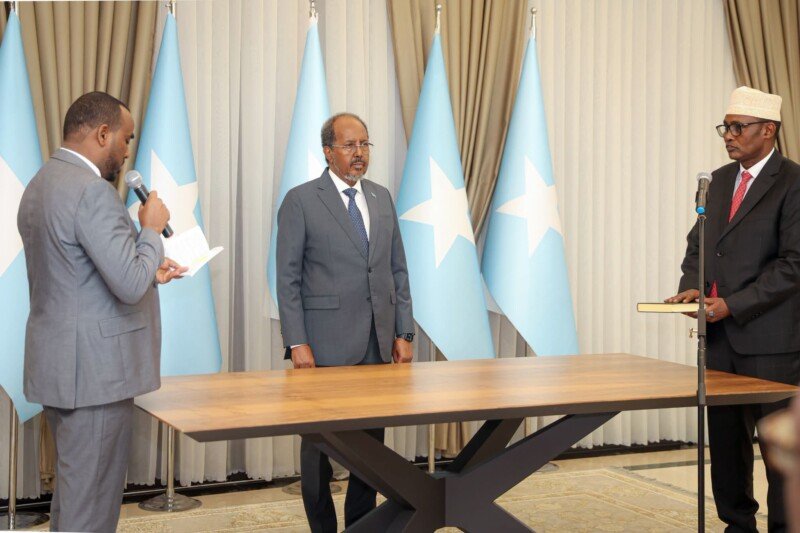
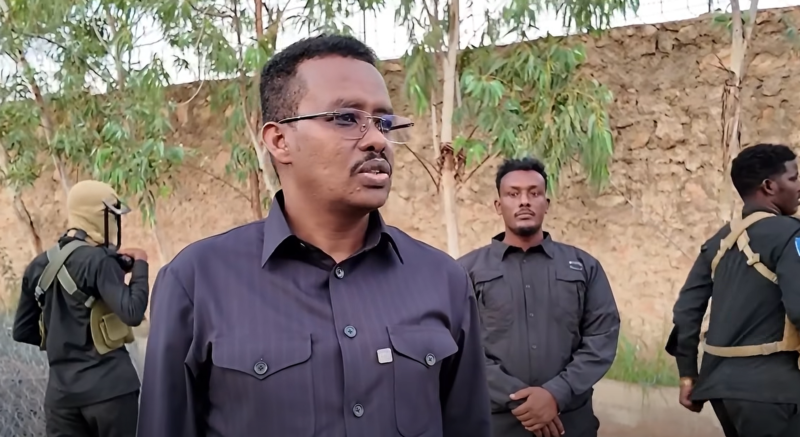
ICRIC Chairman Avv. Burhaan Aadan Cumar sent a formal letter to the Chief Justice of the Supreme Court, requesting urgent action to reform the judiciary in the capital. The letter calls for the implementation of constitutional provisions relating to Mogadishu’s courts, in order to align their structure and functioning with the Federal Republic of Somalia’s Constitution.
Avv. Burhaan based his request on Articles 63, 129, and 132 of the Constitution, as well as Article 191, paragraph two, which he cited as the foundation for this alignment.
The 2026 constitutional amendments, signed into law by President Hassan Sheikh Mohamud on 8 March 2026, introduced significant changes to the judicial branch. Under the amended framework, Article 129 establishes a five-tier court system, and the Constitution formally recognizes the judicial status of the capital, granting it a High Court structure comparable to those of the Federal Member States. As detailed in FTL Somalia’s coverage of the constitutional review timeline, the commission has set October 14, 2026, as the deadline for key amendments, and the judicial reform request comes as that deadline approaches.
The request comes amid ongoing efforts to implement Somalia’s Constitution and harmonize government institutions and their legal frameworks with constitutional provisions. As reported in FTL Somalia’s coverage of ICRIC’s proposed amendments, the commission has been actively engaged in the review process, including proposed changes to Chapters 5 through 9 of the constitution. The constitutional review process that produced the 2026 amendments has been contested by Puntland and Jubaland, both of which have rejected the legitimacy of the amended constitution.
Speaker Presses Human Rights Committee on Pending Legislation
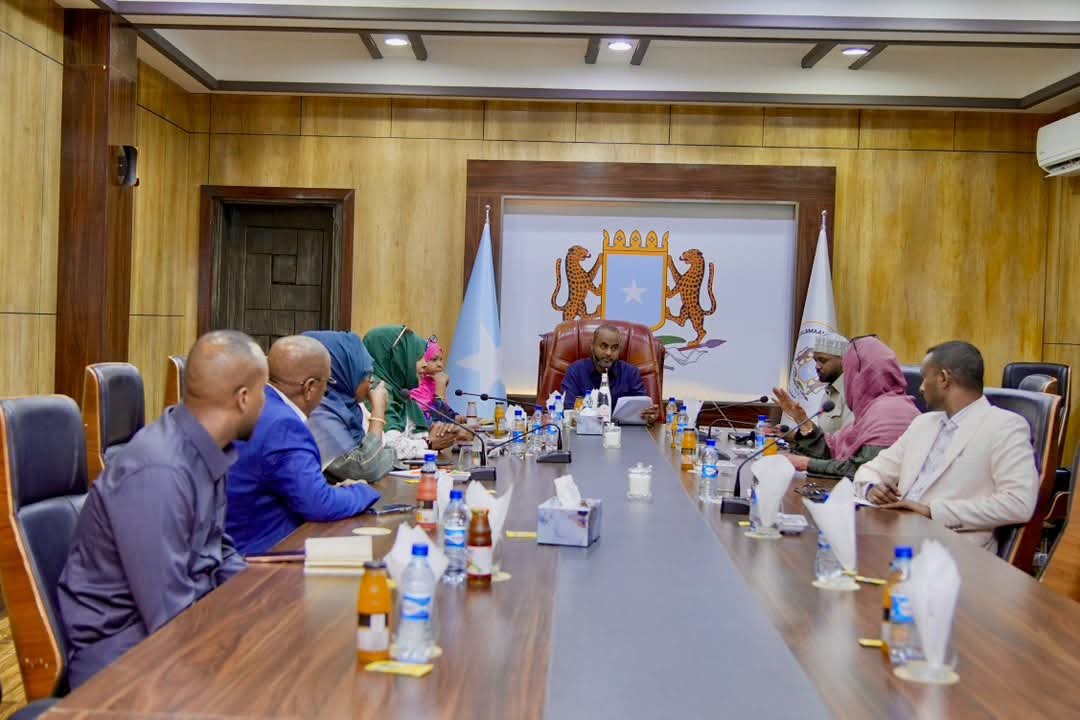
In a separate development, Speaker of the House of the People Abdulkadir Mohamed Nur (Jamac) held a meeting with the Committee on Human Rights, Women and Humanitarian Affairs, urging the committee to accelerate its work and complete pending legislative drafts for submission to the House.
The Speaker specifically directed the committee to prioritize legislation related to the rights of women, the family, and children. He said the House of the People is committed to strengthening its legislative and oversight role, particularly in protecting the rights of Somali citizens, to ensure the protection of every citizen’s rights and dignity and to achieve equal justice.
The meeting comes amid broader institutional challenges for the House of the People, which has repeatedly failed to achieve quorum in recent weeks. As reported in FTL Somalia’s coverage of the quorum failures, only 115 members attended the 21st sitting of the 8th Plenary Session, falling well short of the 138 required. The House has also struggled with absenteeism, with some MPs facing salary deductions for missing sessions.
A Broader Push for Institutional Reform
The two developments, while focused on different institutions, share a common objective: advancing reforms that have been delayed by political disputes and institutional dysfunction.
The judicial reform request is part of the broader effort to implement the amended constitution. Progress has been made on some fronts. In July 2026, Somalia’s Council of Ministers approved four members of the Judicial Service Commission, a body seen as a crucial pillar of judicial independence. In November 2025, Prime Minister Hamza Abdi Barre opened the First National Justice Forum, where he stated that “without trustworthy justice, there can be no lasting security, public confidence, investment, or the modern statehood Somalia deserves.”
The human rights legislation push reflects the Speaker’s stated commitment to strengthening the House’s legislative role. The committee’s focus on women, family, and children’s rights addresses areas where Somalia’s legal framework remains incomplete and where international partners have consistently urged progress. As reported in FTL Somalia’s coverage of ICRIC’s efforts to accelerate the review, the commission has also engaged youth and women in the constitutional process, recognizing that broad participation is essential to producing a framework that reflects Somali society.
Critical Note
Both the ICRIC request and the Speaker’s directive are procedural steps in a much larger and more contentious process. The constitutional amendments of March 2026 fundamentally restructured Somalia’s judiciary, but they did so without the consent of key federal member states. Implementing these changes in Mogadishu may be more straightforward than in states that reject the amended constitution’s legitimacy.
The urgency of judicial reform is not in question. Somalia’s courts are widely perceived as slow, expensive, and susceptible to political interference. The National Justice Forum in 2025 highlighted the government’s own recognition that the justice system requires fundamental strengthening.
The Speaker’s meeting with the Human Rights Committee is similarly welcome, but its impact will be measured by whether the committee produces legislation that the full House can actually pass. The House’s repeated quorum failures are a reminder that even the best-intentioned committee work can stall when members do not attend sessions. The Speaker’s directive to accelerate committee work is necessary; ensuring that the House can convene to act on that work is equally so.
For ordinary Somalis, the practical question is whether these institutional reforms translate into tangible improvements: faster and fairer court rulings, stronger protections for women and children, and a legislature that actually legislates. The processes announced this week are steps in that direction. Whether they produce results depends on follow-through.
Share your story. FTL Somalia is continuing to investigate Somalia’s constitutional implementation process, judicial reform, and legislative progress. If you have information or insights to share, contact us at info@ftlsomalia.com. Your identity will be protected.