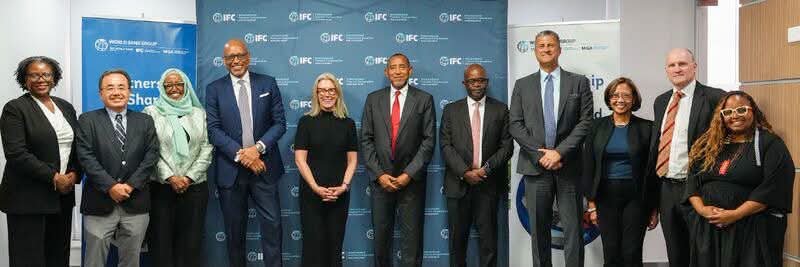
MOGADISHU — The International Finance Corporation (IFC) has made its first-ever investment in Somalia, committing a $2.8 million Sharia-compliant financing package to KIMS Microfinance that aims to expand access to credit for small businesses across the country.
The package, anchored by a $1 million loan from IFC’s own account, represents a landmark step in bridging Somalia’s financial inclusion gap. In Somalia, fewer than 2 percent of businesses receive formal financing, with most small business owners having no access to credit despite viable business models, according to IFC.
The investment targets ambitious growth: from approximately 5,200 microloans currently, KIMS aims to reach 10,000 borrowers by 2028 and 100,000 first-time clients by 2030. The financing structure includes a first-loss guarantee from the IDA20 Private Sector Window and co-financing from AtoZ Foundation and Symbiotics, mobilizing an additional $1.8 million in private capital.
A Market Built on Islamic Finance
KIMS Microfinance has previously secured Sharia-compliant investment aimed at expanding access to clean and affordable energy for Somali households and small businesses. The deal was facilitated through Acumen’s Hardest-to-Reach initiative and supported by the United Kingdom.
The new IFC-backed package builds on this foundation. KIMS offers Sharia-compliant loans designed for the Somali market, including products such as the Khadija Loan, which targets women entrepreneurs directly. The microfinance institution’s work already supports over 40,000 jobs across Somalia.
IFC has partnered with KIMS since 2018 and is now backing the institution with this landmark investment. The financing is structured to be accessible to Somali families and entrepreneurs often excluded from traditional financing systems, with the Sharia-compliant structure aligning with local cultural and religious values.
Building Investor Readiness Through SOMINA
The investment is part of broader efforts to strengthen Somalia’s private sector and attract foreign direct investment. The Somalia Investment Promotion Office has engaged with regional partners, including the Nairobi Securities Exchange, to develop strategies for mobilizing investment and addressing development financing gaps.
Complementing these efforts, the Central Bank of Somalia has announced readiness to join the Inclusive Instant Payments Initiative, a program that could reduce transaction costs and open new opportunities for businesses. Governor Abdirahman Mohamed Abdullahi emphasized that instant payments are the backbone of modern economies and that Somalia’s participation would accelerate financial inclusion.
A parallel initiative, the Somali Investment Academy (SOMINA), has been training Somali professionals and business leaders to attract investment and strengthen their enterprises. Launched in partnership between IFC and Strathmore University Business School in Nairobi, SOMINA has already trained 58 professionals across sectors including agriculture, finance, telecommunications, energy, and healthcare.
Critical Note
The IFC’s first investment in Somalia is a significant vote of confidence in the country’s private sector and its microfinance institutions. By structuring the financing as Sharia-compliant and mobilizing additional private capital, IFC has demonstrated that innovative financial instruments can work in fragile contexts when designed with local realities in mind. The focus on KIMS, an institution with a track record of reaching underserved communities, increases the likelihood that the capital will reach the small businesses that need it most.
The scale of the challenge remains substantial. With fewer than 2 percent of Somali businesses accessing formal financing, the $2.8 million package is a starting point rather than a solution. For Somalia to achieve meaningful financial inclusion, far larger investments will be required, alongside continued reforms to strengthen the banking sector, improve credit information systems, and expand digital payment infrastructure. The IFC investment signals that Somalia is open for business, but it also underscores how much work remains to be done.
The focus on Sharia-compliant financing is particularly important in the Somali context. By aligning financial products with the religious and cultural values of the majority of the population, institutions like KIMS can overcome barriers that have historically excluded many Somalis from formal finance. If this model proves successful and can be scaled, it could provide a template for expanding financial access across the country.