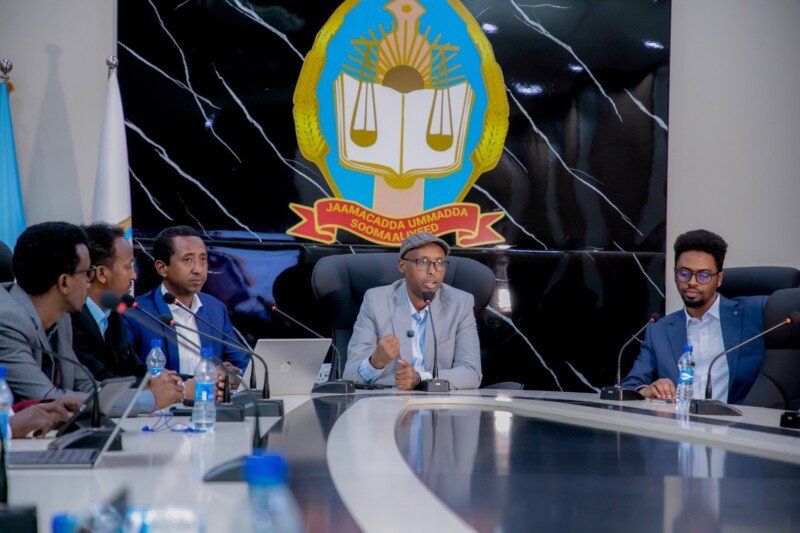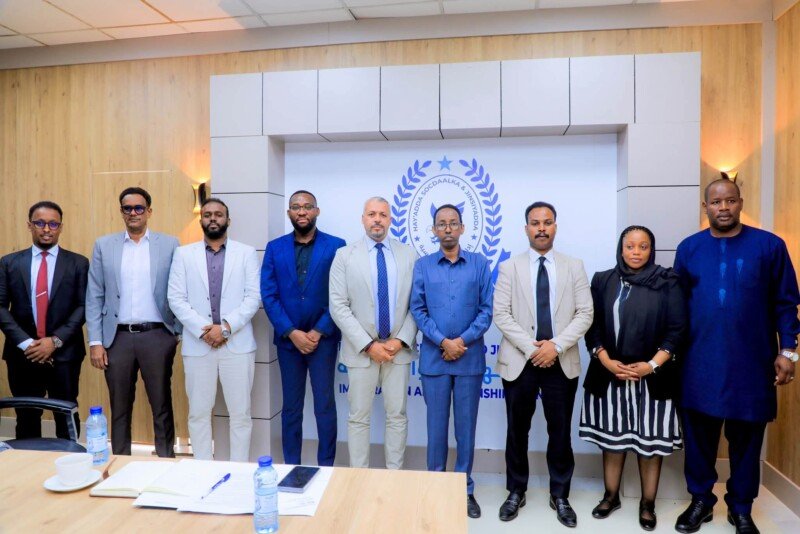
MOGADISHU — The Director General of Somalia’s Immigration and Citizenship Agency (ICA), Hussein Qasim Yusuf, hosted a delegation led by Idriss Mounir Lallali, Acting Director of the African Union Counter-Terrorism Centre (AUCTC), at the agency’s headquarters in Mogadishu to discuss strengthening cooperation on security, travel, and border management.
The meeting focused on enhancing coordination between Somalia and African Union institutions on counter-terrorism, border security, and the management of cross-border movements. Key agenda items included sharing security and travel information, and monitoring the movements of individuals suspected of involvement in terrorist activities, particularly those crossing Somalia’s borders.
The ICA presented its progress in securing and verifying border security using modern technology and digital systems for managing travel data. These systems were described as contributing to improved travel data management, strengthened legal travel, and enhanced government capacity to identify movements that may pose security risks to the country.
Both sides emphasized the importance of sustained cooperation and information exchange between Somali government institutions and regional bodies to address cross-border security threats.
Director General Yusuf stressed the importance of close cooperation between Somalia and regional institutions, stating that such collaboration is essential for strengthening efforts to prevent terrorism and cross-border crimes while facilitating legal travel.
Broader AU Counter-Terrorism Engagement
The meeting comes as the African Union Counter-Terrorism Centre launched its first national counter-terrorism assessment mission in Somalia, marking a significant step in continental efforts to strengthen Somalia’s security capabilities.
The assessment mission is part of the broader security transition as African Union forces reduce their presence and transfer responsibilities to Somali forces. The AUCTC mission aims to evaluate Somalia’s existing defense infrastructure, review operational achievements of national institutions, and identify critical areas requiring technical support and capacity building.
During separate meetings with Somalia’s Ministry of Defense, State Minister for Defense Omar Ali Abdi stressed that African Union support must directly reinforce Somalia’s strategic goals for security and stabilization. The discussions covered counter-terrorism cooperation, intelligence sharing, and strategies to disrupt illicit financial networks.
The ICA has been actively modernizing its border management capabilities, including the launch of a week-long training programme on the advanced PISCES 10 border management system. The system enables biometric identification, passenger data management, document verification, and integration with international databases including INTERPOL I-24/7 and IOM MIDAS.
President Hassan Sheikh Mohamud has previously commended the ICA’s reform efforts, describing the agency’s work as vital to the sovereignty and security of the Somali state. The agency has introduced new Standard Operating Procedures that reduced passport processing times and linked new passports to the National ID database to strengthen identity verification.
Critical Note
The meeting between Somalia’s Immigration and Citizenship Agency and the African Union Counter-Terrorism Centre reflects the growing emphasis on border security and information sharing as essential components of counter-terrorism strategy. As Somalia prepares to assume greater responsibility for its national security amid the AUSSOM transition, the role of agencies like the ICA in monitoring cross-border movements and preventing the infiltration of militant elements becomes increasingly critical.
However, the effectiveness of these efforts depends on more than technical systems and training programmes. Border security requires not only modern equipment and digital databases but also adequate staffing, inter-agency coordination, and sustained political commitment to address the root causes that enable militant groups to operate across borders. The AUCTC’s assessment mission provides a framework for identifying gaps, but translating those findings into concrete improvements will require resources and follow-through.
The timing of this engagement is significant. With AUSSOM’s mandate facing funding uncertainties and the United States signaling opposition to its continuation beyond 2027, Somalia’s ability to secure its own borders and share intelligence effectively with regional partners will be tested in the coming years. The ICA’s modernisation efforts are a necessary step, but they must be part of a broader, coordinated approach that includes Kenya, Ethiopia, Djibouti, and other regional actors who share an interest in preventing Al-Shabaab and other militant groups from exploiting cross-border movements.
Recommended Reading On ftlsomalia.com
- Somali Army Trains Local Recruits in Wajid Ahead of AUSSOM Security Handover
- Somalia’s Immigration Agency Launches Week-Long Training on Advanced Border Security System
- Somalia President Commends Ongoing Reforms at Immigration Agency
- Foreign Ministry Boosts Passport and Immigration Collaboration
- Deputy Premier Witnesses Leadership Transition at Immigration Agency