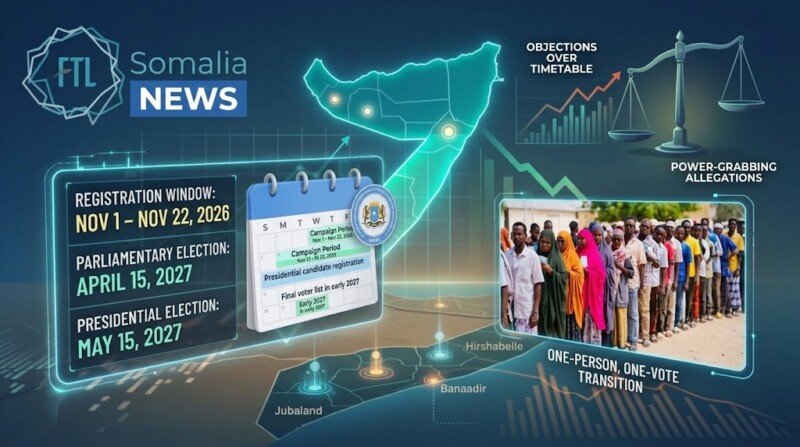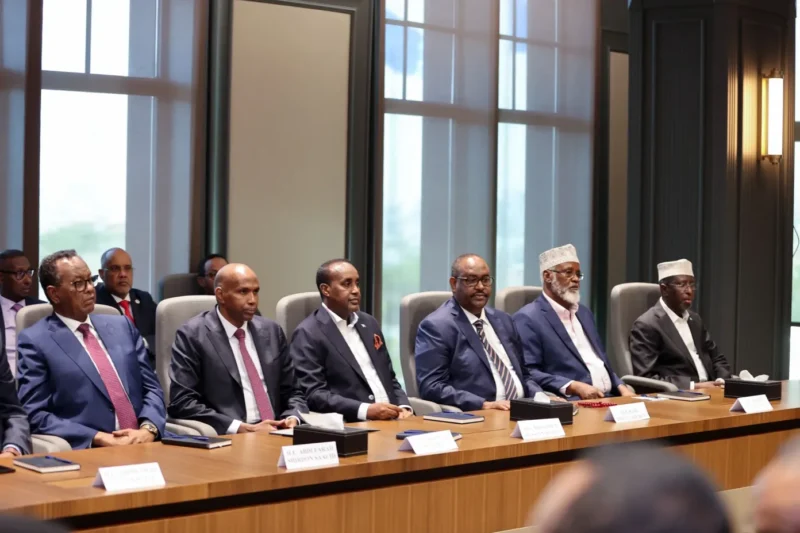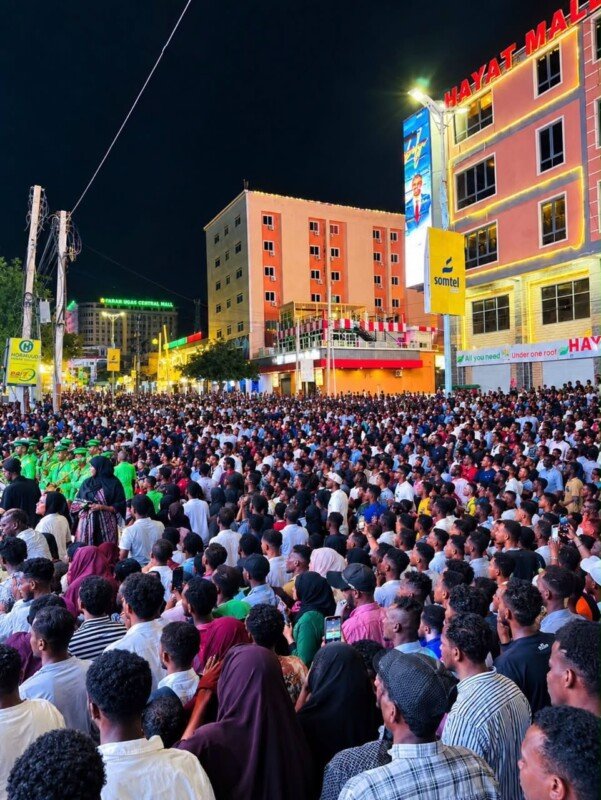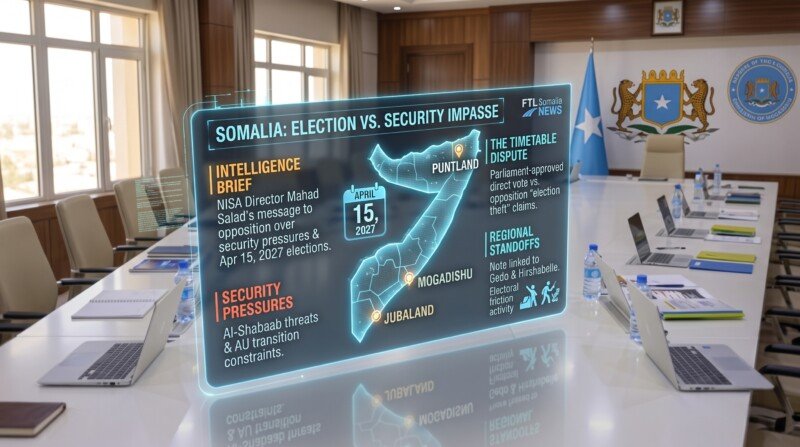
MOGADISHU, Somalia’s National Intelligence and Security Agency (NISA) Director Mahad Mohamed Salad has met with opposition figures in Mogadishu over the past two days, conveying what sources describe as a warning about the country’s security situation and the need to proceed with the scheduled April 15, 2027 elections.
Salad told the opposition members that the country is facing security pressures and that it is important for the election to take place. His message was that the opposition should accept President Hassan Sheikh Mohamud’s call for dialogue and engage with the election process he has scheduled.
The intelligence chief’s outreach follows a similar effort by former Prime Minister Omar Abdirashid Ali Sharmarke, who reportedly delivered a comparable message to the opposition in recent days. Both messages appear to be built on a shared premise: that security pressures, political fragmentation, and the opposition’s refusal to accept the President’s terms could push the country to a point where even the election itself is no longer negotiable.
An Intelligence Chief as Political Envoy
The direct involvement of the NISA director in political mediation is unusual, and it raises questions about the role of the security apparatus in Somalia’s electoral dispute. The NISA is tasked with counterterrorism, intelligence gathering, and internal security. It is not a political mediation body. Deploying its director to persuade opposition figures to accept the election timetable blurs the line between security and politics in a way that opposition figures are likely to view with suspicion.
The opposition has already rejected the timetable announced by the National Independent Electoral and Boundaries Commission, accusing the government of “election theft” and “power-grabbing.” Former President Mohamed Abdullahi Farmaajo has called for renewed dialogue and warned of parallel elections. Puntland President Said Abdullahi Deni has gone further, calling on Mohamud to resign and dismissing a national consultative forum scheduled for mid-November as a waste of time, as Deni rejected the federal election process outright and demanded an interim council to lead the country to elections.
Deni’s position is not isolated. He has accused Mohamud of refusing an agreed election and obstructing dialogue, and Puntland has formally withdrawn from the federal electoral process, as Puntland declared it would not participate in the government-led process. The opposition’s objections center on the process, not merely the dates. The decision to move to a direct voting system, and the constitutional changes that accompanied it, were approved by parliament without the broad political consensus that previous electoral transitions in Somalia have required.
The Security Context
The security pressures Salad cited are real. Al-Shabaab remains a potent threat, and the government is managing a security transition as the African Union mission faces funding constraints and the withdrawal of Ugandan troops. The battle near Leego in October, in which the military claimed to have killed dozens of militants but disclosed limited information about its own casualties, underscored the ongoing cost of the campaign.
But the security argument cuts both ways. A rushed election conducted without broad political agreement could itself become a source of instability. The risk of parallel electoral processes, which former President Sharif Sheikh Ahmed has explicitly warned about, is not hypothetical. The Gedo region has already demonstrated how unilateral electoral moves can trigger confrontation. In May, Gedo Governor Abdullahi Shimbir warned that any election held in the area must adhere to legal frameworks and include broad consultation, stating that regional authorities had been excluded from electoral planning, as the governor cautioned against unilateral elections amid the federal-Jubaland standoff.
The pattern extends beyond Gedo. In Hirshabelle, armed Macawiisley fighters seized voter registration centers in Beledweyne in September, disrupting preparations for regional elections and citing political and security concerns surrounding the planned vote, as the militia challenged the electoral process. The intervention underscored the fragility of the electoral environment and the limited reach of state authority in parts of the country.
The intelligence chief’s own record adds another layer of complexity. Mahad Salad has been at the center of a political rift within the federal government over the Galmudug presidency, with reports that he sought the regional presidency himself, as the rift over Galmudug leadership exposed fractures in the President’s closest circle. His involvement in electoral mediation, given his own political ambitions, is unlikely to be seen as neutral by the opposition.
Critical Note
The NISA director’s meetings with opposition figures are a sign that the government understands the gravity of the political impasse. But sending the intelligence chief to deliver a political message is not mediation. It is pressure dressed as dialogue. The opposition is being told that the election will happen with or without them, and that the security situation leaves no room for the kind of consensus-building they have demanded.
That may be the government’s honest assessment. But if the election proceeds without the participation of the two former presidents, without Puntland and Jubaland, and without the opposition alliance that has rejected the timetable, the result will not be a national election. It will be a unilateral exercise by the incumbent, and it will be treated as such by the public, by federal member states, and by international partners.
The intelligence chief’s message was that security pressures make the election essential. The opposition’s counter-argument is that political consensus makes the election legitimate. Both are right. The question is whether the government is willing to address the legitimacy problem, or whether it intends to rely on the security argument to carry it through an election that a significant portion of the political class will not accept.
Recommended Reading On ftlsomalia.com
- Deni Tells Mohamud to Resign, Dismisses November Forum as a Waste of Time
- Puntland’s Deni Rejects Federal Election Process
- Gedo Governor Warns Against Unilateral Elections Amid Federal-Jubaland Standoff
- Armed Macawiisley Militia Challenges Hirshabelle Electoral Process in Hiiraan
- Growing Rift Over Galmudug Leadership at Villa Somalia