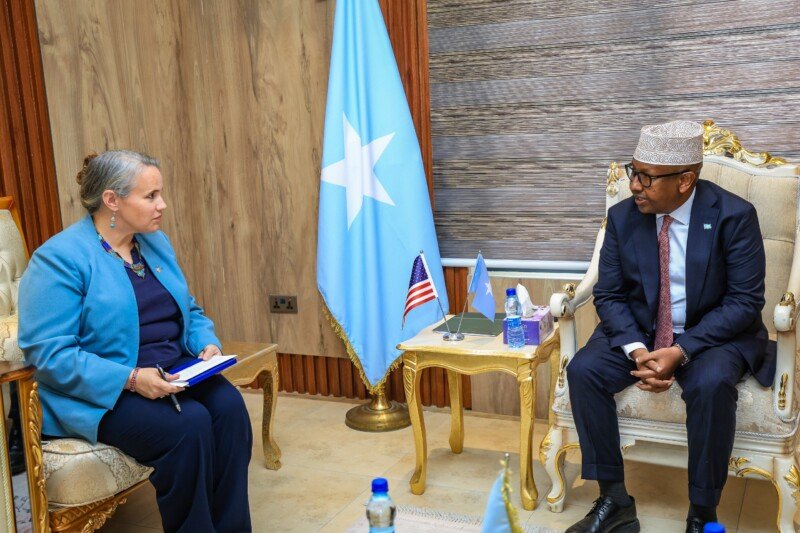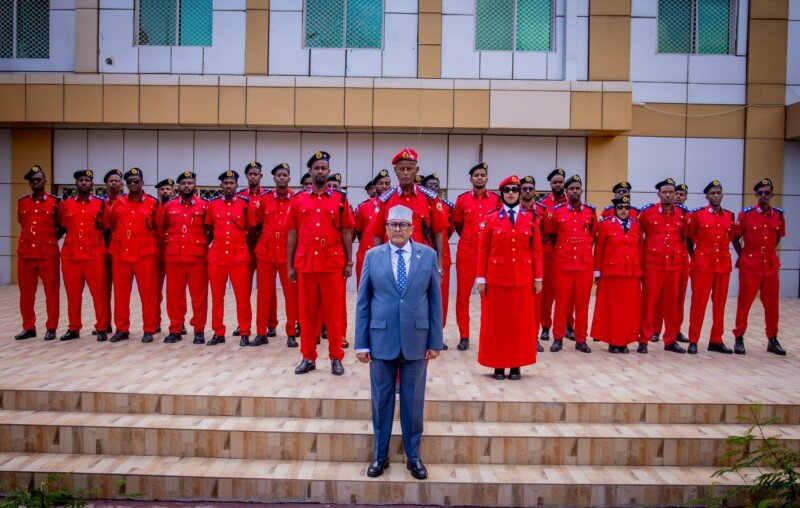
BOSSASO — INTERPOL has completed a dedicated action week in Bossaso, registering 34 suspects linked to terrorism-related crimes and delivering hands-on forensic training to Somali law enforcement officers.
The operation, conducted alongside the Puntland Maritime Police Force and Somali law enforcement, involved INTERPOL’s fingerprint expert delivering training on the use of next-generation biometric devices. National officers then conducted field visits to two detention facilities to apply the training in practice.
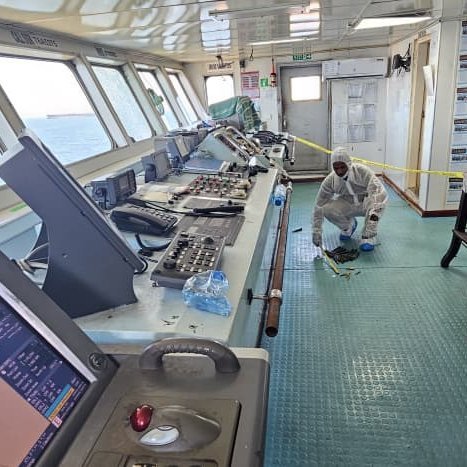
The team also briefed Somali authorities ahead of the examination of the MT Honour 25, a vessel hijacked in a piracy attack in April 2026. INTERPOL advised on the packaging and secure transport of crime scene evidence to the laboratory for potential fingerprint extraction.
The Red Sea Project and Somali Capacity Building
The action week was delivered under INTERPOL’s Red Sea Project, which is funded by the European Union and aims to strengthen maritime law enforcement capabilities in the region. The project, which runs from 2021 to 2026 with a budget of EUR 6.1 million, is part of the EU’s Regional Programme for Maritime Security in the Red Sea and is implemented jointly by INTERPOL, the International Maritime Organization, IGAD, and the UN Office on Drugs and Crime.
Somalia is one of five beneficiary countries, alongside Djibouti, Ethiopia, Sudan, and Yemen. The project focuses on three pillars: training and capacity building, provision of technical equipment, and regional maritime security operations.
Previous activities under the project have included crime scene investigation training for Somali officers in June 2023, instructor development courses, and the provision of technical equipment including crime scene investigation kits, digital forensics devices, and biometric collection equipment. As reported in FTL Somalia’s coverage of Somalia’s forensic partnerships, Somalia has also engaged Turkish institutions specializing in forensic science, crime scene analysis, and digital investigations to train law enforcement personnel and establish modern laboratories.
The MT Honour 25 Hijacking
The MT Honour 25, a Palau-flagged oil tanker, was hijacked by Somali pirates on 21 April 2026 approximately 30 nautical miles off the coast of Hafun in Puntland. The vessel was carrying approximately 18,500 barrels of refined products and had a crew of 17, including 10 Pakistani nationals.
The pirates initially demanded a $7 million ransom. In late September 2026, Puntland maritime police launched an operation to free the vessel. During the operation, five crew members were killed by the pirates before the assault began, including three Pakistanis, one Indian, and one Myanmar national. Four other crew members were wounded. Sixteen suspected pirates were arrested.
The hijacking of the MT Honour 25 marked the beginning of a series of attacks in 2026, with at least seven merchant vessels seized and more than 100 seafarers taken hostage. As reported in FTL Somalia’s coverage of the piracy resurgence, Somali pirates were responsible for eight vessel hijackings from January to September 2026 and accounted for 94 percent of all crew members taken hostage globally.
Broader INTERPOL Cooperation with Somalia
The action week is part of a broader pattern of INTERPOL engagement with Somali law enforcement. In September 2026, Somalia’s Minister of Internal Security, Abdullahi Sheikh Ismail Fartaag, attended the 93rd INTERPOL General Assembly in Marrakech, Morocco, where he held discussions with INTERPOL President Ahmed Nasser on strengthening security cooperation.
In 2024, Foreign Minister Ahmed Moalim Fiqi met with INTERPOL Secretary General Jürgen Stock on the sidelines of the UN General Assembly, emphasising the need for continued collaboration to strengthen Somali law enforcement’s capacity in tackling terrorism, cybercrime, and illicit trafficking.
INTERPOL has also worked with EUCAP Somalia on maritime crime scene investigation training in Puntland, including a January 2026 exercise at Bossaso Seaport that trained 22 law enforcement officers, including four women. As reported in FTL Somalia’s coverage of the Police Chief’s engagement with international partners, General Asad has prioritised cooperation with foreign counterparts to strengthen the force’s capacity.
The Somali Police Force has also invested in developing its future leadership. As detailed in FTL Somalia’s coverage of the leadership training programme, the force has launched a leadership training admission exam for future commanders, a measure intended to professionalise the officer corps and strengthen the chain of command.
Critical Note
INTERPOL’s action week in Bossaso represents a tangible, if modest, investment in Somalia’s forensic capacity. The registration of 34 suspects linked to terrorism-related crimes, and the training of Somali officers on biometric devices, are concrete steps toward building the investigative infrastructure that Somalia has long lacked.
However, the scale of the challenge should not be underestimated. Somalia’s forensic capacity remains severely limited. The country’s Forensic Science Laboratory, established in 2016, has basic DNA collection and packaging capabilities but lacks an advanced DNA analysis facility. Samples are sent to South Africa, delaying results by up to three months and weakening court cases.
The involvement of INTERPOL in the MT Honour 25 investigation is notable, but the vessel’s fate also illustrates the limits of forensic support. Five crew members were killed before Puntland forces intervened, and sixteen suspects were arrested. Whether those suspects will be prosecuted effectively depends not only on fingerprint evidence but on a functioning judicial system and detention facilities that can hold them securely.
The Red Sea Project has a limited timeframe, ending in November 2026. The sustainability of the capacity built during its implementation will depend on whether Somali institutions can retain trained officers, maintain equipment, and continue using the forensic protocols they have learned. Without that, the investment risks becoming a one-off exercise rather than a foundation for lasting capability.
Recommended Reading On ftlsomalia.com
- Gambia, Somalia Partner with Türkiye to Boost Forensic Investigation Capacity
- Somali Police Chief Chairs Weekly Security Meeting on Piracy and Budget
- Somali Police Chief Discusses Security Cooperation with Turkish Delegation
- Somali Police Launches Leadership Training Admission Exam for Future Commanders
- Somalia’s Darawiish Commandos Complete Advanced Training in Mogadishu