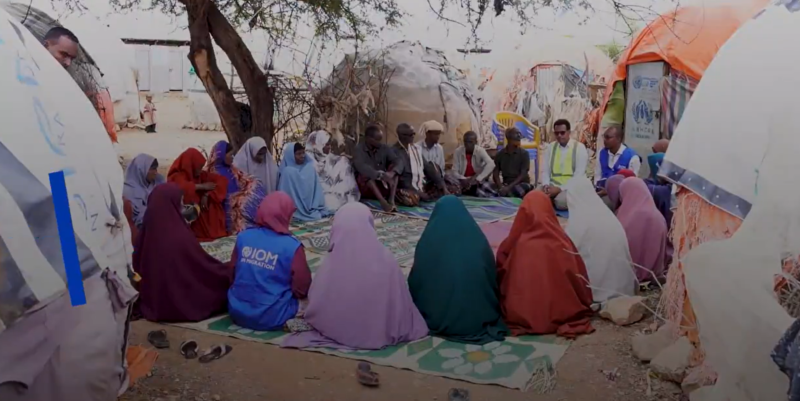
BAIDOA, The International Organization for Migration has trained 129 community volunteers in Baidoa to help displaced and host communities prepare for El Niño-related flooding, as part of an effort to turn early warnings into early action.
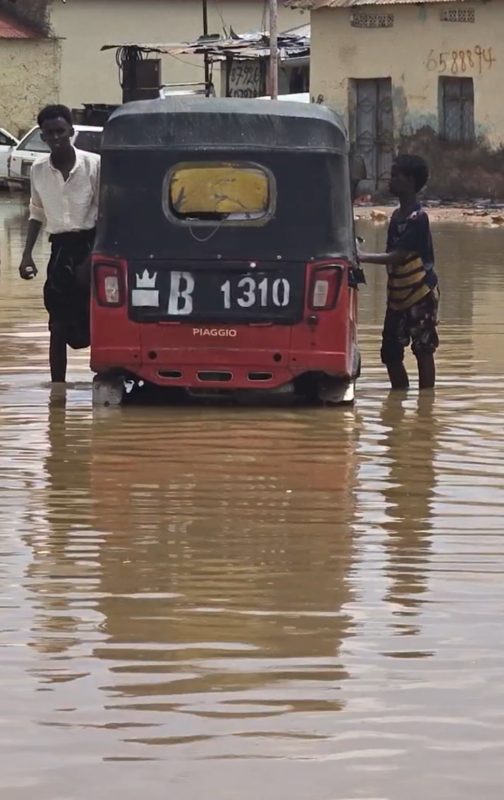
The volunteers are sharing life-saving information with families in one of the districts most exposed to the projected floods. Baidoa has already experienced heavy rainfall that damaged homes and forced families to flee several neighbourhoods, and it hosts a large displaced population that humanitarian agencies have identified as facing catastrophic levels of hunger if flooding intensifies.
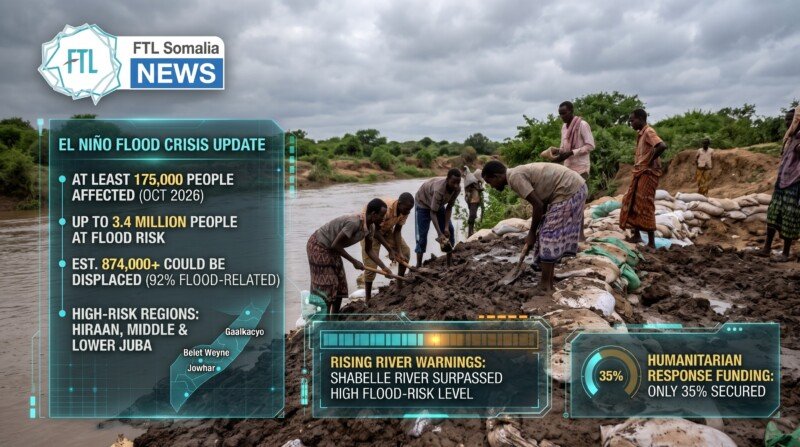
The initiative comes as IOM warns that nearly 874,000 people could be displaced across Somalia between October and December, with flooding accounting for 92 percent of the projected displacement. The agency has secured only about 14.4 percent of the $16.62 million it needs to prepare for and respond to the floods, a shortfall that is already constraining efforts to establish safe relocation areas and provide essential shelter, clean water, sanitation, and healthcare.
A Positive Sign from the Local Government
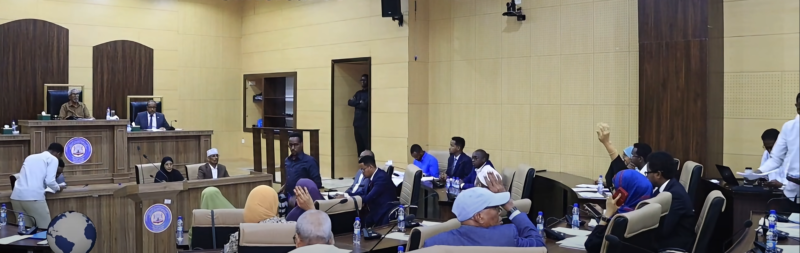
As the international response grapples with funding shortfalls, the Baidoa District Administration has taken a step toward institutionalizing local climate governance. On August 31, 2026, District Commissioner and Mayor Ibrahim Mohamed Nor (Kalay) appointed Ayan Mustaf Ali as the Director of the newly established Department for Climate Change, Disaster Management, and Nature-Based Solutions.
The appointment, made under Articles 18, 19, and 20 of the South West State Local Government Law, creates a dedicated local office responsible for coordinating climate adaptation and disaster response. It signals a recognition that the district, rather than solely the federal government or international agencies, must play a lead role in managing the recurring environmental shocks that devastate the region. Ayan Mustaf Ali’s appointment is a positive sign that local authorities are beginning to build the institutions needed to address these long-term risks.
However, the creation of the department highlights the gap between institutional ambition and capacity. The directive does not mention a budget, a staffing plan, or a strategy, meaning the new director will have to coordinate with international agencies and state ministries, likely without dedicated resources of her own.
A Community-Led Model in an Underfunded System
The use of community volunteers is a deliberate strategy in a context where the humanitarian system cannot reach everyone at risk. IOM has described the volunteers as the frontline of its preparedness efforts, relying on them to disseminate warnings, identify vulnerable families, and support evacuation planning at the neighbourhood level. The model reflects a broader shift in Somalia’s flood response toward anticipatory action, in which pre-arranged financing and community networks are activated before a disaster peaks rather than after.
But the model also reflects a gap. The 129 volunteers in Baidoa are a modest presence in a district that hosts hundreds of thousands of displaced people. Their ability to reach everyone who needs warning and support depends on resources that IOM does not currently have. The agency’s funding shortfall means that plans for safe relocation sites, emergency shelter, and sanitation remain severely constrained.
The stakes in Baidoa are particularly high. The Integrated Food Security Phase Classification has projected that nearly 26,000 internally displaced people in the district could face Catastrophe levels of hunger between October and December, with a risk of famine under a worst-case scenario involving severe flooding and reduced humanitarian assistance. The volunteers, and now the new local climate department, are working in a context where the consequences of a failed warning are not abstract.
Critical Note
The 129 volunteers in Baidoa deserve recognition. They are doing work that the state and the international system cannot do alone, and they are doing it in a district where the margin between preparedness and catastrophe is thin. The appointment of Ayan Mustaf Ali to lead the new climate and disaster management department is a welcome complement to their efforts, signaling that local government is beginning to take ownership of a crisis that will not disappear.
But neither the volunteers nor the new department should be romanticized. Community volunteers are not a substitute for funded infrastructure, and a new local department without a budget is a structure without a strategy. They are stopgaps, and they are being asked to carry a burden that should be shared by a humanitarian system that is currently funded at less than 15 percent of what it needs for this crisis. The volunteers can share information. The new director can coordinate. Neither can build a dyke, stock a shelter, or guarantee that a family has somewhere safe to go.
The IOM’s initiative and the Baidoa administration’s appointment are necessary and creative responses to a funding crisis. But the funding crisis is the story. If the international community is relying on 129 volunteers and an unfunded local office to mitigate a flood that could displace hundreds of thousands of people, it is not doing enough. The volunteers and the new director are doing their part. The donors are not.
Recommended Reading On ftlsomalia.com
- IOM Warns 874,000 Could Be Displaced as Floods Threaten Somalia
- 175,000 Affected as El Niño Floods Hit Somalia, With 3.4 Million at Risk
- ‘We Must Act Now’: WFP Calls for Urgent Action as Floods Ravage Somalia
- Shabelle River Nears Flood Alert Level at Jowhar as El Niño Rains Intensify
- Governance Vacuum Fuels Clan Mobilisation in Lower Shabelle Following Al-Shabaab Withdrawal