MOGADISHU, Iran has condemned Israel’s appointment of an ambassador to Somaliland, describing the move as a plot to destabilize Islamic countries and sow division among nations in the region.
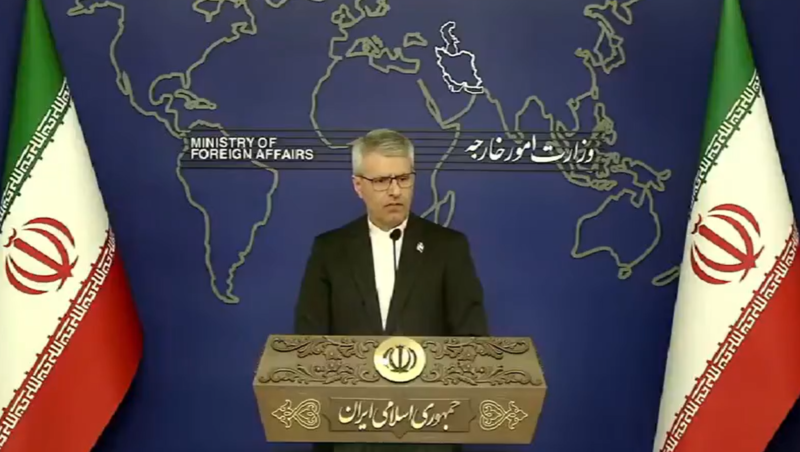
In a statement attributed to Foreign Ministry Spokesperson Esmail Baghaei, Iran said the Israeli regime is “itself illegitimate, founded on the usurpation of a land, and naturally seeks to build alliances and sow division and discord among regional and Islamic countries.” The statement called the appointment a clear contradiction of the UN Charter and international law, and a violation of Somalia’s sovereignty, independence, and territorial integrity.
The condemnation came as Israel’s Ambassador to Somaliland, Michael Lotem, presented his credentials to Somaliland President Abdirahman Mohamed Abdullahi in Hargeisa, followed by a cornerstone-laying ceremony for Israel’s new embassy, an event described by Tel Aviv as another step following the mutual recognition agreement of December 26, 2025.
Iran’s statement is not an isolated intervention. It reflects a broader diplomatic consensus that has formed against Israel’s recognition of Somaliland, one that includes Somalia’s federal government, the Arab League, the African Union, and the Organization of Islamic Cooperation.
The Regional Consensus Against Recognition
Somalia’s federal government has categorically rejected the Israeli move, describing it as a “null, void, and illegal act that carries no political or legal consequences.” Mogadishu has maintained that Somaliland remains an integral part of its sovereign territory, a position that has been endorsed by the African Union and the OIC, both of which have warned that the unilateral recognition threatens regional stability. As President Hassan Sheikh Mohamud stated in October, Israel’s moves are part of a strategy to establish a naval base in Berbera and use the city’s airport, describing the recognition as an “existential threat” to Somalia’s unity.
The Arab League has also weighed in, with Secretary-General Ahmed Aboul Gheit condemning Israel’s decision to appoint an ambassador to Somaliland as a threat to Somalia’s sovereignty. The consensus is broad and unusually unified: no other UN member state has followed Israel in recognizing Somaliland, and the African Union has been explicit that no external actor has the authority to alter the territorial configuration of a member state.
Iran’s intervention adds a distinct dimension to this consensus. Tehran’s objection is not solely about Somalia’s territorial integrity. It is framed around the broader argument that Israel’s recognition of Somaliland is part of a strategy to penetrate the Red Sea region, build alliances on the periphery of the Islamic world, and weaken the coherence of states that oppose Israeli policy. This aligns with Hargeisa’s own stated motivations; as Somaliland has sought Israeli air defense systems to counter Turkey’s military footprint in Somalia, aligning with a broader Israeli security framework that designates Somaliland as “friendly” to serve its interests in the Gulf of Aden and the Bab el-Mandeb strait.
The Strategic Logic Behind the Warning
Iran’s statement must be read in the context of its own regional position. Tehran has no diplomatic presence in Somalia, and no historical relationship with Hargeisa, and no direct stake in the internal politics of the Horn of Africa. Its objection is strategic: Israel’s presence on the Gulf of Aden coast, whether diplomatic or military, alters the balance of power in a waterway that Iran views as a critical corridor for its own trade and for the projection of its influence.
The warning also reflects a broader pattern of Iranian diplomacy in Africa. Tehran has sought to position itself as a defender of African sovereignty against external interference, particularly when that interference is perceived to be Western or Israeli. The Somaliland case allows Iran to align itself with the African Union, the OIC, and the Arab League on a matter where those bodies have taken a clear position, without requiring Iran to invest resources or take on new commitments.
But the statement also carries a risk. By framing the Somaliland recognition as an Israeli plot against Islamic countries, Iran is internationalizing a dispute that Somalia has sought to keep within the framework of its own sovereignty and African Union norms. The federal government in Mogadishu has been careful to frame its objection in legal and territorial terms. Iran’s framing is more overtly geopolitical, and it may complicate Mogadishu’s efforts to present the issue as one of international law rather than regional rivalry.
Critical Note
Iran’s condemnation of Israel’s ambassador to Somaliland is diplomatically consistent with the position taken by the African Union, the OIC, and the Arab League. It is also consistent with Tehran’s own longstanding opposition to Israeli engagement in the Red Sea region. But the statement should not be mistaken for a contribution to Somalia’s sovereignty.
Iran has no capacity to reverse Israel’s recognition of Somaliland. It has no influence over Hargeisa. It cannot compel the Israeli ambassador to leave. What it can do is use the issue to advance its own narrative about Israeli expansionism and Western interference in the Islamic world. That narrative may be sincere, but it is not a policy. It is rhetoric, and rhetoric does not protect Somalia’s territorial integrity.
The real test of the international consensus against Somaliland’s recognition is not the number of statements issued by capitals that have no leverage over the parties involved. It is whether the African Union, the OIC, and the countries that have condemned Israel’s move are prepared to take concrete action to support Somalia’s position. So far, they have issued statements. They have not imposed costs on Israel or on Somaliland. They have not offered Mogadishu a path to reverse the recognition. They have not addressed the underlying reality that Israel is the only UN member state to recognize Somaliland, and that its embassy in Hargeisa is now a physical presence on the ground.
Iran’s warning is a reminder that the Somaliland recognition is not just a bilateral issue between Israel and Somalia. It is a test of whether the international consensus on Somalia’s territorial integrity has any operational content. If the answer is that it does not, then the consensus is not a deterrent. It is a comfort.
Recommended Reading On ftlsomalia.com
- Somali President Accuses Israel of Seeking Berbera Base to Target Iran
- Somaliland Accuses Mogadishu of Interference as Israel Companies Explore Infrastructure
- Hargeisa Wants Israel to Shield It From Turkish Drones and Warplanes
- Somaliland and Puntland Designated as “Friendly” in Israeli Security Framework
- Israel Officially Recognizes Somaliland as Independent Sovereign State