JERUSALEM — Israel’s National Security Council has issued a Level 4 travel warning for Somaliland, urging Israeli citizens to avoid all travel to the breakaway region and to leave immediately if they are currently there, citing an elevated threat of terrorist attacks against Israeli and Jewish targets.
The warning places Somaliland in the highest threat category alongside Jordan, Qatar, and Egypt, including the Sinai Peninsula. The council advised travelers to avoid connection and transit stops in Level 4 countries wherever possible, and barred Israelis passing through such countries from leaving airport terminals.
The warning comes ahead of the Jewish High Holidays — Rosh Hashanah, Yom Kippur, and Sukkot — which begin in September, a period when the council typically issues updated security assessments. The National Security Council said the ongoing conflict with Iran, Hezbollah, Hamas, and other factors has expanded the risk facing Israelis worldwide, and that incitement campaigns tied to the fighting have sharply increased terrorist elements’ motivation to attack Israeli and Jewish targets.
According to the assessment, Yemen’s Houthi movement has specifically called for attacks on Israel and Israelis traveling to Somaliland and other areas of Africa, viewing Israel’s presence on the continent as a threat.
Context of Israel-Somaliland Relations
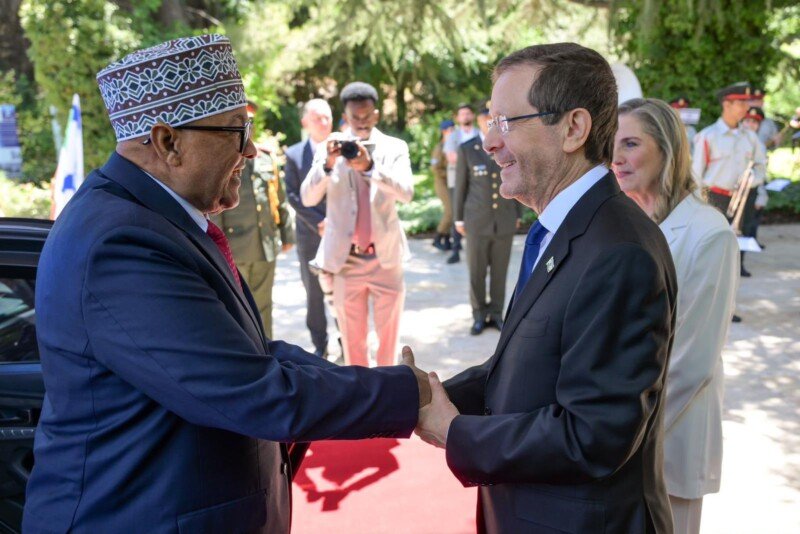
Israel formally recognized Somaliland’s sovereignty in December 2025, a move that has significantly deepened ties between the two entities. However, this diplomatic engagement has also drawn attention to Somaliland’s security environment and its potential vulnerabilities.
Following the recognition, Israel named its first ambassador to Somaliland, further cementing the relationship. Somaliland President Abdirahman Mohamed Abdullahi has also suggested that direct flights between Israel and Hargeisa could begin “very soon,” and has not ruled out the possibility of Israel establishing a military base in the region.
Israel has established an intelligence presence at Berbera International Airport in Somaliland, according to investigative reports, and is holding ongoing discussions about the possible creation of an Israeli military base. A Somaliland official confirmed that in talks between the two sides prior to establishing diplomatic ties, Israel raised its security challenges in the region as a factor.
Security Concerns and Regional Dynamics
The Level 4 travel warning highlights the security challenges facing a territory that has sought to position itself as a stable and reliable partner for international engagement. Somalia and Egypt have united against Somaliland’s recognition, with both governments viewing the Israeli move as a direct threat to regional stability and Somali territorial integrity.
Israel’s security assessment also identified the Houthis as a specific threat to Israelis in Somaliland. The Houthis, who control large parts of Yemen and have been engaged in a long-running conflict with a Saudi-led coalition, have increasingly viewed Israel’s presence in the Horn of Africa as a threat to their strategic interests.
Israel’s National Security Council also noted that other terrorist organizations like ISIS and al-Qaeda continue to spread explicit calls to harm Jews, a threat particularly prominent in Africa and Asia. The council warned of a significant rise in lone terrorist attacks against Israeli and Jewish targets worldwide.
In addition to the Level 4 warning for Somaliland, the council listed Saudi Arabia, Bangladesh, Somalia, Pakistan, Afghanistan, Libya, and Algeria as high-risk countries with restricted entry that should be avoided.
Critical Note
The inclusion of Somaliland in Israel’s highest travel warning category represents a significant setback for the territory’s diplomatic ambitions. Since Israel’s recognition of Somaliland in December 2025, Hargeisa has sought to portray itself as a stable and reliable partner for international engagement. The Level 4 warning, issued by an ally that has extended formal recognition, undermines that narrative and raises questions about the security environment in the breakaway region.
For Somaliland, the travel advisory may complicate its efforts to attract investment and deepen engagement with international partners. The warning suggests that the security situation in the region is not as stable as Hargeisa’s leadership has claimed, and that the territory’s association with Israel has made it a target for militant groups, including the Houthis and other elements hostile to Israel’s presence in the region.
The advisory also reflects the broader geopolitical tensions surrounding Somaliland’s recognition. While Israel has moved quickly to deepen ties with the breakaway region, those ties have come with security costs that may now be more visible. For Somaliland, the challenge will be to demonstrate that it can manage these security risks without undermining its long-term ambitions for international recognition and integration.