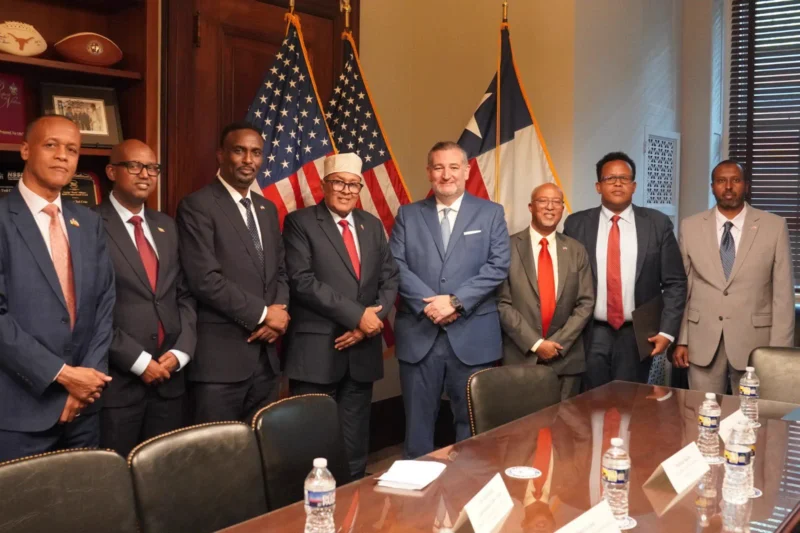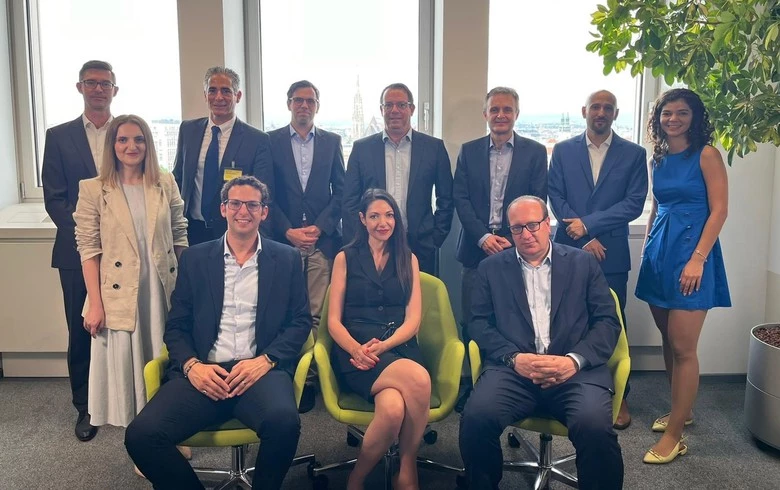
HARGEISA — Representatives of Israeli infrastructure and construction companies, including a delegate from the Shikun & Binui Group, have visited Somaliland to explore opportunities in infrastructure, construction, transportation and urban development, according to reporting by Israeli journalist Yehoshua Meiri.
Meiri, a veteran Israeli journalist and political-security commentator, reported that the visit was intended to assess local needs and possibilities for collaboration with government and business entities. He noted that no signed agreements or financial scope of the examined ventures have been published at this stage. The claim has not been independently verified by FTL Somalia.
Shikun & Binui is one of Israel’s largest infrastructure and construction conglomerates, listed on the Tel Aviv Stock Exchange and 57 percent owned by the Arison Group. The company operates globally and has been involved in major infrastructure projects across multiple countries.
A Company with a Documented Settlement Construction Record
Shikun & Binui’s expansion into new markets comes amid longstanding scrutiny of its role in Israeli settlement construction in the occupied West Bank and East Jerusalem. Norway’s Government Pension Fund Global excluded the company in 2012 on the recommendation of its Council on Ethics, which found that the company’s activities entailed “an unacceptable risk that it will contribute to serious violations of the rights of individuals in situations of war or conflict.”
The Council’s recommendation documented specific projects. Shikun & Binui Real Estate Development built 102 dwellings in the Ma’aleh Edumim settlement in 1994, one of the largest Israeli settlements on the West Bank. Its subsidiary Solel Boneh has been lead contractor for several settlements, including the Homat Shmuel settlement in Har Homa in East Jerusalem. Solel Boneh operates a ready-mixed concrete factory in Kyriat Sefer, adjacent to the Modi’in Illit settlement. In 2004, the Israeli authorities announced that Solel Boneh had won a tender for a split contract to erect the West Bank separation barrier.
The company also appears on the UN Human Rights Council’s database of businesses involved in settlement activities. Danish pension fund PKA excluded Shikun & Binui in 2014 over its role in settlement financing.
The International Court of Justice ruled in its 2004 advisory opinion that Israeli settlements in the Occupied Palestinian Territory, including East Jerusalem, “have been established in breach of international law.” UN Security Council Resolution 465, adopted unanimously in 1980, established that Israel’s settlement policy “constitutes a flagrant violation” of the Fourth Geneva Convention.
Broader Israeli-Somaliland Economic Engagement
The reported company visit is part of a broader expansion of Israeli economic engagement with Somaliland since Israel’s recognition in December 2025. In May 2026, Somaliland and Israeli business leaders held historic talks in Addis Ababa, focusing on trade and investment cooperation in agriculture, energy, technology, infrastructure, financial systems and healthcare, as per sources closed to the action.
In June 2026, Somaliland President Abdirahman Mohamed Abdullahi inaugurated the first-ever Somaliland-Israel Business Forum in Tel Aviv, bringing together more than 200 Israeli business executives and investors. Discussions focused on trade expansion, foreign direct investment, infrastructure development, energy, water, agriculture, healthcare and telecommunications. A second cohort of 25 Somaliland engineers is undertaking advanced training in Israel in water management and modern water technologies.
The deepening economic ties come amid growing regional tensions. As reported in FTL Somalia’s coverage of the Israel-Turkey rivalry, Somaliland officials say their diplomatic normalisation with Israel was motivated in part by the need to counter Turkey’s growing military footprint in Somalia.
Critical Note
The reported visit by Israeli infrastructure companies to Somaliland is consistent with the broader pattern of Israeli economic engagement that has accelerated since recognition. Somaliland’s interest in attracting foreign investment for ports, roads, water and energy projects is well documented, and Israeli companies with global infrastructure experience are logical potential partners.
The involvement of Shikun & Binui raises questions that go beyond commercial considerations. The company’s documented record of building settlements in the occupied West Bank and East Jerusalem, and its exclusion from Norwegian and Danish pension funds on human rights grounds, carries implications for Somaliland’s international standing. Somaliland has sought recognition by presenting itself as a law-abiding, democratic entity deserving of international acceptance. Partnering with a company blacklisted by the UN for settlement activities could complicate that narrative.
The claim itself comes from a single Israeli journalist’s tweet and has not been independently verified. Meiri is a credible reporter with decades of experience covering Israeli political-security affairs, but the absence of confirmation from Shikun & Binui, the Somaliland government, or Israeli officials means the visit remains unconfirmed. If the reporting is accurate, it would mark a significant step in Israel’s economic footprint in Somaliland, one that goes beyond the security and diplomatic dimensions that have dominated coverage of the relationship.