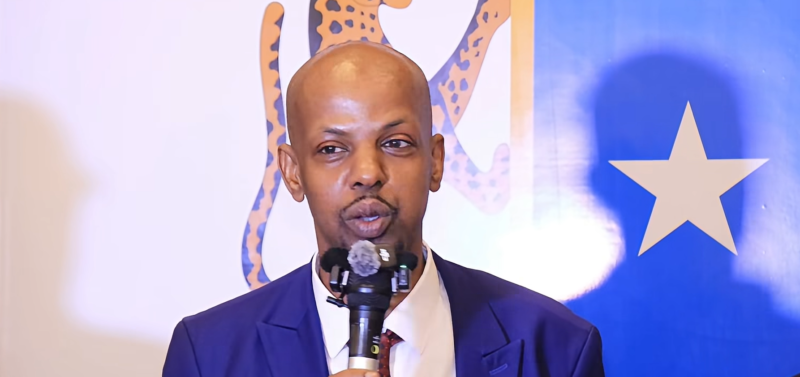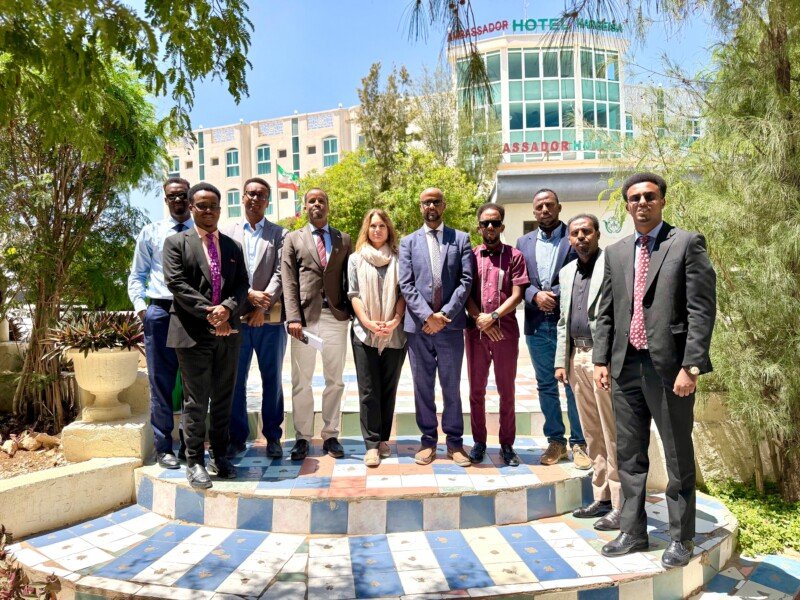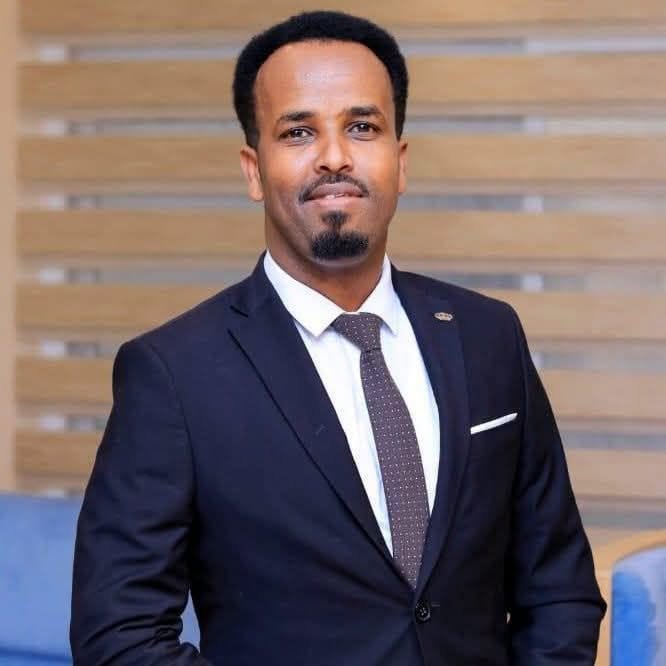
GABILEY — Somaliland police detained journalist Hassan Saleban Haaruun, known as Hassan Galaydh, in Gabiley on Tuesday afternoon while he was attending a graduation ceremony at Timacadde University.
Galaydh, who owns Galaydh Television, was in the town for a working visit when he was arrested, according to sources close to the journalist. Reports indicate that he was subsequently transferred to the Criminal Investigation Department (CID) in Hargeisa.
The official reason for the arrest and the exact location where he is being held remain unknown. Somaliland police have not issued an official statement or provided details about the charges, if any, or whether he will appear in court.
Context of the Arrest
According to reports, Galaydh’s arrest may be linked to statements he made in Hargeisa, where he and other journalists called on the Somaliland government to release fellow journalist Abdiqani Hussein Abokor, also known as Baylood.
Baylood has been held without charge since August 29 after he published a video interview with a well-known poet, Ismail Yusuf Abdi (Jiheeye), who recited a poem warning Somaliland President Abdirahman Mohamed Abdillahi that he would be cursed if he did not intervene in the alleged illegal seizure of two plots of land belonging to the poet.
The Committee to Protect Journalists (CPJ) has called for Baylood’s release, with CPJ Africa Program Coordinator Muthoki Mumo stating that authorities have failed to formally present charges in court ten days after taking him into custody. Baylood’s lawyer, Tawakal Ibrahim Mohamed, said police intend to bring two charges: offending the honour or prestige of the president, which carries a maximum penalty of three years’ imprisonment, and the dissemination of anti-state propaganda, which carries a maximum penalty of five years’ imprisonment under the penal code.
Political Reactions
Lawmaker Mohamed Abiib and officials from the KAAH party have demanded the release of the detained journalists, calling for the protection of press freedom and the right of journalists to report on matters of public interest. Abiib stated that “governments gain nothing but disgrace and a loss of credibility from this type of arrest” and called for the restoration of journalists’ freedom.
The arrest has sparked widespread reaction, with the Somaliland government facing heavy criticism. This development comes amid ongoing debate in Somaliland regarding freedom of speech and the government’s treatment of the media.
The Somaliland government, which during its time in opposition vigorously campaigned for the protection of freedom of speech and press independence, had previously criticized the administration of former President Muse Bihi Abdi for the arrest and harassment of journalists. At that time, the opposition Wadani party frequently condemned the detention of journalists, accusing the Bihi administration of curtailing press freedom.
Pattern of Press Crackdowns
Press freedom groups have accused Somaliland authorities of increasing arrests and pressure on journalists and media workers over the past year. Multiple journalists have been detained under dubious circumstances in recent months, according to the Committee to Protect Journalists.
In June 2026, journalist Mubaarik Mohamed Aadan was detained in Erigavo over a report that local offices of the ministry of water had closed, though he was later acquitted. In May 2026, journalist Omar Mohamed Omar was arrested in Borama on accusations of filming an arrest and transferred to Gabiley Central Prison without a trial or court order before being released.
The detention of Galaydh is not an isolated incident, as Somaliland authorities previously arrested a journalist who criticized Gaza refugee plans, highlighting a recurring pattern of press freedom concerns in the region. These developments come as Somaliland continues its diplomatic outreach and engagement with international partners, which some observers see as at odds with the government’s domestic treatment of journalists.
The crackdown on journalists occurs alongside ongoing discussions about international security cooperation in Somaliland, including reports of foreign military infrastructure development in the region, raising questions about the government’s priorities and its commitment to democratic principles.
Critical Note
The detention of Hassan Galaydh adds to a growing pattern of arrests targeting journalists in Somaliland, raising serious questions about the government’s commitment to press freedom. The timing of the arrest, following his calls for the release of another detained journalist, suggests that authorities may be seeking to suppress dissent rather than uphold the rule of law.
Somaliland has long presented itself as a democratic exception in the Horn of Africa, with a strong record of peaceful transfers of power and relative stability. The recent wave of journalist detentions risks undermining that reputation and eroding the credibility of Somaliland’s democratic institutions, particularly as it seeks broader international recognition.
The government’s refusal to provide formal charges or explain the legal basis for these detentions is concerning. Detaining journalists without charge is inconsistent with international human rights standards and the principles of due process that Somaliland’s leadership once championed while in opposition. The authorities should either present credible charges and bring the detained journalists before a court or release them immediately.