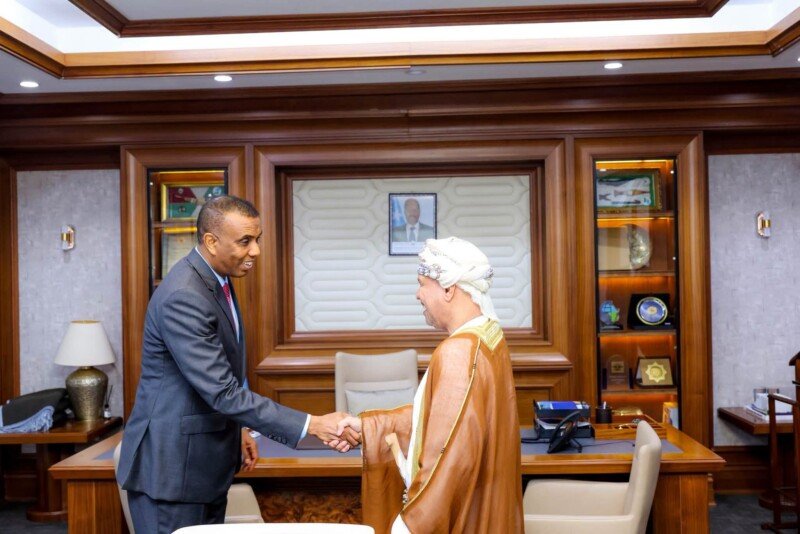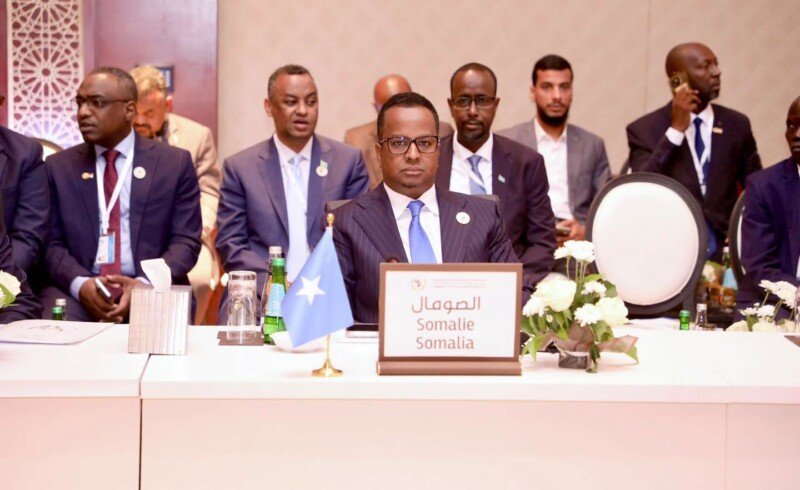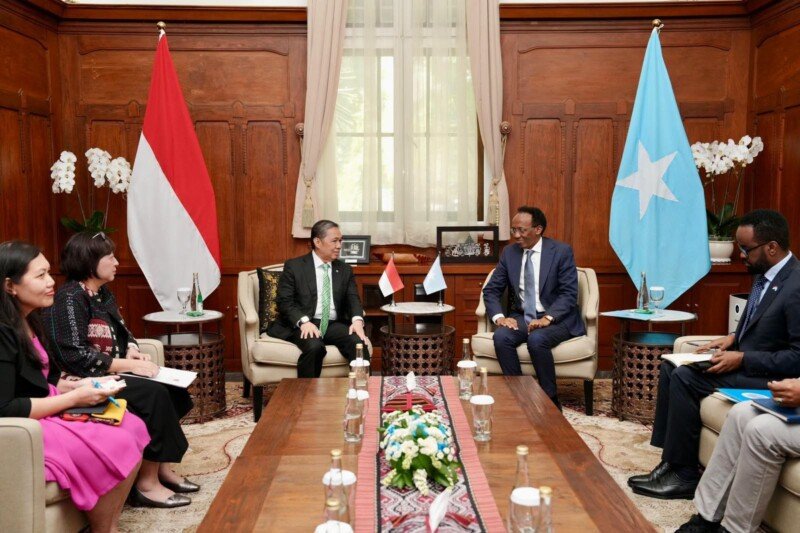
DOHA, The Director General of the Somali Civil Aviation Authority, Ahmed Moallin Hassan, participated in the eighth meeting of the Directors General of Civil Aviation for the Middle East Region (DGCA-MID/8) in Doha this week, presenting Somalia’s aviation progress and its strategic role in maintaining regional connectivity amid security disruptions elsewhere.
The meeting, hosted by the Qatar Civil Aviation Authority in cooperation with the ICAO Middle East Regional Office, runs from October 26 to 28 and brings together aviation chiefs from across the Middle East and beyond, along with representatives from international and regional organizations.
According to reports, Hassan highlighted Somalia’s advancements in civil aviation and the strategic importance of Somali airspace in linking international flights. He noted that at a time when regional security conditions have affected aviation operations, Somali airspace has played a vital role in connecting civilian flights across the region and the wider world ( 2017–2021 Qatar diplomatic cordon).
Somalia’s Airspace as a Regional Asset
The SCAA Director General stated that the modernization of the aviation system, the use of advanced technology, and the employment of skilled and experienced staff have enhanced Somalia’s reputation and the significance of its airspace, noting that the world now relies on Somalia’s skies.
This positioning is not merely rhetorical. As reported in FTL Somalia’s coverage of Somalia’s aviation recovery, Somalia regained Class A airspace classification in January 2023, restoring full control of its airspace after more than three decades. The reclassification enabled the country to provide air traffic control services instead of advisory services, with flight numbers projected to rise from about 400 to 600 per day and annual revenue from $22 million to $34 million.
The DGCA-MID/8 agenda covers a broad range of technical and policy issues, including aviation safety and air navigation, aviation security and cybersecurity, environmental protection, and the economic development of air transport. Somalia’s participation in these discussions signals its intent to be seen not as a passive beneficiary of regional aviation frameworks, but as an active stakeholder with a strategic asset to offer.
A Timely Pitch Amid Regional Disruption
The Doha meeting comes as aviation across the Middle East faces significant disruption. Houthi missile and drone attacks on Saudi Arabia, including strikes on Riyadh’s King Khalid International Airport, have forced airlines to cancel flights and reroute aircraft, with reports of over a thousand cancellations and diversions. The closure of Iranian and Iraqi airspace has further constrained the traditional corridors linking Europe and Asia.
In this environment, Somalia’s geographic position, at the junction of the Indian Ocean and the Red Sea, near the Bab al-Mandab, becomes more valuable. Airlines seeking alternatives to the disrupted northern routes have increasingly looked south, and Somali airspace offers a path that avoids the immediate conflict zones.
Somalia has also invested in the technical infrastructure needed to handle increased traffic. As reported in FTL Somalia’s coverage of aviation infrastructure, the SCAA has installed advanced weather monitoring systems and received search and rescue equipment from WFP/UNHAS to strengthen emergency response capabilities, aligning with ICAO standards.
Critical Note
Somalia’s pitch in Doha is well-timed and substantively grounded. The restoration of Class A airspace, the modernization of radar and communications systems, and the steady expansion of overflight revenue are real achievements, not aspirational claims. The regional disruption caused by the Houthi attacks has made Somalia’s airspace more relevant than at any point in decades, and the SCAA is right to highlight that relevance to its regional peers.
But the pitch also carries an implicit challenge. Somalia’s ability to serve as a reliable alternative corridor depends on maintaining safety and security standards that meet international expectations. The DGCA-MID/8 agenda includes cybersecurity, facilitation, and aviation security, areas where Somalia’s institutional capacity remains thin. The SCAA’s progress is real, but it is also fragile. A single serious safety incident or security breach could undermine the confidence that airlines and insurers have placed in Somali airspace.
The deeper issue is that Somalia’s airspace revenue is a function of regional instability. The more the Middle East burns, the more valuable Somalia’s skies become. That is not a sustainable foundation for aviation development. The SCAA’s long-term goal should be to make Somali airspace a preferred route on its own merits, through efficiency, safety, and competitive pricing, not merely a refuge from conflict. The Doha meeting is an opportunity to make that case. Whether the region’s aviation chiefs were persuaded will be measured in the flight paths they choose in the months ahead.