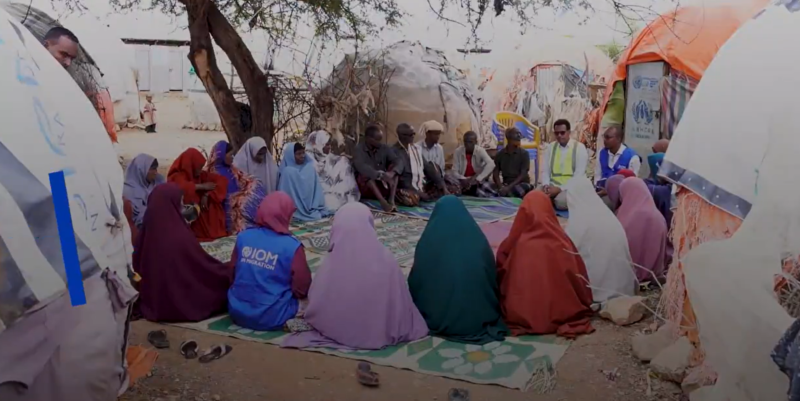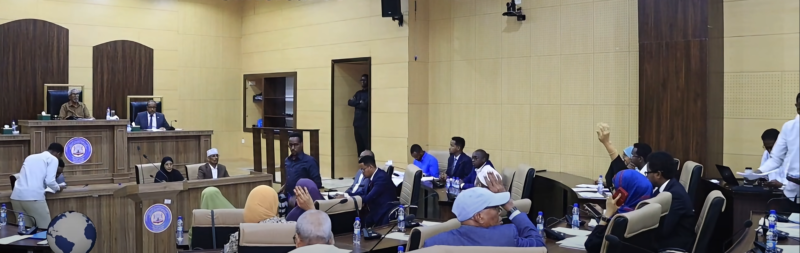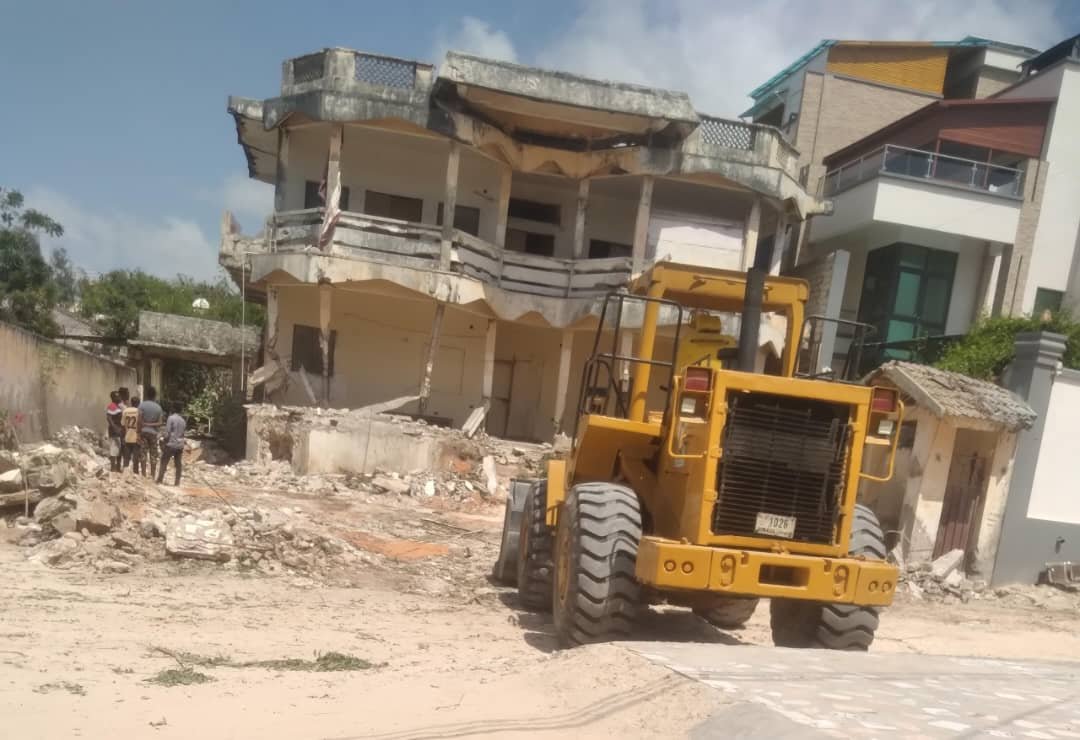
MOGADISHU — More than 2.1 million people have been forcibly evicted across Somalia since 2017, with nearly two-thirds of those evictions occurring in the capital, according to a new report from the Heritage Institute for Policy Studies.
The Heritage Institute’s October 2026 commentary, titled “Elite Capture of Urban Land in Mogadishu Eroding State Legitimacy,” draws on data from the Norwegian Refugee Council’s Evictions Information Portal to document the scale of the crisis. Between 2017 and September 2026, the NRC recorded 2,136,420 people evicted across Somalia, with 64 percent of those evictions taking place in the Benadir region, which encompasses Mogadishu.
The report situates this displacement within a broader pattern of state-led evictions and elite land capture that has accelerated in recent years, transforming Mogadishu’s land crisis from a localized dispute over property boundaries into what the Heritage Institute describes as “the defining test of whether the Somali state governs its capital through the rule of law.”
The State as Evictor
The Heritage Institute report documents a significant shift in the nature of evictions in Mogadishu. In 2021, only 11 percent of evictions from the city’s displacement camps occurred on government-owned land. By 2025, that figure had risen to 44 percent of the 143,548 people evicted in the city that year.
This trend reflects what the report describes as the state’s transition from bystander to evictor. In July 2025, a state-led clearance at the former Ministry of Health compound abruptly displaced approximately 120 families, many of whom had lived there for more than 14 years.
The report notes that evictions routinely occur without adequate notice, consultation, or compensation, and are often conducted at night. The human toll extends beyond displacement: the report cites documentation linking evictions to violence, sexual assault, family separation, and cholera outbreaks.
According to ACLED data cited in the report, 84 protests against forced evictions were recorded in Somalia between April 2025 and March 2026, with 78 of those protests taking place in Mogadishu. These protests have been met with arrests, injuries, and occasional fatalities.
A Governance Vacuum Exploited by Elites
The Heritage Institute attributes the crisis in part to Somalia’s unresolved federal arrangement, which leaves the capital without a clearly defined status or governance model. The Benadir Regional Administration and the Ministry of Public Works dispute responsibility for urban land, creating what the report describes as a vacuum that “predatory political and commercial elites have seized on to enrich themselves at the public’s expense.”
The report notes that Mogadishu’s formal courts are overwhelmed with land cases, with roughly 85 percent of cases filed in the city’s courts being land-related and between private claimants. For ordinary citizens, the judiciary is often slow, prohibitively expensive, or politically co-opted, leaving them without effective legal remedy.
The Heritage Institute’s findings align with documented incidents from recent months. In August 2026, violence erupted in Mogadishu’s Tookiyo neighbourhood when government forces clashed with residents protesting the demolition of their homes. Nearly 10 people were injured, according to local reports.
Similar confrontations occurred in the Wabari and Hamar Jajab and Abdalaziz districts, where opposition leaders accused government forces of using live ammunition against civilians protesting the destruction of homes and businesses.
The Scholars’ Intervention
The Heritage Institute report highlights the August 2026 intervention by the Union of Somali Scholars’ Councils, which called on the government to halt demolitions and investigate land seizures. The scholars said they had received numerous complaints from residents who claimed to possess legal ownership documents but had their property challenged, seized, or subjected to fees with no clear legal basis.
The scholars urged President Hassan Sheikh Mohamud, Prime Minister Hamza Abdi Barre, and the Banadir Regional Administration to independently investigate the complaints and hold accountable anyone found responsible for abuse of power, theft, or corruption.
The Heritage Institute frames this intervention as a “moral and legal backlash” against the government’s land policies, noting that it represents an unprecedented challenge from a traditionally cautious religious establishment.
A Security Threat
The report’s central argument is that Mogadishu’s land crisis has become a national security threat. When the state’s security apparatus is deployed to enforce evictions that benefit private, speculative real estate developments, the report warns, “the fragile social contract is shattered.”
Denied protection by a dysfunctional judiciary, ordinary citizens are increasingly driven to seek alternative authority, “creating a dangerous opening that insurgent groups can exploit.” The report cites evidence that Al-Shabaab has used displacement grievances as a recruitment tool.
Opposition lawmaker Abdirahman Abdishakur Warsame has previously warned that forced evictions risk “handing Al-Shabaab a powerful recruitment tool on a silver platter.” He emphasised that when citizens are stripped of their homes, dignity, and livelihoods without due process, the resulting despair becomes fertile ground for extremist groups.
The Heritage Institute concludes that reforming Mogadishu’s land governance is “not merely an administrative necessity; it is a strategic imperative to prevent the erosion of state authority to insurgent alternatives.”
Critical Note
The Heritage Institute’s report provides the most comprehensive accounting to date of the scale and consequences of Mogadishu’s land crisis. The figure of 2.1 million evictions nationwide since 2017, with 64 percent concentrated in the capital, transforms what has often been treated as a series of localized disputes into a systemic governance failure.
The report’s most significant contribution is its framing of land governance as a question of state legitimacy. When the government deploys its security forces to demolish homes and displace citizens, it does not merely violate property rights; it undermines the fundamental premise of the social contract. The state exists to protect its citizens, not to dispossess them.
The Heritage Institute’s warning about Al-Shabaab’s exploitation of displacement grievances is particularly sobering. The government’s counterterrorism strategy depends on maintaining the trust and cooperation of local communities. When that trust is destroyed by evictions that appear to benefit politically connected elites, the security implications extend far beyond the immediate humanitarian crisis.
The report does not address the government’s stated justification for demolitions, which officials have described as efforts to reclaim public land and implement urban redevelopment. There is a legitimate case for clearing illegal settlements from public property. But the Heritage Institute’s documentation of the scale of evictions, the lack of due process, and the concentration of displacement in areas sought by private developers suggests that the line between public interest and private enrichment has been systematically blurred.
The scholars’ intervention and the opposition’s warnings have raised the political stakes. Whether the government responds with genuine reform or continues to treat the crisis as a public relations problem will determine whether Mogadishu’s land crisis remains a source of instability for years to come.