MOGADISHU, The massacre of more than 60 Christians in Ethiopia’s Oromia region is not a distant tragedy for Somalia. It is a direct indicator of the escalating instability in a neighboring state whose internal conflicts are increasingly intertwined with Somalia’s own security and political trajectory.
A Pattern of Sectarian Violence
According to the Ethiopian Orthodox Tewahedo Church, more than 60 people were killed in attacks on three areas in the Shirka district of Oromia. A local official blamed the Alliance for Survival, a newly formed rebel coalition that includes the Oromo Liberation Army (OLA). The OLA has denied involvement in previous such attacks. Eyewitnesses told BBC Amharic that five of those killed were children, and that 20 houses were burned to the ground.
The Ethiopian Human Rights Council reported in July 2026 that 458 people had been killed in attacks in that area over the previous four years, describing them as religiously motivated and targeting followers of the Orthodox Church. This latest massacre is one of the deadliest in that period.
The Rebel Alliance Behind the Chaos
The Shirka killings are part of a wider pattern of escalating violence across Ethiopia. A coalition of seven armed groups, including the TPLF, the Fano militia in Amhara, and the OLA, has announced the formation of the Ethiopian Peoples’ Forces Alliance for Survival, aimed at removing Prime Minister Abiy Ahmed’s government. As reported in FTL Somalia’s coverage of the alliance, the coalition spans half of Ethiopia’s twelve regional states and brings together groups that have previously fought one another, making the alignment an unusual development in the country’s fragmented opposition landscape.
The Ogaden National Liberation Front (ONLF), a Somali-majority armed group, is among the signatories. Its inclusion is particularly notable given the group’s 2018 peace agreement with the Ethiopian government and its subsequent focus on diplomatic efforts to advance the interests of ethnic Somalis in Ethiopia’s Somali Regional State.
The Moyale Clashes: A Somali Dimension
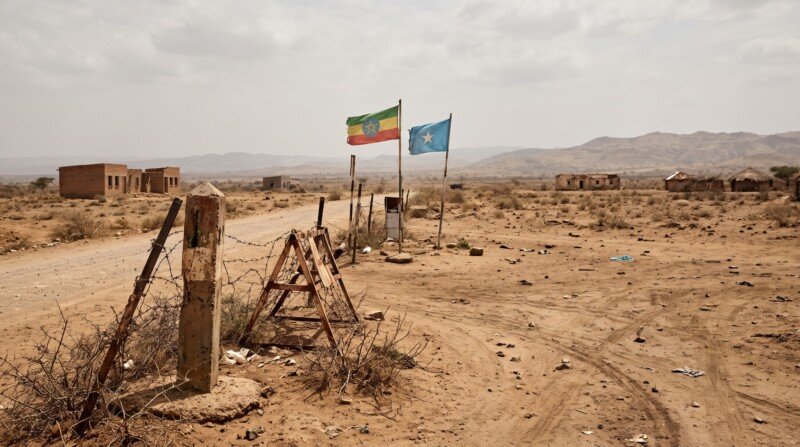
The violence in Oromia directly affects ethnic Somali communities in Ethiopia. As reported in FTL Somalia’s coverage of the Moyale clashes, heavy fighting erupted between Oromo and Somali communities in the border town, killing at least nine people and forcing more than 2,500 Ethiopians to flee into Kenya. The trigger was a dispute over the display of the Somali Regional State flag at an administrative office in an area administered by Oromia.
These clashes demonstrate how local disputes over flags, administrative boundaries, and political control can escalate into deadly confrontations with regional consequences. For Somalia, the displacement of ethnic Somalis across the border into Kenya carries humanitarian and security implications, particularly in a borderland region where Al-Shabaab has historically exploited instability.
What This Means for Somalia: The Security Gap
For Somalia, the implications are direct and urgent. Ethiopia’s internal conflicts are already drawing its military resources away from Somalia. As reported in FTL Somalia’s coverage of Ethiopia’s military redeployment, Addis Ababa is planning to withdraw more than 3,000 troops from the Bay and Bakool regions of South West State to redeploy them to Tigray, Amhara, and Afar. This withdrawal would leave a security gap in areas where Ethiopian forces have been fighting Al-Shabaab, and it comes as the AUSSOM mission faces its own funding and mandate uncertainties.
The timing is particularly delicate. The UN political mission in Somalia is closing its doors on October 31, ending more than three decades of international political stewardship. The AUSSOM mission faces a funding cliff and a potential withdrawal of Ugandan forces. As reported in FTL Somalia’s coverage of the transition, Somalia is entering a phase where it will have fewer international buffers and more direct responsibility for its own security.
Ethiopia’s regional position is also hardening. As reported in FTL Somalia’s coverage of Ethiopia’s response to the Alamein Declaration, Addis Ababa has rejected what it describes as “coercive measures” and “acts of destabilization” aimed at constraining its Red Sea ambitions. The four-nation Alamein Declaration, signed by Egypt, Eritrea, Somalia, and Sudan, formalized coordination on regional security and affirmed that Red Sea governance is the responsibility of littoral states. Ethiopia’s exclusion from that framework, combined with its internal conflicts, creates a volatile regional dynamic.
Critical Note
The massacre in Shirka is a crime that demands accountability, and the Ethiopian government’s failure to protect its citizens, particularly religious minorities, is a damning indictment of its security apparatus. The Orthodox Church’s statement that it had repeatedly raised concerns with authorities but received no solution is a familiar refrain in Ethiopia, where local communities have borne the brunt of conflicts that the state is either unable or unwilling to contain.
For Somalia, the lesson is one of exposure. Ethiopia’s internal fragmentation is not a spectator sport. It is a process that is already reshaping the security architecture of the Horn of Africa. The withdrawal of Ethiopian troops from Somalia, the displacement of civilians across the Kenyan border, and the formation of a rebel alliance that includes armed groups from multiple regions all point in the same direction: Ethiopia is entering a period of prolonged instability, and Somalia will feel the consequences whether it is prepared or not.
The Somali government’s focus on its own political crisis, the contested electoral process, and the fight against Al-Shabaab is understandable. But it cannot afford to ignore the collapse of order next door. The same international partners who are withdrawing from Somalia are also watching Ethiopia with concern. The same Al-Shabaab that Somalia is fighting has exploited Ethiopian instability in the past. The same borderlands that are now scenes of sectarian violence are the corridors through which weapons, fighters, and displaced people move.
The Shirka massacre is a warning. It is not the first, and it will not be the last. Somalia’s security is not confined to its borders. It is shaped by the stability of its neighbors, and Ethiopia’s stability is deteriorating rapidly.
Recommended Reading On ftlsomalia.com
- ONLF Joins Seven-Group Ethiopian Alliance Against Abiy Government
- Ethiopia’s Troop Withdrawal and the Egypt-Eritrea Alignment: What It Means for Somalia
- Deadly Oromo-Somali Clashes in Moyale Kill Nine, Displace Thousands to Kenya
- Ethiopia Rejects ‘Coercive Measures’ as Egypt, Eritrea, Somalia and Sudan Formalize Bloc