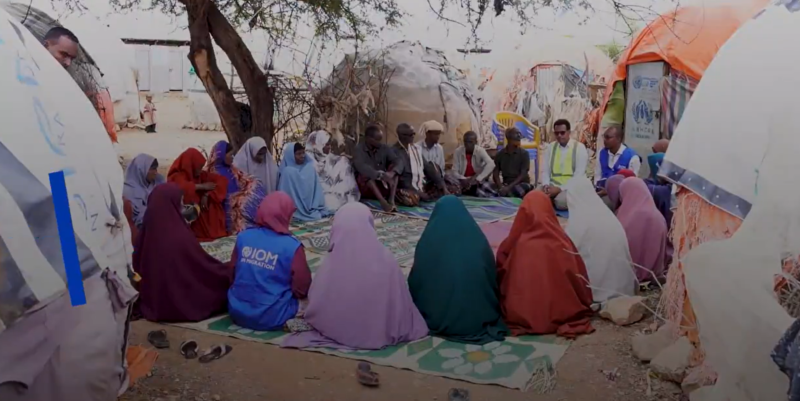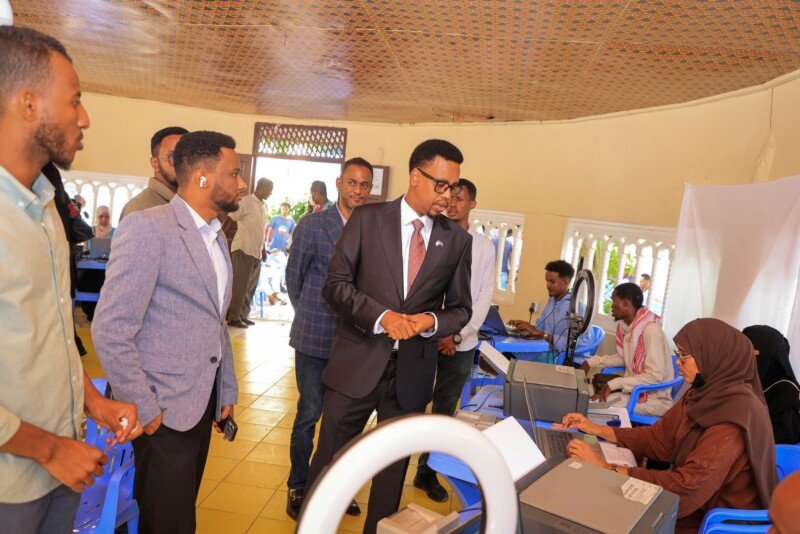
MOGADISHU, Somalia’s National Identification and Registration Authority (NIRA) has registered Somali citizens repatriated from Yemen, issuing them National ID cards as part of a broader effort to facilitate their reintegration into society and access to essential services.
The registration was conducted in coordination with the National Commission for Refugees and Internally Displaced Persons (NCRI). NIRA’s Deputy Director General, Abdirahman Said Ahmed, visited the NCRI center where the returnees were being processed, noting that the authority prioritizes issuing identification to citizens returning to the country to ease their social reintegration and access to services.
The exercise is the latest phase in Somalia’s expanding national ID system, which has become the primary mechanism for citizens to access banking, education, healthcare, and domestic travel. As reported in FTL Somalia’s coverage of the eAqoonsi digital ID launch, NIRA has also introduced a mobile application allowing citizens to carry their National ID digitally, with the same legal validity as the physical card.
The Returnee Pipeline
The registration of Yemen returnees is part of a larger repatriation effort. In early October 2026, the Somali government repatriated 160 nationals from Yemen, including 59 women and children. Some had lived in Yemen for decades, while others were born there and were arriving in Somalia for the first time, as reported in Hiiraan Online’s coverage of the repatriation.
NCRI Commissioner Liban Abdi Egal said the returnees were received at an integration center where they received medical screening, registration, identification cards, and assistance to reach their home areas. He noted that many Somalis remain in Yemen, including some registered as refugees with UNHCR, and that the number returning could rise.
The context of their departure is grim. Thousands of Somalis have been stranded in Yemen, many living in makeshift homes in Aden’s “Little Mogadishu” and struggling to find work. A UN Refugee Agency survey found that 56 percent of repatriated Somalis cited a lack of income opportunities in Yemen as their primary reason for returning, as reported in FTL Somalia’s coverage of Somali migrants in Yemen.
The National ID as a Gatekeeper
The registration of returnees reflects a significant policy shift in Somalia’s approach to identity and service delivery. Starting in January 2026, access to key services, including opening a bank account and domestic travel, has been linked to possession of a national ID. The Central Bank of Somalia has mandated that all individuals seeking to open or renew bank accounts must present a valid National ID card, and the Ministry of Trade and Industry requires the ID for business registration.
For returnees, this creates both an opportunity and an obstacle. The ID is the key that unlocks financial inclusion, formal employment, and social protection. Without it, reintegration is practically impossible. NIRA’s mobile registration teams have attempted to reach displaced populations, with a Baidoa pilot enrolling over 38,000 internally displaced persons at a cost of under one dollar per registration, as documented by UNDP Somalia. But the standard registration process can still present barriers for those lacking documentation or the ability to pay fees.
Critical Note
The registration of Yemen returnees is a practical necessity. Without identification, these citizens cannot open bank accounts, enroll their children in school, access healthcare, or travel freely within their own country. NIRA’s presence at the NCRI center is a recognition that reintegration begins with legal identity, and that the state has an obligation to provide it.
But the policy of linking essential services to the national ID raises questions that the government has not fully addressed. For returnees who have spent years or decades abroad, the documentation required to verify their identity may be unavailable. For the poorest and most vulnerable, even nominal fees can be prohibitive. NIRA has attempted to address this through mobile registration and fee waivers in some cases, but the system’s reach is not universal. The risk is that the ID, intended as a tool of inclusion, becomes another barrier for those least able to overcome it.
The returnees from Yemen are a test case. They arrive with nothing, having fled a country that offered them no future. If the state can register them, provide them with identity, and connect them to services, it will demonstrate that the national ID system is more than a bureaucratic exercise. If it cannot, the returnees will join the millions of displaced Somalis for whom legal identity remains an aspiration rather than a reality. The registration exercise this week is a start. It is not a guarantee of successful reintegration.