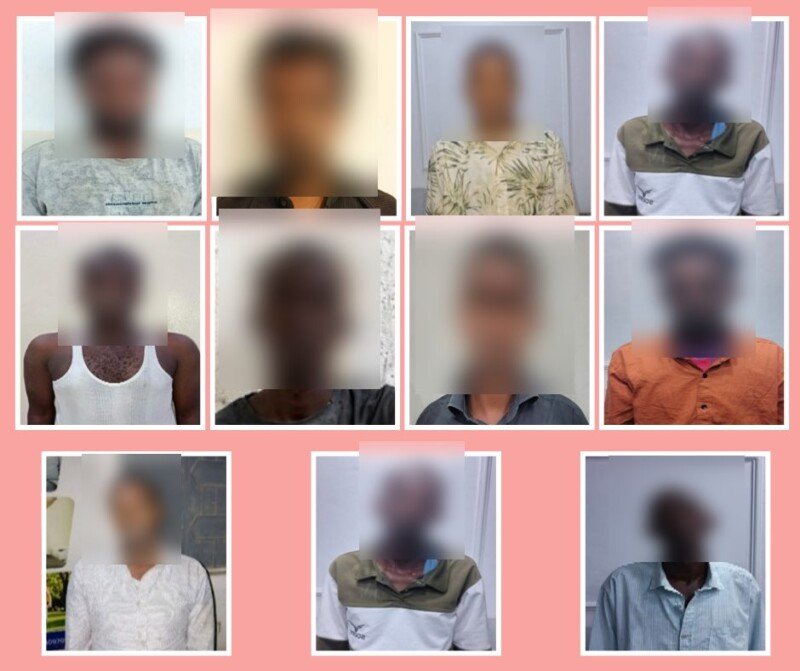
MOGADISHU — Somalia’s National Intelligence and Security Agency (NISA) has dismantled several Al-Shabaab networks that were preparing to infiltrate parts of Mogadishu and surrounding areas, arresting 11 suspected operatives during a series of planned security operations .
The operations were conducted in Daarusalaam, Garasbaaley, Kaxda, Dayniile and Afgooye districts, according to a NISA statement released on Tuesday. The agency said the networks were being prepared to carry out activities that threatened security in the capital and neighboring areas.
NISA forces also seized weapons and other materials that the suspects allegedly intended to use in planned attacks. The agency described the operations as part of its continuing efforts to prevent Al-Shabaab and other militant groups from carrying out attacks aimed at undermining security and harming civilians.
NISA did not provide further details about the identities of those arrested, the specific activities allegedly being planned, or the weapons and materials recovered during the operations. The agency urged members of the public to remain vigilant and report suspected security threats or information relating to Al-Shabaab and ISIS to the authorities.
Pattern of Intelligence-Led Operations
The arrests follow a series of NISA operations targeting Al-Shabaab networks in and around the capital. In early September 2026, NISA arrested nine suspected Al-Shabaab operatives who were planning to carry out attacks in Mogadishu. Those suspects were reportedly operating covertly in the districts of Garasbaaley, Kaxda, and parts of Ceelasha Biyaha.
The operations come amid heightened security concerns in the capital. A threat assessment circulated among security personnel earlier in September warned that more than 100 Al-Shabaab elements had been deployed across Mogadishu and surrounding areas with the intent to conduct infiltration operations and support possible high-profile assassinations, sniper attacks, vehicle-borne improvised explosive device attacks, and vest-borne suicide bomber attacks.
Al-Shabaab remains a persistent security threat in Somalia despite sustained military operations by Somali forces and international partners. The group continues to carry out attacks targeting government forces, civilians and foreign interests.
Critical Note
The dismantling of these networks represents a tactical success for NISA and demonstrates the agency’s capacity to conduct intelligence-led operations across multiple districts simultaneously. The arrests in Daarusalaam, Garasbaaley, Kaxda, Dayniile and Afgoye suggest that Al-Shabaab maintains an active presence in and around the capital, even as security forces intensify efforts to disrupt its operations.
The limited information provided by NISA raises questions about the scope and nature of the threat. The agency did not disclose the identities of those arrested, the specific targets they allegedly planned to attack, or the timeline of their operations. While operational security concerns may justify some discretion, greater transparency would help build public confidence in the government’s counterterrorism efforts and allow for independent verification of claims.
The recurring nature of these operations, with multiple rounds of arrests in recent months, suggests that Al-Shabaab retains the ability to recruit and deploy operatives despite sustained pressure. This underscores the need for a comprehensive approach that addresses not only the immediate security threat but also the underlying drivers of radicalization, including poverty, lack of opportunity, and weak governance in areas where the group operates.