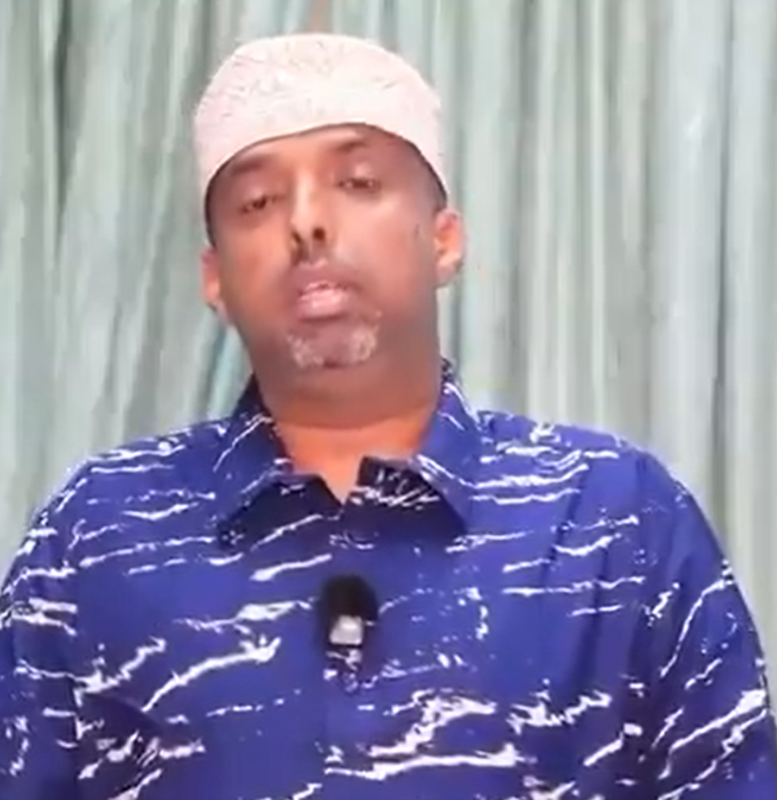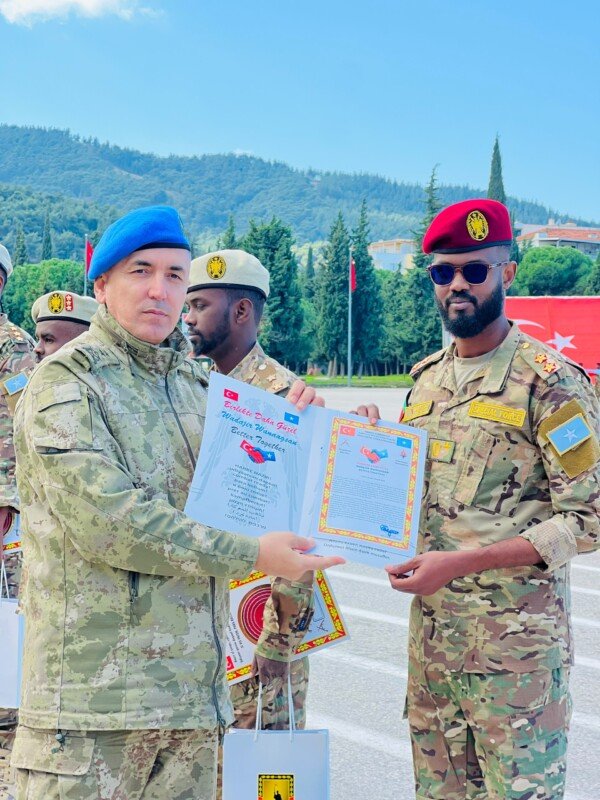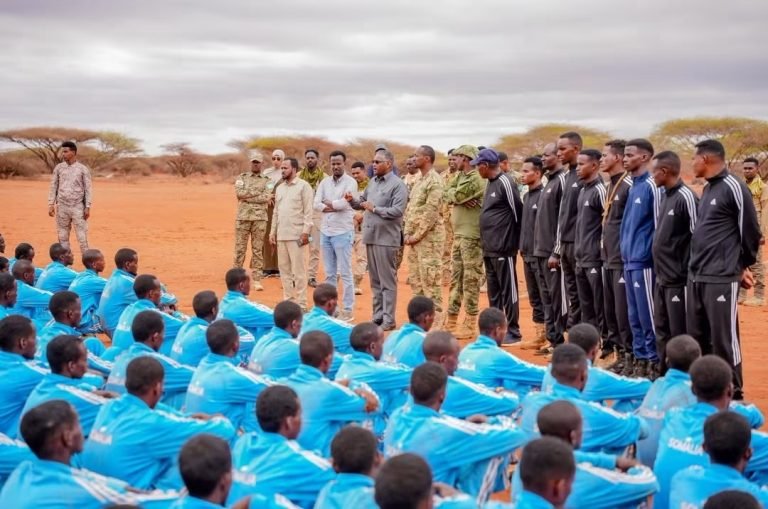
DHUSAMAREEB — The Director of Somalia’s National Intelligence and Security Agency (NISA), Mahad Mohamed Salaad, visited the agency’s training centre in Balanballe district, Galgaduud region, on Sunday, inspecting the base and addressing recruits undergoing training, according to officials.
During the visit, Salaad met with NISA personnel in training and urged them to honour the commitment they had made to defend the country, its people and its religion. The Director and his delegation are expected to remain in Balanballe, where major reconciliation events are scheduled to take place in the coming days.
Reconciliation Events Planned
The visit comes ahead of planned reconciliation gatherings in Balanballe that will bring together local community members. The events are part of a broader effort to address clan conflicts that have affected parts of Galmudug and the central regions.
Salaad has previously issued firm directives to government forces deployed in the region, ordering them to act decisively to prevent clan violence and revenge killings in Galmudug and surrounding areas. According to reports, the security situation in the area has stabilised following those instructions, and the focus is now shifting toward genuine reconciliation to end the conflicts in the central regions.
NISA’s Expanding Role in the Central Regions
The NISA Director’s presence in the frontline area is a notable development. Balanballe has been a site of military operations and inter-clan tensions, and the establishment of a permanent training facility there reflects the agency’s expanding footprint beyond Mogadishu.
NISA has been active in counterterrorism operations across the central regions in recent months. As detailed in FTL Somalia’s coverage of the Bur Saruur operation, the agency killed 12 Al-Shabaab members in a planned operation in the Middle Shabelle region in September 2026, targeting a location where militants were gathered.
The agency’s intelligence-led operations have also extended to the Banadir region, where NISA has conducted multi-district sweeps targeting Al-Shabaab networks. These operations reflect a shift toward proactive intelligence gathering and disruption of militant cells operating in urban areas.
In Balanballe specifically, NISA’s engagement has focused on both security and reconciliation. As reported in FTL Somalia’s coverage of the Balanballe security agreement, senior officials from the Somali National Army and the Somali regional state reached an agreement in July 2026 to enhance border security and prevent the flow of illicit weapons. The agreement was witnessed by the NISA Director for the Galmudug sector and local officials.
Critical Note
The NISA Director’s visit to Balanballe and the planned reconciliation events signal a dual approach to security in the central regions: military pressure against Al-Shabaab and clan violence, combined with political engagement to address the underlying grievances that fuel conflict. This is a sensible framework on paper. The question is whether it can be implemented effectively.
Reconciliation in Somalia is a long and difficult process. It requires sustained engagement, impartial mediation, and accountability for past abuses. NISA’s security operations may have stabilised the immediate situation in Balanballe, but stability imposed through force is fragile. The reconciliation gatherings will need to address root causes, including land disputes, resource competition, and unresolved grievances from previous cycles of violence. If they do not, the calm may prove temporary.
The deployment of the intelligence chief to a frontline area also raises questions about the agency’s expanding role. NISA’s mandate is intelligence and security, but its involvement in reconciliation and local governance matters blurs the line between security operations and political engagement. In a region where clan dynamics are deeply intertwined with security, that blurring may be unavoidable. But it also carries risks, particularly if NISA is perceived as taking sides in local disputes. The agency’s credibility as a national institution depends on its ability to operate impartially. The coming days in Balanballe will be a test of whether that is possible.
Recommended Reading On ftlsomalia.com
- Somali Intelligence Strikes Al-Shabaab Gathering in Bur Saruur
- NISA Kills Al-Shabaab Commander and Three Militants in Middle Shabelle Operation
- NISA Arrests 11 Operatives as Al-Shabaab Networks Targeted in Multi-District Operation
- Galmudug and Somali Regional State Forces Reach Border Security Agreement in Balanbale
- NISA Director Mahad Salad Lays Foundation for New Security Base in Balanballe