ADDIS ABABA — Seven Ethiopian armed and opposition groups announced the formation of a coalition on Sunday aimed at removing Prime Minister Abiy Ahmed’s government and establishing an inclusive transitional administration, with the Ogaden National Liberation Front (ONLF) among the signatories.
The coalition, named the Ethiopian Peoples’ Forces Alliance for Survival, was announced in a statement read live on Tigrai TV by Zemene Kassie, chairman of the Amhara Fano National Movement. The alliance brings together groups that have previously fought one another or backed opposing sides in Ethiopia’s recent conflicts, making the alignment an unusual development in the country’s fragmented opposition landscape.
Composition of the Alliance
The seven groups are the Amhara Fano National Movement (AFMN), the Oromo Liberation Army (OLA), the Tigray People’s Liberation Front (TPLF), the Ogaden National Liberation Front (ONLF), the Afar Revolutionary Democratic Unity Front (Ugugumo), the Benishangul Peoples’ Liberation Movement, and the Gumuz Peoples’ Democratic Movement.
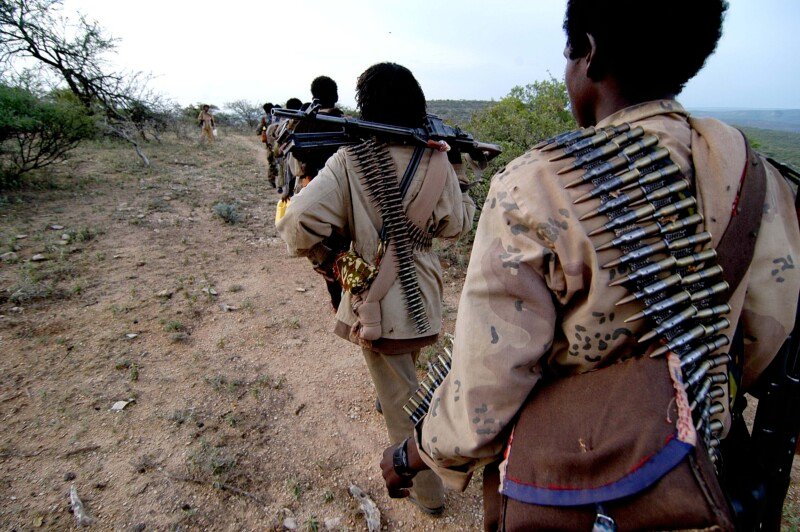
The alliance spans half of Ethiopia’s twelve regional states. The OLA has fought federal forces in Oromia since 2018, while the Fano militia has been in armed insurgency in Amhara since 2023. The TPLF dominated Ethiopian politics for nearly three decades before Abiy took office and fought a two-year civil war against federal forces from 2020 to 2022.
The inclusion of the ONLF is particularly notable given the group’s trajectory. The ONLF signed a peace agreement with the Ethiopian government in Asmara on October 21, 2018, mediated by Eritrea, and transitioned from armed struggle to political activity. The organisation has since focused on diplomatic efforts, including presenting the situation in the Somali Region to the UNPO General Assembly in The Hague in August 2026.
ONLF spokesman Adani Hirmooge has previously stated that the organisation intends to bring the issue of the Somali people in Ethiopia to international bodies, including the United Nations, and aims to play a prominent role in the political leadership of the Somali Region.
Stated Objectives
In its joint statement, the alliance accused the Prosperity Party-led government of presiding over “war, genocide, mass destruction, and utter poverty,” and claimed Ethiopia is at risk of disintegration.
The coalition said its immediate political objective following the removal of the government would be the establishment of an inclusive transitional government guided by a Transitional Charter. It outlined two principal objectives: ending armed conflicts and addressing Ethiopia’s security, humanitarian, social and economic crises, and conducting what it described as a genuine and participatory popular constitutional dialogue.
The alliance also called on Ethiopian popular forces, civic associations, and political organisations to join its stated objectives, and appealed directly to members of the Ethiopian armed forces to abandon the government and join the struggle.
The statement did not set out the alliance’s proposed leadership or command structure, or explain how its members would coordinate military operations.
Critical Note
The formation of a seven-group alliance spanning Ethiopia’s major conflict zones represents a significant development, but its practical implications remain uncertain. The groups have different regional bases, competing historical grievances, and in some cases have fought against each other. The OLA itself described the emerging alliance as a “procedural consensus” that did not amount to agreement on substantive political questions.
For Somalia, the inclusion of the ONLF in a coalition explicitly aimed at regime change in Addis Ababa raises questions about the organisation’s political trajectory. The ONLF has maintained a presence in Mogadishu and engaged with Somali federal leadership, including attending President Hassan Sheikh Mohamud’s inauguration in 2022. Its alignment with armed groups seeking to overthrow the Ethiopian government could complicate Somalia’s already delicate relations with Addis Ababa, which have improved in recent months following the Ankara Declaration.
The timing is also notable. The announcement comes amid renewed tensions in Tigray, where clashes in recent weeks have been described as one of the most serious breaches of the 2022 Pretoria peace deal. Whether the alliance can translate its declaration into coordinated action across multiple fronts, or remains a symbolic alignment of convenience, is the question that will determine its impact on Ethiopia’s trajectory and the broader Horn of Africa.