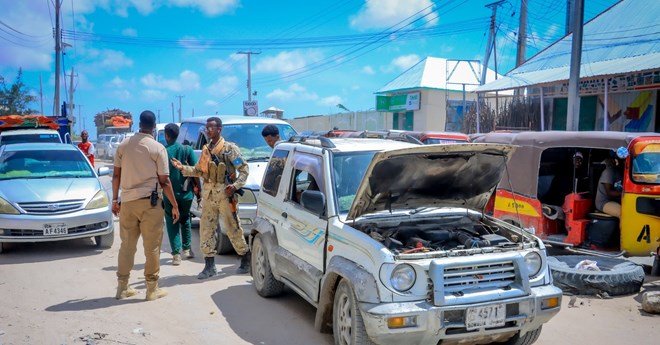
MOGADISHU — The Banadir Regional Police Command has rejected reports circulating on social media that major roads in Mogadishu are being closed and traffic halted, saying the claims have no basis.
In a public notice issued on 5 October 2026, the police command said the reports being shared on social media and other platforms are unfounded. The public was urged not to be misled by unverified information and to rely only on official statements issued by security agencies.
The police confirmed that general traffic in Mogadishu is flowing normally and that no general order has been issued to close roads or halt public movement.
Context of the Denial
The police denial comes as Mogadishu allegedly prepares to host a conference of African Union troop-contributing countries from 6 to 8 October 2026. The meeting is expected to bring senior military and security officials to the capital, and sources have indicated that roads leading to Villa Somalia may be temporarily closed for VIP movements to and from the conference venue. However, the venue has not been publicly confirmed, and no general road closures have been ordered.
The distinction matters. Temporary, localized road closures for VIP movements are a routine security measure during high-level diplomatic and military gatherings. The police notice appears intended to clarify that such temporary measures do not amount to a general lockdown or the closure of major roads across the city.
The AU troop-contributing countries conference is significant for Somalia’s security transition. As reported in FTL Somalia’s coverage of the Ethiopian withdrawal, Ethiopia plans to withdraw more than 3,000 troops from Somalia’s South West State to address its internal conflict. The conference is expected to address force generation, funding, and coordination among the mission’s contributors at a time when AUSSOM faces chronic funding shortfalls and political uncertainty.
Pattern of Unverified Security Claims
The police denial is the latest in a series of official clarifications issued in response to unverified reports circulating on social media. The Somali Civil Aviation Authority issued a similar public notice on the same day, rejecting claims that Aden Adde International Airport would close in the coming days, as reported in FTL Somalia’s coverage of the airport notice.
The circulation of unverified security-related claims has become a recurring challenge in Mogadishu. In September 2026, reports of potential attacks on the capital triggered security alerts and disrupted normal activity, though no major incident materialised. The police have repeatedly called on the public to verify information through official channels before sharing it.
Critical Note
The Banadir Police Command’s decision to issue a formal public notice rejecting the road closure reports reflects growing concern within the government about the impact of disinformation on public confidence and daily life in the capital. Unverified claims about security incidents, road closures, and airport shutdowns can cause unnecessary panic and disrupt economic activity.
The context of the AU troop-contributing countries conference adds an important dimension. High-level military gatherings inevitably involve temporary security measures, including VIP road closures. These are normal and expected. But when unverified reports circulate without context, they can be misinterpreted as a general lockdown. The police notice appears intended to preempt that confusion.
However, the notice raises the question of why such reports continue to circulate so frequently. In a city where security incidents do occur and where official communication is often slow, the public has limited means of distinguishing between genuine warnings and false rumours. The police’s call for citizens to rely only on official sources is reasonable, but it assumes that official information is timely and accessible. When it is not, rumours fill the gap. A more transparent approach, including timely public advisories about temporary road closures for VIP movements, would help build public trust and reduce the space for speculation.