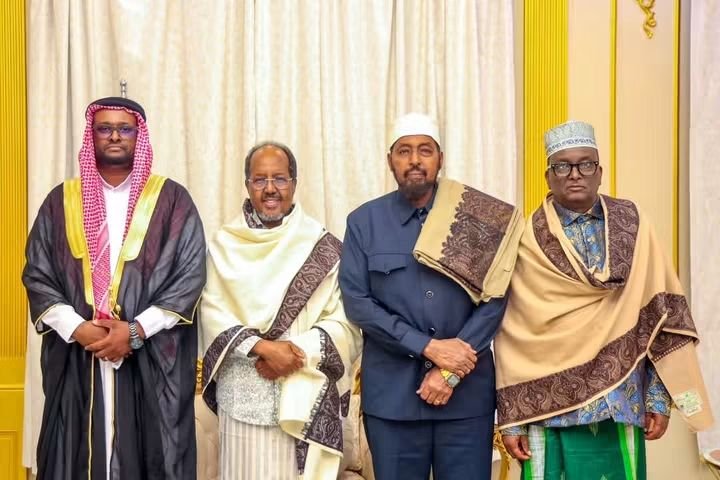
MOGADISHU, President Hassan Sheikh Mohamud received a delegation of traditional leaders from the northern regions, known as Somaliland, at the Presidential Palace on Tuesday, urging them to use their influence to promote reconciliation and strengthen ties among Somali communities.
The delegation included Boqor Ibrahim Boqor Ali Hussein, Sultan Mahmoud Ahmed, and Sultan Omar Osman Goodir, who had been in Mogadishu for several days. According to a statement from the presidency, discussions focused on national unity, social cohesion, and the role of traditional leadership in encouraging dialogue and understanding among communities.
The President emphasized the importance of traditional elders in safeguarding national unity, peace, and social cohesion, saying that dialogue, mutual respect, and the longstanding ties between Somali communities were essential foundations for strengthening brotherhood and trust. He urged the leaders to continue playing an active role in peacebuilding and bringing communities closer together.
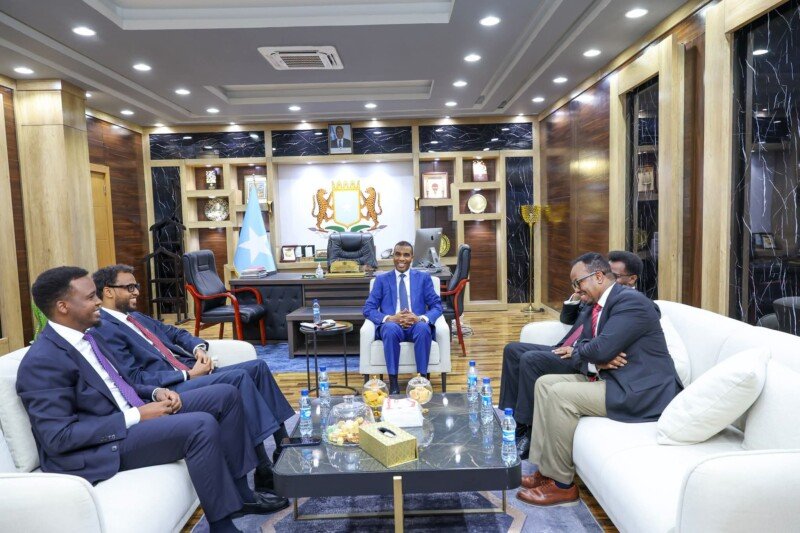
The meeting is the latest in a series of engagements between Mogadishu and traditional figures from the north. Just days earlier, Banadir Regional Governor Hassan Mohamed Hussein welcomed a similar delegation of elders in Mogadishu, who stated that they had come “seeking unity and supporting the togetherness of the Federal Republic of Somalia,” as FTL Somalia reported on the earlier visit.
A Familiar Dynamic, With Familiar Limits
The visit follows a pattern that has become familiar in Somalia-Somaliland relations. Traditional elders, clan leaders, and cultural figures travel to Mogadishu, are received by senior officials, and issue calls for unity. The federal government amplifies these gestures as evidence that the social fabric of the Somali people remains intact despite the political division.
That is partly true. Traditional leaders do maintain relationships that politicians cannot. But the elders do not speak for the political leadership in Hargeisa, and their calls for unity do not change the fact that Somaliland’s government has rejected reunification and pursued its own diplomatic path. As FTL Somalia reported when ministers used a similar gathering to call for dialogue, the federal government’s outreach remains directed at individuals rather than the political authority in Hargeisa.
The political backdrop has grown more difficult. Israel’s recognition of Somaliland in December 2025, followed by the opening of a Somaliland embassy in Jerusalem and the deepening of security ties between Hargeisa and Tel Aviv, has pushed the two sides further apart. The federal government has condemned the recognition as a violation of Somalia’s sovereignty and territorial integrity.
Critical Note
The meeting between President Mohamud and the traditional leaders is a genuine gesture of cultural affinity. The elders who traveled to Mogadishu deserve credit for their willingness to engage across political lines, and the President’s emphasis on dialogue and mutual respect is consistent with the government’s stated position on national unity.
But the ceremony should not be mistaken for a political breakthrough. The elders do not represent the Somaliland administration, and their presence in Mogadishu does not signal that Hargeisa is reconsidering its position. The federal government knows this. The question is why it continues to invest in these gestures without a corresponding effort to address the political grievances that led Somaliland to seek independence in the first place.
One answer is that the gestures are not really aimed at Hargeisa. They are aimed at Mogadishu’s domestic audience and at international partners who want to see evidence that the federal government is committed to dialogue and reconciliation. The optics of traditional leaders from the north being welcomed at the Presidential Palace are useful. They reinforce the narrative that Somalia remains unified at the social level, even if it is divided politically.
That narrative has value, but it has limits. The elders can open a door, but they cannot force the politicians to walk through it. Until the federal government is prepared to engage in a serious negotiation with Somaliland’s leadership over the terms of any future relationship, the visits will remain what they are: symbolic gestures that do not alter the political reality. The President has urged the elders to promote reconciliation. The harder task is for the government to do the same.