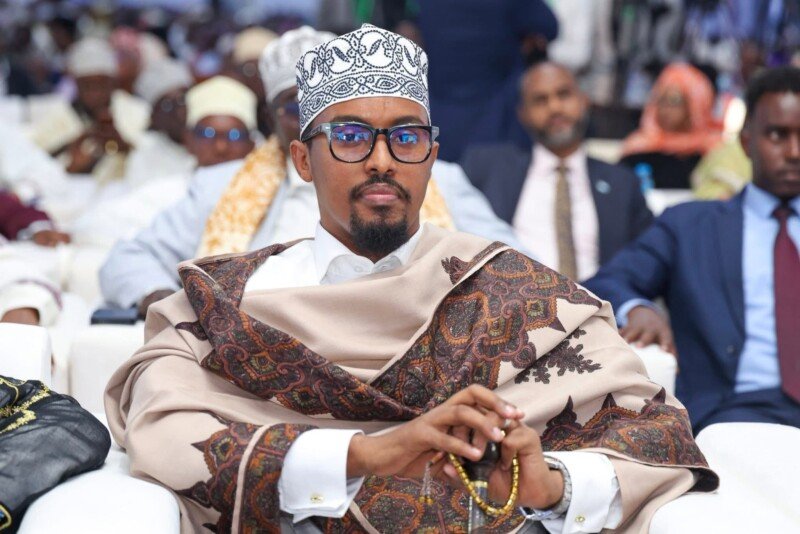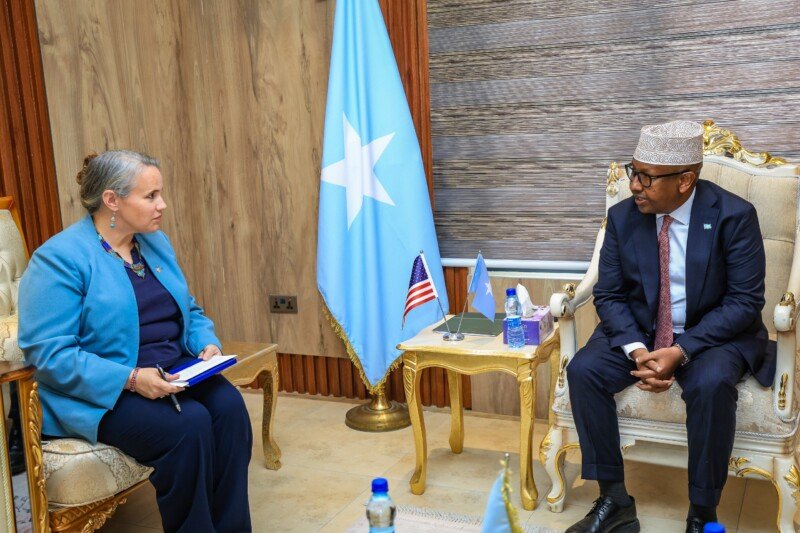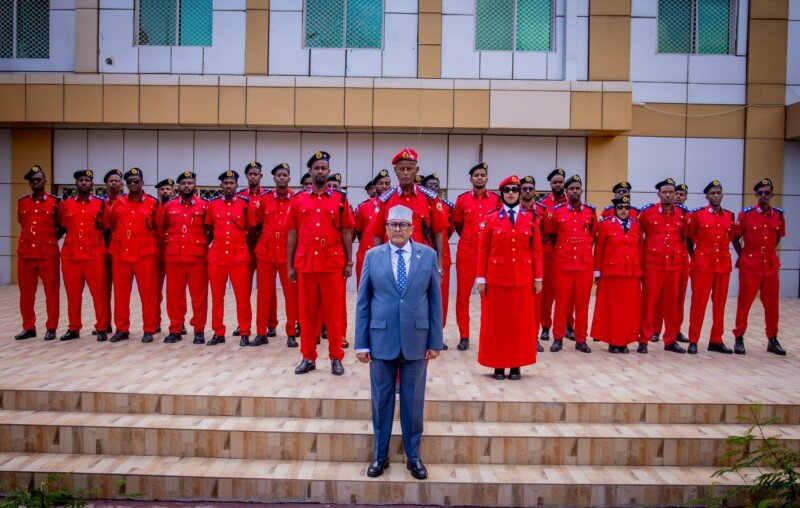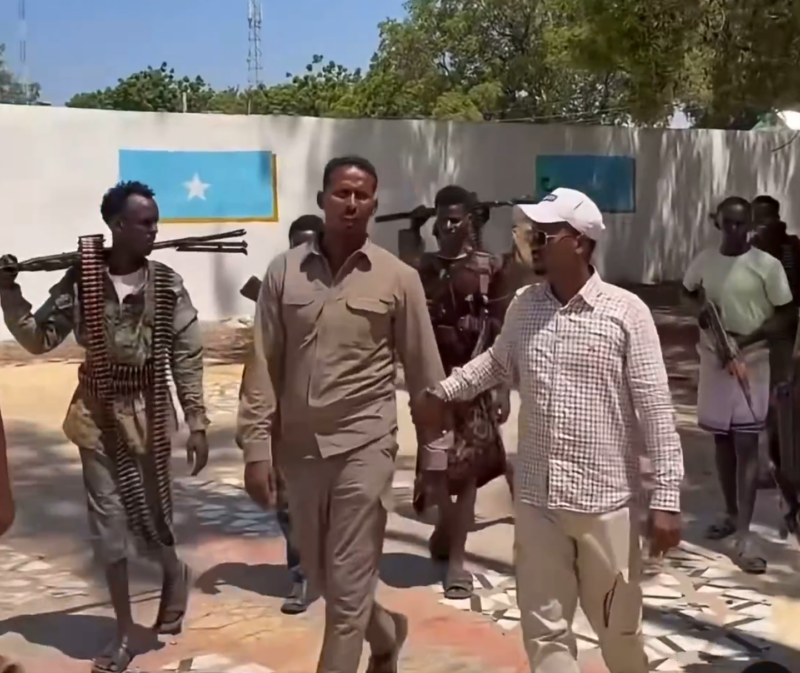
BELEDWEYNE, Armed Macawisley militia fighters and former NISA director Abdullahi Mohamed Ali Sanbaloolshe have reportedly entered Beledweyne, the capital of Hiiraan region, in a dramatic escalation of the political dispute between local Hawadle actors and the Hirshabelle regional administration.
Social media reports circulating on Friday claimed that Macawisley forces had captured the regional airport in Beledweyne and that the Hirshabelle-appointed governor of Hiiraan had fled the city. These claims could not be independently verified.
What is confirmed is that Beledweyne has been tense for days. As FTL Somalia reported, armed forces and Macawisley militia members had been seen moving through residential neighbourhoods, with heavy weapons positioned on rooftops overlooking strategic locations and anti-aircraft equipment moved near Ugaas Khaliif Airport. The developments raised fears that the political dispute over Hirshabelle’s leadership could escalate into armed confrontation.
Sanbaloolshe, a former director of the National Intelligence and Security Agency and a sitting MP, has been at the centre of the escalating confrontation. In an interview with Geylan Media that has circulated on social media, he claimed to have met in the United Arab Emirates with Somaliland President Abdirahman Mohamed Abdullahi Irro, Puntland President Said Abdullahi Deni, and Jubaland leader Ahmed Mohamed Islam Madobe, discussions he said were focused on forming a front to remove President Hassan Sheikh Mohamud from power.
The claims have not been independently verified. The opposition National Salvation Council has denied that Sanbaloolshe is a member, after he claimed membership in the same interview.
The Dispute Behind the Mobilisation
The immediate trigger for the current standoff lies in the relationship between Hiiraan and the Hirshabelle presidency, which has been strained since the formation of the federal member state in 2016. The original power-sharing arrangement allocated the presidency to the Hawadle clan, dominant in Hiiraan, but that arrangement was broken in 2020 when Ali Gudlawe, an Abgaal from Middle Shabelle, was elected president. As FTL Somalia reported, Hawadle political leaders and traditional elders have repeatedly demanded a return of the presidency to their community.
The most recent flashpoint came in mid-October, when Gudlawe dismissed Hiiraan Governor Mohamed Hussein Mohamed Arab and reappointed Muse Salad Weheliye, a former governor, to the post. The dismissal came days after Arab publicly criticized the distribution of tax revenue collected from the livestock market in Beledweyne, arguing that the allocation of funds to other localities was unfair. The Hirshabelle presidency denied a link, stating that the decision followed a recommendation from the regional interior minister.
The new governor, Muse Salad, is the official whose proposed visit to Beledweyne was reportedly opposed by local actors, with the Hiiraan regional administration warning airlines against transporting him. The warning, whose legal basis and precise authority have not been made public, underscored the depth of local rejection of the Hirshabelle-appointed leadership.
The Macawisley Dimension
The Macawisley are community-based militias that have played a significant role in operations against Al-Shabaab in Hiiraan, often backed at different times by Somali government forces. Their mobilisation in a political dispute rather than a counter-insurgency campaign represents a significant shift.
As FTL Somalia noted in its analysis of the situation, the pattern is familiar in Lower Shabelle and now appears to be repeating in Hiiraan: whenever the militant group’s control is removed or reduced, unresolved local disputes resurface, and weak administrative institutions create openings for armed mobilisation. The Macawisley, formed to fight Al-Shabaab, are now being drawn into a confrontation with the regional administration they were once allied with.
The Critical Threats Project reported on October 29 that Hawadle militia members were beginning to mobilise around Beledweyne. The precise numbers and command structure of the forces reportedly entering the city remain unclear.
The National and Regional Context
The Beledweyne confrontation intersects with a broader political crisis that has been building for months. Sanbaloolshe’s claims about meetings in the UAE align with earlier reporting that several prominent figures opposed to President Mohamud were in Abu Dhabi for talks. As FTL Somalia reported, Defence Minister Ahmed Moallim Fiqi accused opposition politicians of meeting with representatives linked to Sudan’s Rapid Support Forces in the Emirati capital, claiming the gatherings were part of a plot against Somali statehood. The government has not publicly presented evidence to substantiate the claim.
Puntland and Jubaland, whose leaders Sanbaloolshe claims to have met, have rejected Mohamud’s constitutional and electoral reforms and demand a negotiated electoral agreement. Somaliland, which declared independence in 1991, rejects Mogadishu’s authority entirely.
The timing of the Beledweyne escalation, coming as Uganda begins withdrawing its troops from Somalia and as the AUSSOM mission faces a funding crisis, adds another layer of instability to a security transition already under strain.
Critical Note
The reports from Beledweyne are fragmentary and contested, and FTL Somalia cannot confirm the claims that the airport has been captured or that the governor has fled. What is clear is that a city that has been a frontline in the fight against Al-Shabaab is now the site of an armed political confrontation between local actors and the regional administration. That development deserves serious attention, not dismissal as mere social media rumour.
The Hawadle community’s grievances over power-sharing and revenue distribution are not new, and they are not illegitimate. They date back to the formation of Hirshabelle and were sharpened by the 2020 election that broke the original agreement. But the turn to armed mobilisation, whatever its provocations, carries risks that fall hardest on the residents of Beledweyne, who have already borne years of displacement and violence.
The federal government’s response will be telling. If it treats the Beledweyne events solely as a security problem to be suppressed, it will miss the political roots of the confrontation. If it ignores them, the vacuum will be filled by those with weapons and their own agendas. The most urgent task is to de-escalate the armed standoff and create space for a negotiated resolution to the Hirshabelle dispute. Whether Mogadishu has the will and the capacity to do that, while managing a troop withdrawal and a funding crisis, is an open question.
Recommended Reading On ftlsomalia.com
- Beledweyne Tensions Rise as Armed Forces Deploy Heavy Weapons
- Gudlawe Replaces Hiiraan Governor with Former Officeholder as Regional Election Looms
- Former NISA Chief Alleges Abu Dhabi Plot with Deni, Madobe and Cirro as Mogadishu Escalates UAE Accusation
- Governance Vacuum Fuels Clan Mobilisation in Lower Shabelle Following Al-Shabaab Withdrawal