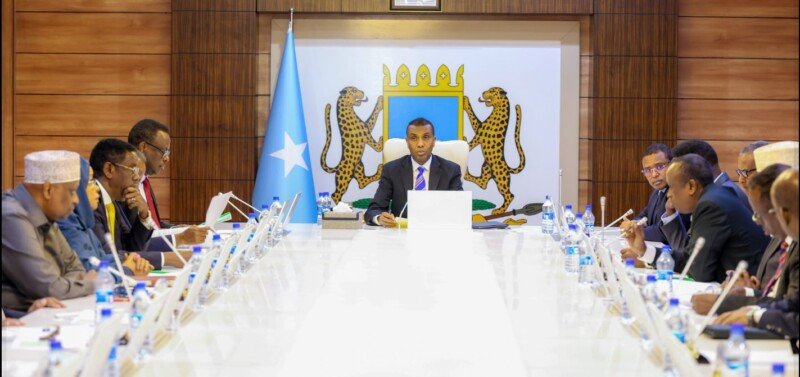
MOGADISHU — Somalia’s Council of Ministers held its weekly meeting on Wednesday, chaired by Prime Minister Hamza Abdi Barre, reviewing reports on security, health, elections, trade, and other matters, and approving a resolution to establish a national Ebola preparedness committee.
The Cabinet received a report from the Ministry of Interior, Federal Affairs and Reconciliation on the recently concluded one-person, one-vote elections in Galmudug and Hirshabelle states. The Council commended the democratic process, describing it as part of the government’s efforts to implement the constitution. As detailed in FTL Somalia’s coverage of the constitutional review timeline, the Independent Constitutional Review and Implementation Commission has set October 14, 2026, as the deadline for key amendments, and the Cabinet’s emphasis on constitutional implementation comes as that deadline approaches.
Ebola Preparedness Committee Established
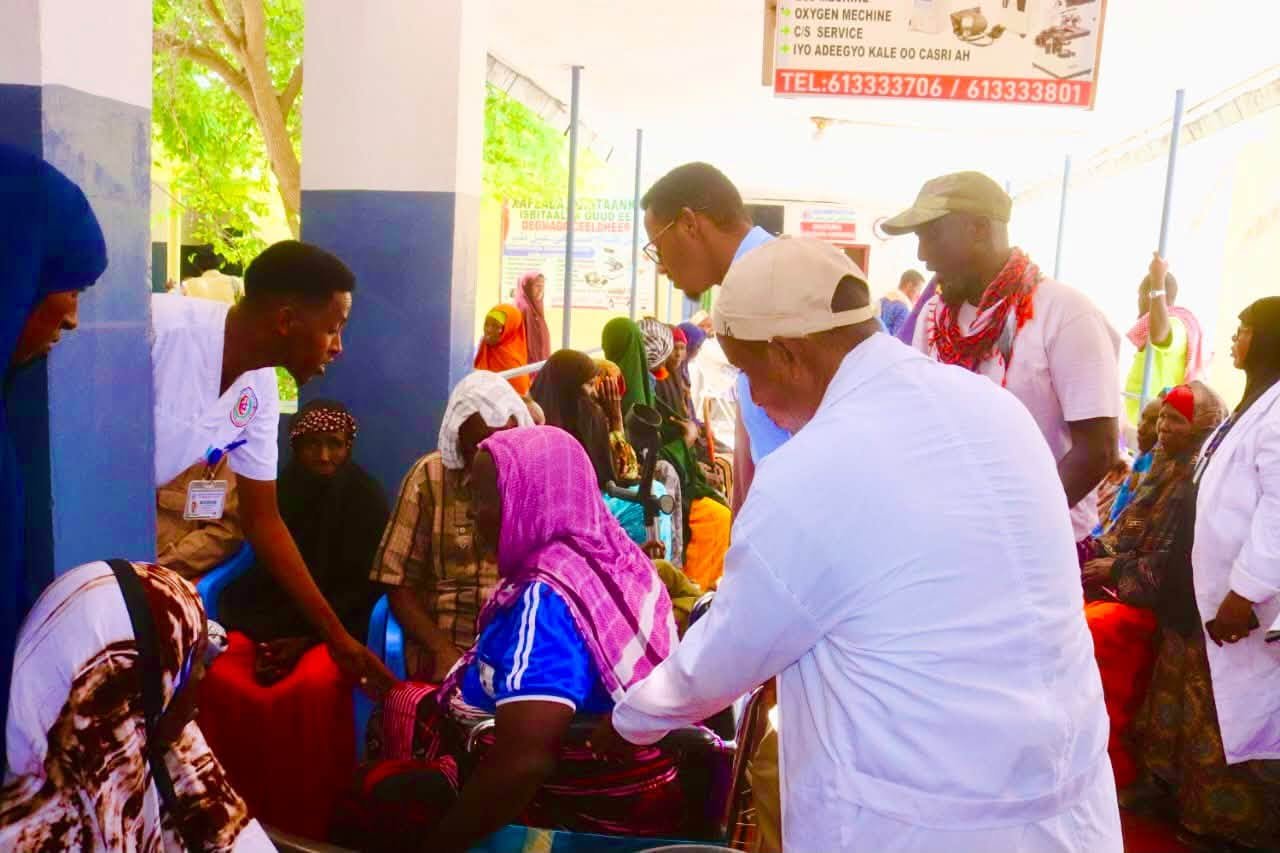
The Ministry of Health and Social Care presented a report on the Ebola situation and measures to prevent the disease from reaching Somalia. Following the report, the Cabinet approved a resolution establishing a committee composed of six ministries and chaired by the Second Deputy Prime Minister, Jibril Haji Abdi.
The committee includes the Ministries of Health, Security, Foreign Affairs, Transport, Information, and Livestock. The establishment of the committee follows Kenya’s confirmation of its first Ebola case earlier this week. Somali health authorities have deployed staff at Mogadishu airport to monitor arriving travellers, and the Cabinet’s decision to create a multi-ministerial committee reflects the cross-cutting nature of Ebola preparedness.
EAC Membership Benefits Reviewed
The Cabinet reviewed a report on the benefits Somalia has gained from joining the East African Community (EAC). The report highlighted that Somali students can now attend universities in East Africa at fixed regional tuition rates, while tourists are exempt from foreigner tourism fees.
The Ministry of Foreign Affairs reported that EAC membership has facilitated residency, travel, and health matters, and noted that for the first time, Somalia has been allocated a permanent EAC staff quota. As detailed in FTL Somalia’s coverage of Somalia’s EAC staffing push, the country is expected to secure 11 staff positions within the bloc’s institutions.
WTO Accession Progress
The Ministry of Commerce and Industry presented a report on the status of Somalia’s bid to join the World Trade Organization (WTO). The process, which has been underway for approximately 10 years, is nearing completion, with Somalia having fulfilled all required conditions, including tariff scheduling and the establishment of administrative institutions.
As reported in FTL Somalia’s coverage of Somalia’s WTO accession, the process is in its final stages. The Cabinet’s statement that Somalia has fulfilled all required conditions is a significant milestone in the decade-long effort.
National Fisheries Company Committee Approved
The Cabinet approved a nine-member committee for the National Fisheries Company, following a proposal from the Ministry of Fisheries and Blue Economy. The establishment of the committee is a step toward formalizing the governance of Somalia’s fisheries sector.
This move aligns with broader efforts to develop the blue economy. As detailed in FTL Somalia’s coverage of the Somtürk fisheries committees, Somalia has been advancing joint ventures and committee structures to manage marine resources, though the sector faces political and regulatory tensions.
Prime Minister Hamza instructed the Cabinet to accelerate priority government tasks and strengthen inter-agency cooperation to ensure the government’s plans for the year are realized.
Critical Note
The Cabinet’s decisions reflect a government attempting to manage multiple priorities simultaneously: a public health threat from across the border, the consolidation of regional integration gains, the final stages of a decade-long WTO accession process, and the development of a national fisheries company.
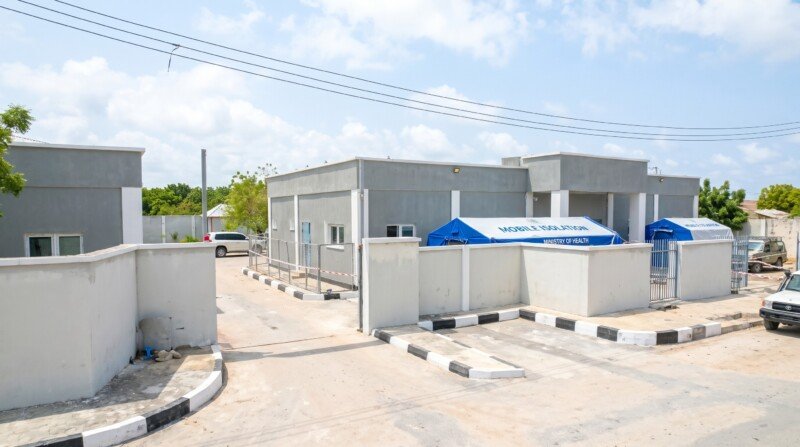
The Ebola preparedness committee is a necessary bureaucratic step, but its effectiveness will be tested in implementation. Somalia’s points of entry have IHR core capacities of only 20 percent, and the federal government does not control all airports and borders. A committee chaired by the Second Deputy Prime Minister can coordinate policy, but it cannot substitute for functioning isolation facilities, biosecure transport, and laboratory capacity.
The EAC benefits cited by the Cabinet are real but modest. Access to regional tuition rates and exemption from tourism fees are tangible gains, but they do not by themselves transform Somalia’s economic prospects. The more consequential benefits, such as access to the EAC common market and labor mobility, depend on continued implementation of trade facilitation reforms.
On WTO accession, the Cabinet’s statement that Somalia has fulfilled all required conditions is optimistic. Accession processes involve complex negotiations on market access, domestic support, and regulatory alignment. The process is nearing completion, but it is not finished.
Recommended Reading On ftlsomalia.com
- Somalia’s Constitutional Review Body Sets October 14 Deadline for Key Amendments
- Somalia Seeks 11 EAC Staff Positions to Strengthen Regional Integration Role
- Somalia About to Join World Trade Organisation
- Turkish Delegation Launches Blue Economy Committees as SOMTURK Faces Puntland Ban and Federal Tensions