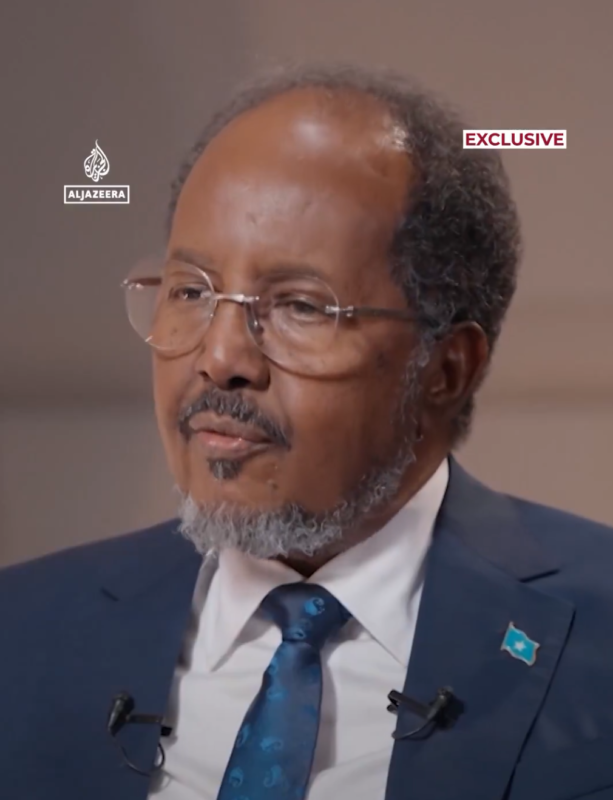
MOGADISHU — Somali President Hassan Sheikh Mohamud has said his country will not accept Israeli presence on its territory “under any circumstances,” accusing Israel of planning to establish a naval base in Berbera and use the city’s airport.
In an exclusive interview with Al Jazeera broadcast on Saturday, Mohamud said Israel’s activities in the area were aimed at strengthening its access to Gulf states and Iran. He described Israel as a “destabilising force” that does not abide by international law.
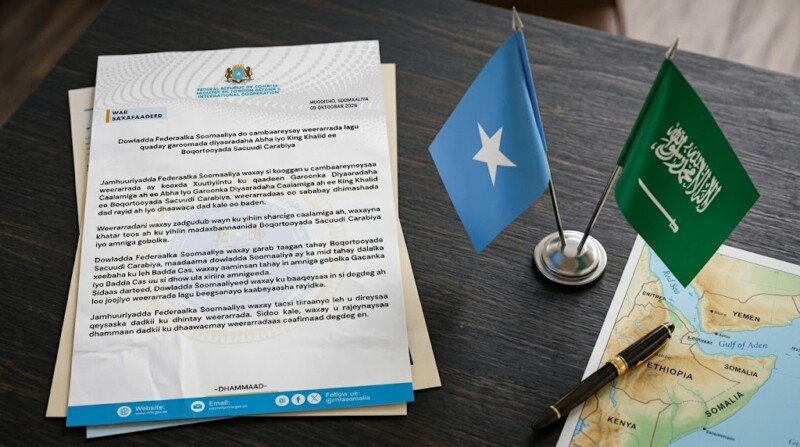
Berbera is a port city on the Gulf of Aden in Somaliland, the self-declared republic in northwestern Somalia that Israel recognised in December 2025 but which Mogadishu claims as part of its territory. The city faces Yemen across the water near the strategic Bab al-Mandeb strait.
“We will overcome the challenges posed to our country by Israeli moves,” Mohamud said. He added that the Israeli plans fall under the “Greater Israel” project, referring to proposals for Israeli control over territory beyond its current borders.
Berbera’s Strategic Significance
Berbera’s location makes it a valuable asset for any military power seeking to project force in the Red Sea and the Gulf of Aden. The airport has one of the longest runways in the Horn of Africa, capable of accommodating heavy transport aircraft and fighter jets. It sits just 550 kilometres from Sanaa, Yemen, compared to at least 1,800 kilometres from Israel, representing a 70 percent reduction in distance for potential operations.
The port and airport have already seen significant infrastructure development. Satellite imagery analysed by open-source investigators shows extensive excavation, new ammunition depots, and at least a dozen underground bunkers carved into the terrain around the air base.
Reports have indicated that Israeli military and intelligence personnel have visited Berbera, and that Somaliland intelligence officers have received training in Israel. As detailed in FTL Somalia’s coverage of Israel’s intelligence presence, multiple current and former officials confirmed that Israel already has an intelligence footprint at Berbera Airport and is holding discussions about a possible military base.
Somaliland’s government has publicly denied plans to host an Israeli military base. As reported in FTL Somalia’s coverage of Somaliland’s denial, President Abdirahman Mohamed Abdullahi (Irro) said “at the moment, Israel has no troops in Somaliland, but I cannot say what may happen in the future”.
Regional Reactions and Risks
The Houthi movement in Yemen has warned that “any Israeli presence in Somaliland” would become a military target. The UAE’s own facilities at Berbera are within range of Houthi short-range ballistic missiles.
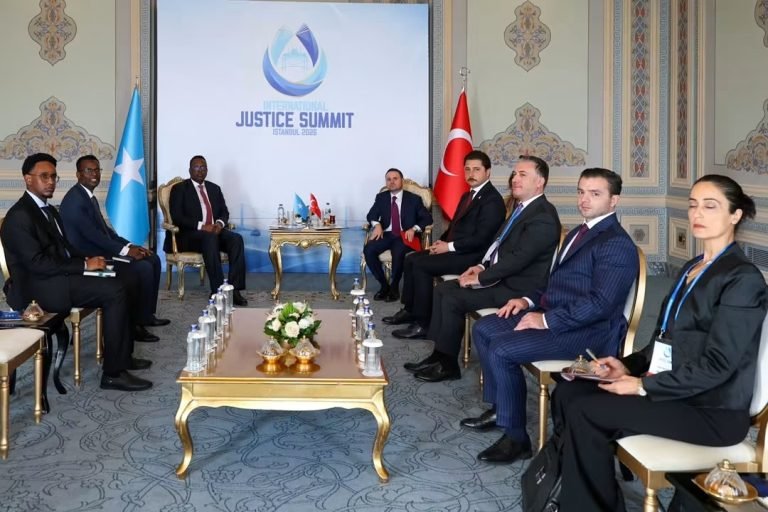
Turkey, which maintains its largest overseas military base in Mogadishu and has trained thousands of Somali soldiers, has branded Israel’s recognition of Somaliland unlawful. Egypt, Saudi Arabia, and the Arab League have also reaffirmed support for Somalia’s territorial integrity.
Washington has not followed Israel’s lead. A State Department report to Congress in June 2026 reaffirmed that the United States recognises Somaliland as part of Somalia, while AFRICOM commander General Dagvin Anderson has visited Hargeisa and Berbera for counterterrorism discussions.
Mohamud also stated that the people of Somaliland themselves are completely opposed to an Israeli presence, and that attempts to pull Somalia into Middle East crises would not succeed.
Critical Note
President Mohamud’s statement is a clear rejection of Israel’s expanding footprint in the Horn of Africa, but it also underscores the limits of Mogadishu’s authority. Somaliland has governed itself for more than three decades and signed its own defence agreements, including the 2017 pact with the UAE that facilitated development at Berbera. Mogadishu can condemn these arrangements, but it cannot physically prevent them.
The strategic logic behind Israel’s interest in Berbera is straightforward: the airport and port offer a platform for monitoring and potentially striking Houthi targets in Yemen, as well as for projecting power into the Red Sea. The infrastructure upgrades already underway suggest that preparations for military use are well advanced, regardless of the public ambiguity from Hargeisa.
For Somalia, the challenge is not simply opposing Israel’s presence but articulating a credible alternative. Mogadishu has deepened its own partnerships with Turkey, Egypt, and Eritrea, but those relationships carry their own risks. The competition for influence in the Red Sea is intensifying, and Somalia risks becoming a proxy battleground if it cannot manage these competing interests. The President’s words are firm, but the gap between rhetoric and the reality on the ground in Berbera remains wide.
Recommended Reading On ftlsomalia.com
- Israel Opens Somaliland Intelligence Base
- President Cirro of Somaliland: No Israeli Troops in Somaliland for Now
- CNN: Somaliland Provided Covert Military Position to Israel During Iran War
- Israel Recognizes Somaliland as Independent State
- President Irro of Somaliland Meets Israeli Ambassador at UN as Recognition Strategy Faces Growing Doubts