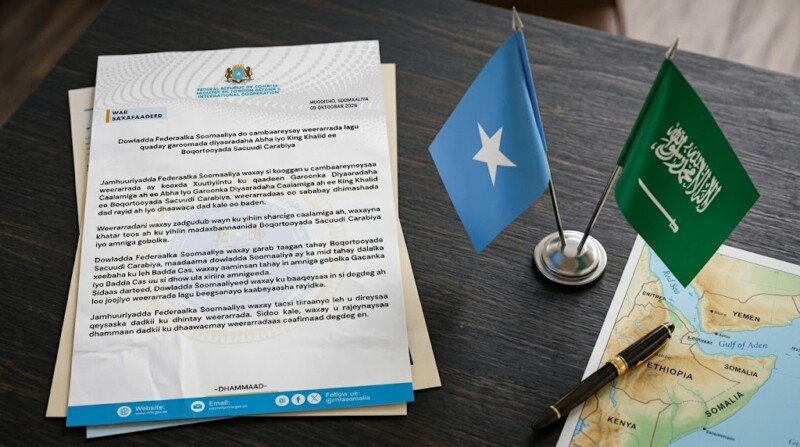
MOGADISHU — Somalia’s federal government has strongly condemned Houthi attacks on two international airports in Saudi Arabia, describing them as violations of international law and a direct threat to the Kingdom’s sovereignty and regional security.
In an official statement issued on 9 October 2026, the Ministry of Foreign Affairs and International Cooperation said the attacks targeted Abha International Airport and King Khalid International Airport, causing civilian casualties and injuries. The statement expressed Somalia’s solidarity with Saudi Arabia and emphasized that the security of the Gulf and Red Sea is closely tied to Somalia’s own stability.
The Attacks and Regional Escalation
The Houthi attacks, which occurred between 6 and 8 October 2026, marked a significant escalation in the group’s campaign against Saudi Arabia. According to Saudi authorities, the strikes killed three people, including one Egyptian and one Algerian national at Abha airport and one Sudanese national at King Khalid airport, and wounded at least 36 others. The Independent Permanent Human Rights Commission of the Organisation of Islamic Cooperation condemned the attacks, noting that they targeted civilian infrastructure and a civilian aircraft, and warned they could constitute war crimes.
The attacks came amid a broader regional crisis linked to the ongoing conflict between the United States and Iran. The Houthis had previously imposed a maritime blockade on Saudi Arabia in July 2026, claiming responsibility for attacking two Saudi oil tankers in the Red Sea. As reported in FTL Somalia’s coverage of the Houthi attacks, Somalia’s Ministry of Foreign Affairs had already condemned the earlier threats against Saudi Arabia, denouncing actions that undermine maritime security and freedom of navigation.
Somalia’s Strategic Position
Somalia’s statement reflects its position as a Red Sea littoral state with a direct stake in the security of the Bab al-Mandab Strait and the Gulf of Aden. The federal government has consistently argued that instability in the Red Sea extends beyond regional boundaries and is closely connected to global peace and prosperity.
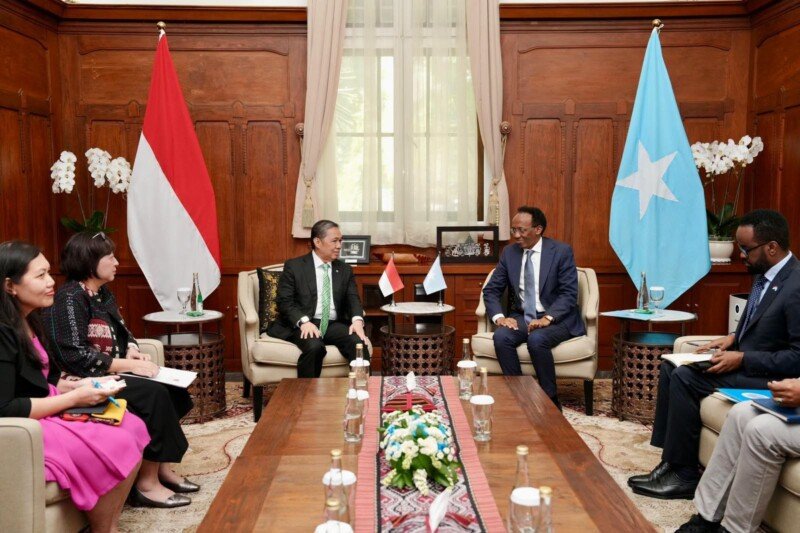
In July 2026, Somalia joined a new maritime security coalition alongside Saudi Arabia and 11 other nations, aimed at protecting freedom of navigation in the Bab al-Mandab Strait, the Red Sea, and the Gulf of Aden. As reported in FTL Somalia’s coverage of the coalition, the alliance was described as defensive in nature, with planned operations including intelligence sharing, joint patrols, and maritime operations.
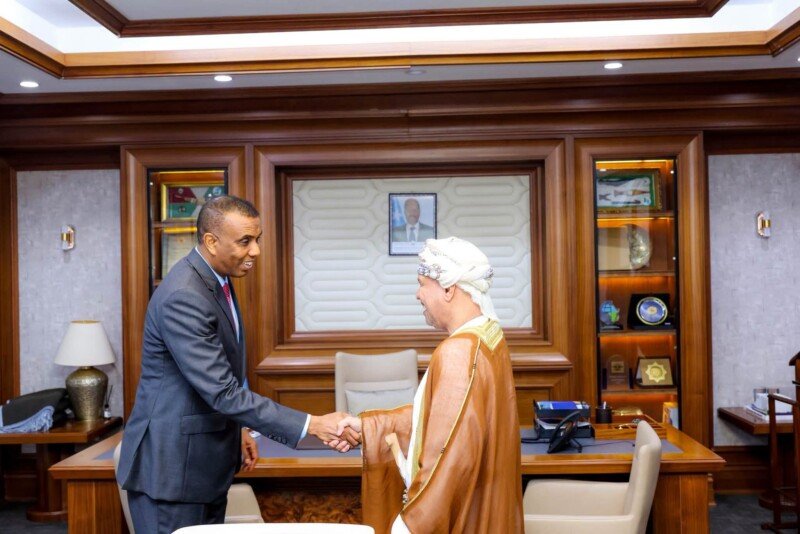
Somalia’s Foreign Minister, Abdisalam Abdi Ali (Dhaay), had previously held discussions with his Saudi counterpart, Prince Faisal bin Farhan Al Saud, emphasizing the importance of securing international waters and ensuring freedom of navigation in the Bab al-Mandab Strait and the Gulf of Aden, as detailed in FTL Somalia’s coverage of the diplomatic engagement.
Regional Diplomatic Alignment
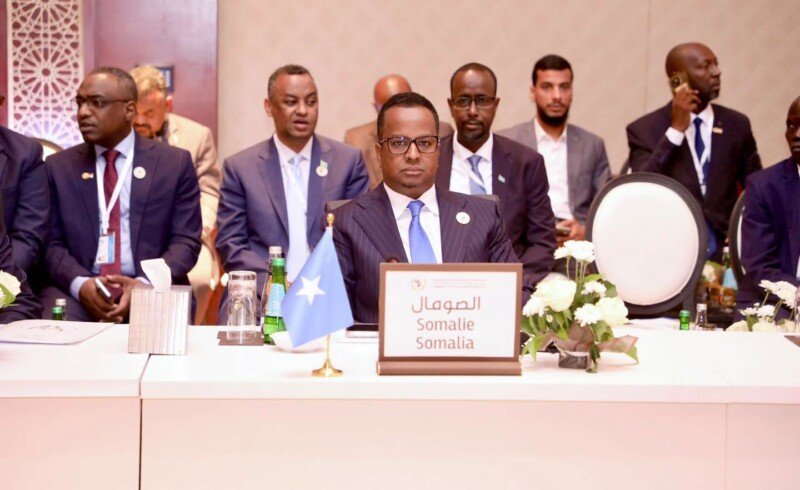
Somalia’s condemnation of the Houthi attacks aligns with a broader diplomatic framework established at the El Alamein Joint Declaration on 4 October 2026. The quadrilateral summit brought together the leaders of Egypt, Sudan, Eritrea, and Somalia, who affirmed the principle of freedom of navigation and declared that the governance of the Red Sea is the exclusive responsibility of its littoral states. The declaration also rejected any recognition of or support for Somaliland, considering it an infringement of Somalia’s sovereignty.
The leaders called on regional and international partners to provide adequate, sustainable, and predictable funding for the African Union Support and Stabilization Mission in Somalia (AUSSOM) to support the country’s security transition.
Critical Note
Somalia’s condemnation of the Houthi attacks on Saudi Arabia is a necessary diplomatic statement, but it also exposes the gap between Somalia’s declared position as a Red Sea stakeholder and its actual capacity to influence events in the region. The federal government has consistently aligned itself with Saudi Arabia and the littoral states’ framework for Red Sea governance, yet its ability to protect its own maritime domain remains limited.
The attacks on Abha and King Khalid airports demonstrate how quickly the Red Sea crisis can escalate. For Somalia, the primary concern is economic. As documented in FTL Somalia’s reporting, the earlier Houthi attacks on Saudi tankers triggered a 77 percent overnight surge in fuel prices in Mogadishu, with analysts warning that food prices would likely follow. The resurgence of piracy off Somalia’s coast, driven by the diversion of international naval assets to the Red Sea, has further compounded these economic pressures.
Somalia’s diplomatic alignment with Saudi Arabia and the El Alamein framework provides political cover and potential security cooperation. But the country’s fundamental vulnerability remains: it is a littoral state with limited naval capacity, a weak coast guard, and an economy highly dependent on imports that transit through the very waterways now under threat. Statements of solidarity are important, but they do not secure shipping lanes or protect Somali citizens from the economic fallout of a regional war.
Recommended Reading On ftlsomalia.com
- Houthi Attacks and Iran-US Conflict Threaten Somalia’s Fragile Recovery
- Saudi Arabia, Somalia and 11 Nations Form New Maritime Coalition to Secure Red Sea and Bab al-Mandab
- Somali Foreign Minister and Saudi Counterpart Discuss Bilateral Cooperation and Maritime Security
- Somalia, DRC and Liberia Call for Yemen Sovereignty and De-escalation at UN Security Council