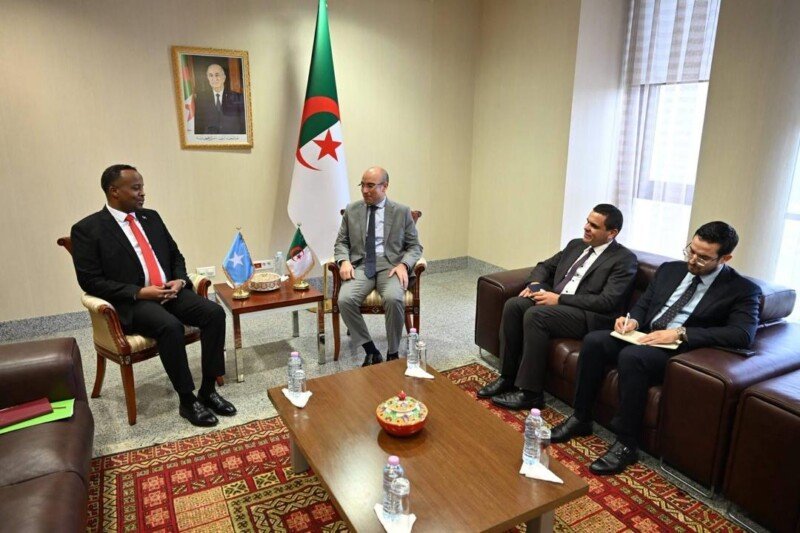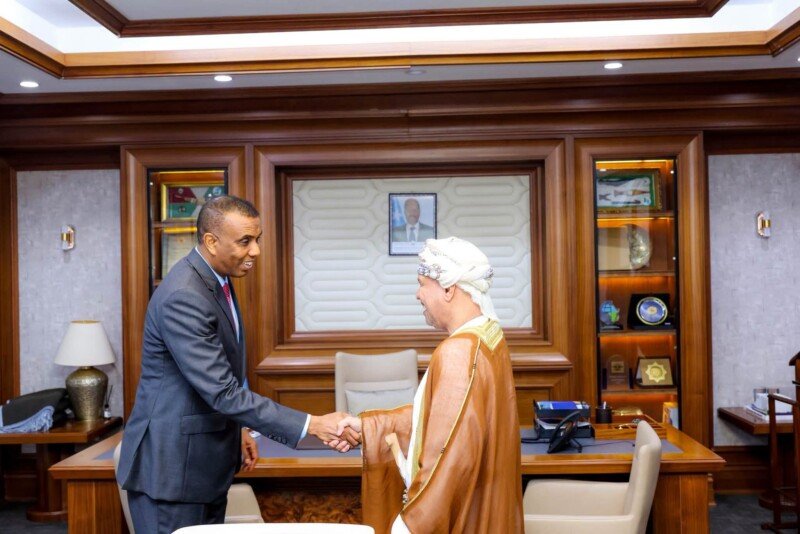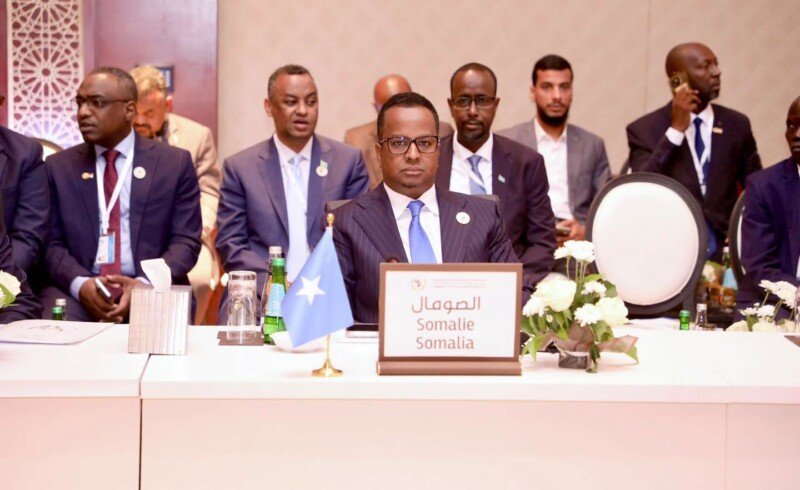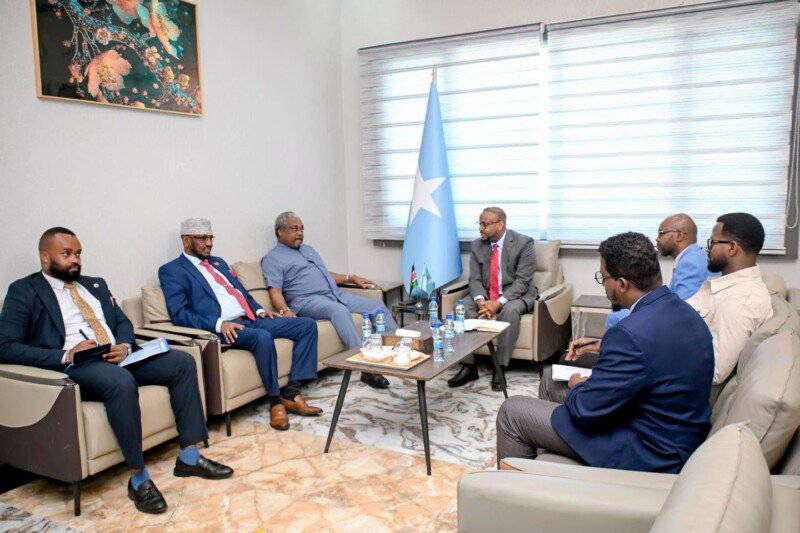
MOGADISHU, Somalia’s Permanent Secretary at the Ministry of Foreign Affairs, Hamza Adan Haadoow, met with Kenya’s Ambassador to Somalia, Kubai Iringo, on Monday to discuss strengthening bilateral relations and accelerating the work of the Joint Cooperation Commission between the two countries.
The meeting focused on making the Joint Cooperation Commission the primary platform for implementing shared priorities across political, economic, and regional affairs. Both sides emphasized the importance of structured cooperation between the two neighboring states, which are both members of the East African Community, as previously discussed in earlier diplomatic engagements aimed at advancing the Joint Commission of Cooperation.
However, the diplomatic engagement comes at a delicate moment in Somalia-Kenya relations, one that is not solely defined by the agenda of the Joint Cooperation Commission. The meeting took place as a former Somali regional leader, Abdiaziz Hassan Mohamed Laftagareen, continues to operate from Nairobi, where he has been based since fleeing Baidoa in March 2026 under military pressure from federal forces.
The Laftagareen Factor
Laftagareen’s presence in Kenya has become a persistent issue in the relationship. Since his departure from Baidoa, he has maintained a defiant posture, publicly rejecting his removal and vowing a political return from exile while insisting he remains the legitimate president of South West State. He has continued to engage in national politics from Kenyan soil, even as his loyalist forces have seized official South West State digital platforms to broadcast messages challenging the federal government’s authority.
The pressure escalated in October 2026, when Somalia’s government announced financial sanctions against Laftagareen and nine other individuals over suspected links to Al-Shabaab and terrorist financing. The sanctions require financial institutions to freeze assets and halt transactions involving those listed. Laftagareen has rejected federal claims linking his forces to Al-Shabaab, warning that such allegations endanger civilians and worsen political tensions. South West State’s Security Minister subsequently called on the Kenyan government to arrest Laftagareen and extradite him to Somalia.
The Laftagareen issue is not a bilateral dispute in the traditional sense. Kenya has not been accused of harboring him for hostile purposes, and Nairobi has its own complex relationship with Mogadishu, including a history of diplomatic rows over passports, trade, and security. In July 2026, Kenya deported a Somali State Minister over terrorism financing allegations, the second senior Somali official expelled in a month. But the fact that a sanctioned former regional leader can operate freely from Nairobi while the two governments discuss “strengthening cooperation” illustrates the gap between diplomatic rhetoric and the practical realities of cross-border politics.
Critical Note
The Joint Cooperation Commission is a necessary mechanism for managing a relationship that matters to both countries. Trade, security, and the movement of people across their shared border require structured engagement, and the Permanent Secretary’s meeting with Ambassador Iringo is a routine but important step in that process.
But the meeting cannot be separated from the Laftagareen question. A former regional president who has been sanctioned by Mogadishu for suspected links to Al-Shabaab is living in Nairobi, holding political meetings, and broadcasting messages from exile. The Kenyan government has not acted on Somalia’s extradition request. These are not minor diplomatic irritants. They go to the heart of whether the two governments trust each other enough to translate the Joint Cooperation Commission from a talking shop into a functioning mechanism.
The readout of Monday’s meeting made no mention of Laftagareen. That silence is understandable in a diplomatic context, but it is also revealing. The two sides discussed cooperation without addressing the most concrete obstacle to it. Until Nairobi and Mogadishu resolve the status of a sanctioned former leader operating from Kenyan territory, the Joint Cooperation Commission will remain a framework for conversations that cannot address the issues that actually divide them.
Recommended Reading On ftlsomalia.com
- “I Remain Lawful President”: Laftagareen Rejects Removal, Vows Political Return from Exile
- Former South West State President Laftagareen Named on Somalia’s Financial Sanctions List
- Ousted South West President Rejects Federal Claims Linking His Forces to Al-Shabaab
- Laftagareen Seizes Official Southwest State Digital Platforms Amid Standoff With Adan Madobe
- Somalia, Kenya Reaffirm Strategic Partnership in Nairobi Talks