MOGADISHU — Somalia is preparing to roll out the International Air Transport Association’s Billing and Settlement Plan (BSP) nationwide following a successful pilot phase, as Mogadishu prepares to host a high-level IATA delegation, according to the Somali Civil Aviation Authority.
Ahmed Moallin Hassan, Director General of the SCAA, said the introduction of the BSP represents a significant milestone in Somalia’s efforts to modernise its air transport system and integrate fully with global aviation payment and settlement standards.
What the BSP Changes
The BSP is a worldwide system designed to facilitate and simplify financial transactions between IATA-accredited passenger sales agents and airlines. It tracks and manages the sale of air tickets and associated financial transactions between more than 400 airlines and tens of thousands of travel agents globally.
In April 2026, IATA launched a pilot of the BSP in Somalia, with a full rollout expected by the end of May 2026. Four travel agents and several airlines serving the country, including Ethiopian Airlines, participated in the pilot. The system will open to all airlines and more than 300 travel agents operating in Somalia.
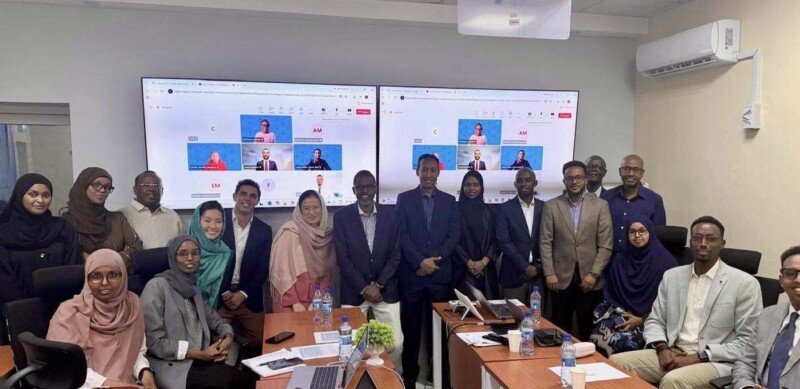
Transport and Civil Aviation Minister Mohamed Farah Nuh announced the development following a high-level IATA meeting, describing it as a major achievement for the nation. Kamil Alawadhi, IATA’s Regional Vice President for Africa and the Middle East, welcomed the initiative and commended the steps taken by the Somali government to modernise and rebuild its aviation infrastructure.
Airspace Recovery and Revenue Gains
The BSP rollout builds on broader progress in Somalia’s aviation sector. Somalia regained Class A airspace classification in January 2023, restoring full control of its airspace after more than three decades. As reported in FTL Somalia’s coverage of the Class A upgrade, the reclassification enabled the country to provide air traffic control services instead of advisory services. Director General Hassan said at the time that the number of flights using Somali airspace could rise from about 400 to 600 per day, with annual revenue projected to increase from $22 million to $34 million.
The SCAA has continued to strengthen its meteorological and aviation safety capabilities. In June 2025, the authority launched a Meteosat Third Generation satellite reception system, replacing a decade-old platform and enhancing real-time weather monitoring and flight planning accuracy, as detailed in FTL Somalia’s coverage of the MTG system.
Aden Adde Airport Modernisation
The BSP rollout coincides with ongoing efforts to modernise Aden Adde International Airport, Somalia’s primary aviation gateway. As reported in FTL Somalia’s coverage of the airport overhaul, Prime Minister Hamza Abdi Barre held high-level talks with Turkish Ambassador Alper Aktaş and executives from Favori LLC, the Turkish company managing the airport, to discuss plans for expanding passenger capacity, upgrading runways, and enhancing safety systems [citation:3].
In February 2026, the Prime Minister conducted an inspection tour of the airport to evaluate service quality and operational performance, ordering immediate refunds for travelers who had been charged for yellow fever cards and directing airport management to improve accountability and passenger convenience, as reported in FTL Somalia’s coverage of the inspection.
Payment System Reform and Cost Savings
The BSP’s introduction mirrors broader efforts by the Central Bank of Somalia to modernise the country’s financial infrastructure and reduce transaction costs. As detailed in FTL Somalia’s coverage of Somalia’s payment system challenges, Central Bank Governor Abdirahman M. Abdullahi has estimated that Somalia loses approximately $210 million annually to intermediary fees on aid and remittance transfers, money that could otherwise finance infrastructure and development projects.
The Central Bank has taken concrete steps to address this. The Somalia Instant Payment System (SIPS), launched in January 2025, enables real-time, 24/7 transfers between banks and mobile wallets, reducing reliance on costly intermediaries. As reported in FTL Somalia’s coverage of the National Payment System, the system processed 1.4 million transactions worth $2.42 billion during 2025, representing a 25 percent increase in value compared with 2024. In the first quarter of 2026 alone, the system processed 337,788 transactions worth $593 million, as detailed in FTL Somalia’s coverage of the Q1 figures.
Governor Abdullahi has also announced Somalia’s readiness to join the Arab Monetary Fund’s Inclusive Instant Payments Initiative, a step expected to further reduce transaction costs and improve cross-border payment infrastructure, as reported in FTL Somalia’s coverage of the initiative.
Critical Note
The introduction of the IATA Billing and Settlement Plan is a concrete and verifiable step forward for Somalia’s aviation sector, distinct from the more aspirational announcements that have characterised some previous reforms. The BSP addresses a specific operational bottleneck: the absence of a centralised, internationally recognised system for settling airline ticket transactions.
The practical impact will depend on implementation. The pilot involved only four travel agents and a handful of airlines. Expanding to more than 300 agents across a country with limited banking infrastructure, weak regulatory enforcement, and ongoing security challenges will not be straightforward. The SCAA will need to ensure that agents comply with BSP requirements, that settlement flows function reliably, and that airlines see tangible benefits in reduced risk and faster payment cycles.
Full BSP rollout would mark another step in Somalia’s long effort to rebuild its civil aviation sector, following the restoration of Class A airspace, the launch of the MTG satellite system, and the ongoing modernisation of Aden Adde International Airport. The parallel progress in the financial sector, particularly the Central Bank’s success in reducing transaction costs through the National Payment System and SIPS, demonstrates that Somalia can achieve measurable improvements in complex technical systems when there is sustained institutional commitment. The BSP is one building block. Its value will be measured by whether it leads to more reliable ticketing, better consumer protection, and deeper integration with global airline networks.
Recommended Reading On ftlsomalia.com
- Somalia Back in Control of Own Airspace Following Class A Upgrade
- Somalia and Türkiye Planning Major Overhaul of Aden Adde International Airport
- Somalia’s National Payment System Surges to 1.4 Million Transactions Worth $2.42 Billion
- Somalia Loses $210 Million Annually in Costly Aid and Remittance Transfer Chains
- Somalia Launches New MTG Satellite System for Aviation Weather Monitoring
- Prime Minister Assesses Aden Abdulle International Airport Operations