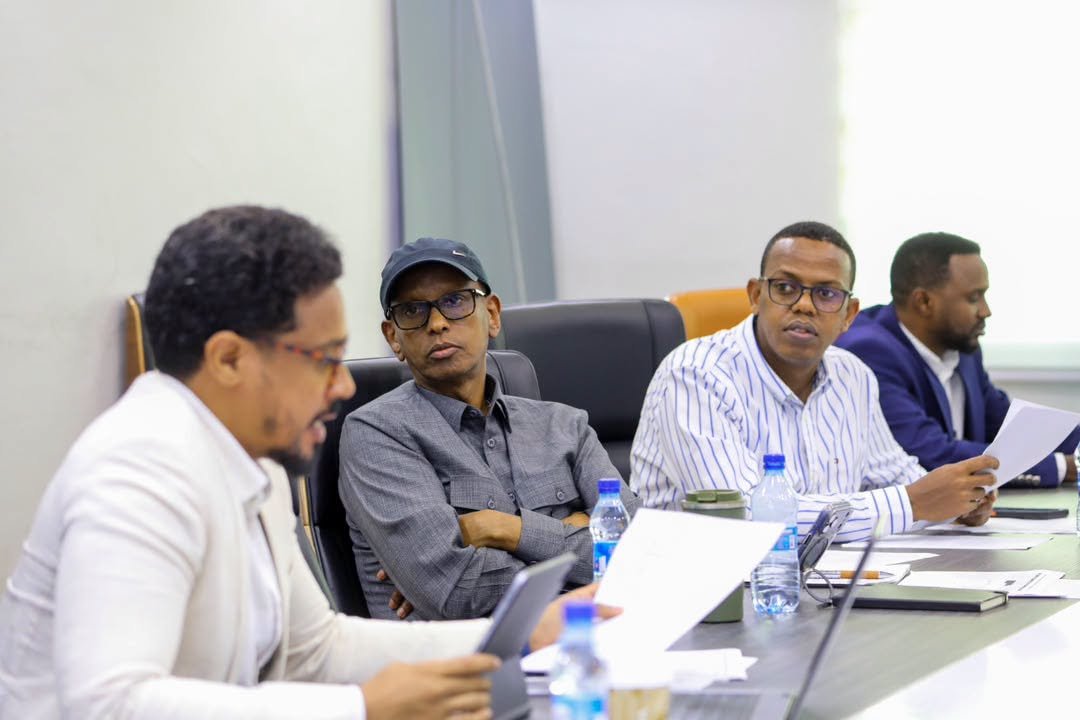
MOGADISHU — The Budget, Finance, Planning, International Cooperation and Accountability Committee of Somalia’s House of the People held its 8th meeting of the 8th session at the Speaker’s and Committees’ Office in Villa Hargeisa on 11 October 2026, to review proposed amendments to the Central Bank of Somalia Law.
The meeting, chaired by Committee Vice-Chair Mohamed Harun Abdullahi, focused on the Bill to Amend the Central Bank Law No. 130 of 22 April 2012, which had already completed its second reading in the full House. Committee members discussed preparations for the third reading, incorporating the views and recommendations raised by MPs during the second-reading debate.
Second Reading Completed with Quorum
The House of the People concluded the second reading of the Central Bank Amendment Bill during its 22nd sitting of the 8th session. As reported in FTL Somalia’s coverage of the parliamentary session, the session was chaired by Speaker Abdulkadir Mohamed Nur Jama and opened with a quorum of 141 lawmakers. The bill, prepared by the Ministry of Finance, covers 63 provisions and seeks to update the legal framework governing the Central Bank.
During the debate, lawmakers raised significant questions about the legislation’s implications. Several MPs questioned the removal of provisions from the 2012 law that they said explicitly required the Central Bank and other banks to adhere to Islamic banking principles, and proposed establishing a higher Sharia supervisory committee for the Central Bank. Others raised concerns about the Central Bank’s independence, calling for greater parliamentary oversight of the bank’s leadership, including requiring the governor and board members to be presented to parliament for approval.
Currency Reform Under Scrutiny
The most contentious issue was the proposed reintroduction of the Somali shilling. MP Abdullahi Arab challenged Article 34(2) of the draft bill, which sets an exchange rate of 100 Somali shillings to one US dollar, asking: “What is the economic and legal basis for determining in Article 34(2) that 100 Somali shillings equal $1, when no formal study has been presented to the House?”
Lawmakers also sought details on the planned banknotes, including their design, denominations, printing location, and production timeline. MP Mohamed Abukar noted that the limited availability of Somali shilling banknotes remained a problem, particularly for rural communities and small businesses that rely on cash. Some MPs called for the Central Bank governor to appear before the House to explain the technical aspects of the currency reform.
The currency reform is part of a broader effort to restore monetary sovereignty after more than three decades without new domestic banknotes. As reported in FTL Somalia’s coverage of the currency reform, the Central Bank is preparing to reintroduce the shilling under a currency board arrangement, with each shilling fully backed by foreign currency reserves. Governor Abdirahman Mohamed Abdullahi has stated that “we cannot have a monetary policy without reintroducing the Somali Shilling.”
Next Steps
The committee said it would review lawmakers’ recommendations and determine which proposals could be incorporated into the revised bill. Details on banknote samples, denominations, and production arrangements will be presented at the appropriate stage. Central Bank officials will also brief lawmakers on outstanding technical questions.
The bill remains under parliamentary consideration and must complete a third reading before becoming law. House Speaker Jama directed the relevant committees to prepare reports for the third reading and return them to the House.
Critical Note
The Central Bank Amendment Bill represents a critical piece of legislation for Somalia’s economic future. The proposed currency reform, if implemented effectively, could restore public confidence in the national monetary system, improve access to financial services for rural communities, and reduce the economy’s heavy dependence on the US dollar.
However, the questions raised during the second reading highlight significant gaps that must be addressed. The absence of a formal economic study justifying the proposed exchange rate, the concerns about Islamic finance provisions, and the calls for greater Central Bank independence are not minor technical issues. They go to the heart of whether the reform will be credible and sustainable.
The removal of Sharia compliance provisions from the 2012 law is particularly significant in a country where Islamic banking principles are deeply valued. Lawmakers’ proposals for a Sharia supervisory committee and alignment with the constitution reflect a legitimate concern that the reform must be consistent with Somalia’s legal and religious framework.
The committee’s work in the coming weeks will determine whether these concerns are addressed or deferred. For a bill of this magnitude, deferral would be a mistake. The currency reform’s success depends on public trust, and that trust is built through transparency, rigorous scrutiny, and responsiveness to legitimate concerns. The third reading will be the test of whether the legislation meets that standard.
Share your story. FTL Somalia is continuing to investigate Somalia’s currency reform and the legislative process surrounding the Central Bank Amendment Bill. If you have information or insights to share, contact us at info@ftlsomalia.com. Your identity will be protected.
Recommended Reading On ftlsomalia.com
- Somalia’s Currency Reform: New Shilling to Be Backed by Currency Board Arrangement
- Parliament Passes Environmental Management Bill, Advances Central Bank Amendment
- House of the People Misses Quorum for Second Time in a Week
- Somali MPs Return After Salary Deductions as Parliament Quorum Failures Persist