MOGADISHU — The Central Bank of Somalia (CBS) has joined the Accounting and Auditing Organization for Islamic Financial Institutions (AAOIFI), a leading global standard-setter for Islamic finance, according to a statement by the Central Bank.
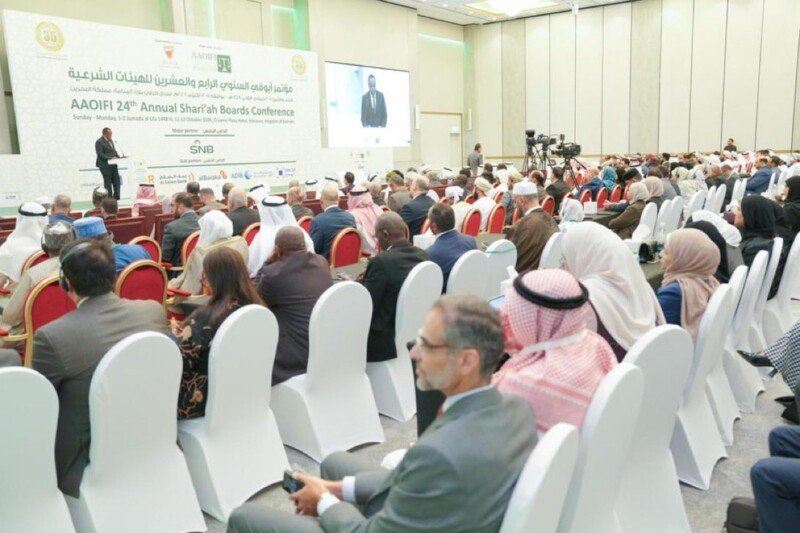
The membership was approved at the 24th AAOIFI Annual Shari’ah Boards Conference in Manama, Bahrain, where the CBS was represented by Deputy Governor Dr. Ali Yassin. The CBS said the membership, together with its existing membership in the Islamic Financial Services Board (IFSB), reinforces Somalia’s engagement with the two leading international standard-setting bodies for Islamic finance and supports its efforts to develop a sound, internationally aligned Islamic finance sector.
A Sector Without a Coherent Framework
The CBS’s membership in AAOIFI is a meaningful institutional step, but its practical significance depends on implementation. Somalia’s Islamic finance sector is the dominant form of banking in the country, yet it has historically operated without a unified national Shari’ah governance framework. Different institutions have applied varying interpretations, creating inconsistencies and reputational risks.
The Central Bank has taken some steps to address this. As reported in FTL Somalia’s coverage of the Central Bank’s licensing efforts, the CBS has authorized 15 commercial banks to operate in the country and has moved to regulate the Takaful sector. In January 2026, it granted the first-ever licenses to four Takaful (Islamic insurance) companies, bringing a previously unregulated segment under formal oversight, as detailed in FTL Somalia’s coverage of the Takaful licensing.
But the broader Islamic banking sector still requires a coherent governance framework. AAOIFI’s own 2025 review noted that “regulatory fragmentation remained a challenge, with uneven adoption of Shari’ah standards across jurisdictions, complicating compliance and governance.” Somalia is not immune to this problem. Joining AAOIFI signals intent, but membership is not the same as enforcement.
The Capacity Gap
The deeper challenge is supervisory capacity. The Central Bank’s own policy briefs acknowledge that Somalia’s non-bank financial institution sector is “still in a formative stage, characterized by fragmented regulation, limited supervisory capacity, and informal service delivery channels.” The same assessment applies to Islamic finance supervision.
AAOIFI’s standards are adopted by over 45 regulatory and supervisory authorities in more than 40 countries. But adoption requires trained Shari’ah auditors, compliance officers, and supervisory staff who can assess whether institutions are actually following the standards. Somalia’s financial sector has historically struggled with exactly this kind of technical capacity.
The Central Bank has taken steps to build its own institutional capacity. As reported in FTL Somalia’s coverage of the Central Bank’s leadership training, the bank completed a week-long strategic leadership workshop with MEFMI to improve governance and regulatory oversight. It has also obtained ISO/IEC 27001:2022 certification for its Information Security Management System and joined the World Bank’s Reserve Advisory and Management Partnership (RAMP).
But auditing the Central Bank is different from supervising an entire Islamic banking sector.
A Symbolic Affiliation or a Driver of Reform?
The CBS’s membership in AAOIFI is a signal that the Central Bank intends to align with international standards. But the history of financial regulation in Somalia suggests that membership in international bodies does not automatically translate into domestic enforcement. The country’s AML/CFT framework, for example, was strengthened by law in 2025, but implementation remains a work in progress.
For Somalia, the stakes are high. Islamic finance is not a niche segment; it is the backbone of the financial system. If the CBS can translate its AAOIFI membership into tangible regulatory improvements, it will strengthen confidence in a sector that millions of Somalis rely on. If it cannot, the membership will remain a symbolic affiliation rather than a driver of reform.
The Central Bank’s broader reform agenda is advancing. As reported in FTL Somalia’s coverage of the currency reform, the CBS is preparing to reintroduce the Somali shilling under a currency board arrangement after 35 years without new banknotes. The National Payment System Law was enacted in March 2026, providing a legal framework for the modernisation of payment infrastructure.
Critical Note
The Central Bank’s decision to join AAOIFI is a welcome signal of intent. It shows that Somalia’s financial regulators are aware of the need for international alignment and are taking steps to achieve it. But the history of Somali financial regulation is littered with well-intentioned initiatives that failed at the implementation stage, not because of a lack of will but because of a lack of capacity.
The Central Bank has made genuine progress in recent years, licensing banks, modernizing the payment system, and preparing for a currency reform. Its clean audit opinions and international certifications are a testament to its own institutional discipline. But supervising an Islamic banking sector requires a different kind of expertise: the ability to audit Shari’ah compliance, to assess the quality of governance, and to enforce standards consistently across institutions that have historically operated outside any formal framework.
Joining AAOIFI is the easy part. The hard part is building the supervisory infrastructure that makes membership meaningful. That will require investment in training, recruitment of qualified Shari’ah auditors, and a sustained commitment to enforcement that has sometimes been lacking in Somalia’s regulatory bodies. The test will be whether Somali Islamic banks are held to AAOIFI standards in practice, not just in principle.
Recommended Reading On ftlsomalia.com
- Central Bank Grants 15 Banking Licenses
- Somalia’s Central Bank Grants First Takaful Licenses to Four Insurance Companies
- Central Bank Ends Leadership Training Amid Reforms
- Somalia’s Currency Reform: New Shilling to Be Backed by Currency Board Arrangement
- Parliament Passes Environmental Management Bill, Advances Central Bank Amendment