NAIROBI, Kenya’s Ministry of Health reported no new Ebola cases on Thursday, marking the 17th day since the country confirmed its first imported case of Bundibugyo Virus Disease, with all 135 contacts now traced and the first group of quarantined individuals preparing to return home this weekend.
According to a press release signed by Director General Dr. Patrick Amoth, all 14 samples collected and tested from alerts across the country over the previous 24 hours returned negative results. The total number of confirmed cases remains nine, including the index patient who died on October 5. All cases belong to a single cluster, with no evidence of community transmission.
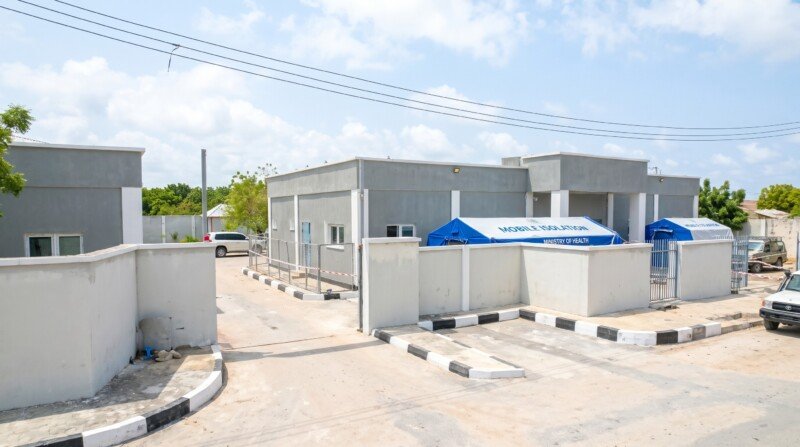
The Ministry also confirmed that the 8th National Ebola Taskforce convened on Thursday, chaired by Principal Secretary for Public Health and Professional Standards Mary Muthoni, to review progress and strengthen the response. The taskforce reviewed surveillance, case management, isolation facilities, essential supplies, and resource mobilisation to sustain the gains made so far. The PS reiterated the government’s commitment to containing Ebola through a coordinated whole-of-government and whole-of-society approach.
The eight patients currently receiving treatment in designated isolation facilities are stable and responding well to care. They comprise four family members and four healthcare workers who treated the index case.
All Contacts Traced, No Quarantine Transmission
The Ministry confirmed that all 135 contacts associated with the first case have been traced, both within Kenya and internationally, with relevant health authorities formally notified under the International Health Regulations. This represents a 100 percent tracing rate, up from the 99.3 percent reported earlier in the week.
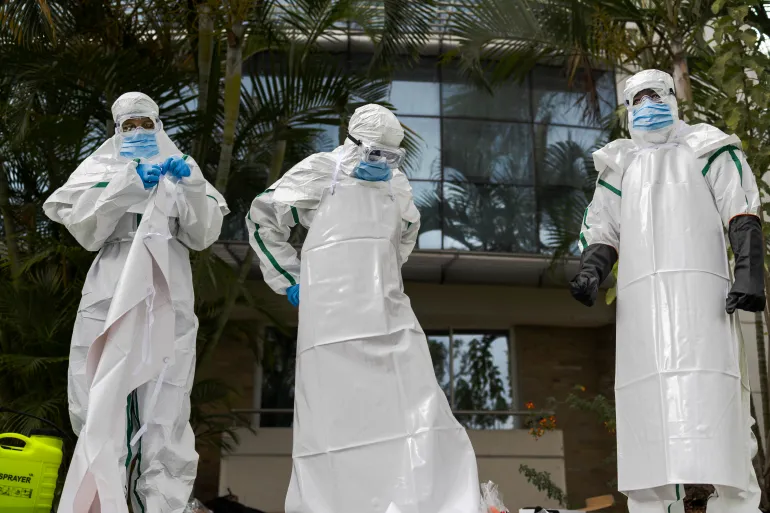
Epidemiological investigations have established that every confirmed case had close contact with the index patient between October 3 and October 5, before entering quarantine, and each developed symptoms within Ebola’s known incubation period of two to 21 days. No infections have been traced to transmission within quarantine facilities, where infection prevention and control measures have been strengthened.
From Sunday, October 25, the first contacts who complete their 21-day monitoring period and remain in good health will be released from quarantine and reunited with their families. The Ministry urged communities to receive them warmly, stating that they have passed the full monitoring period without falling ill and cannot transmit the infection to anyone.
What This Means for Somalia
Kenya’s progress is welcome news for Somalia, whose primary transit hub for international travel and humanitarian logistics is Nairobi. An uncontrolled outbreak in Kenya would have immediate and severe consequences for Mogadishu. The fact that all nine cases remain linked to a single chain, with no community transmission and all contacts traced, suggests that Kenya’s containment measures have functioned as intended.
But Kenya’s success also sharpens the contrast with Somalia’s own preparedness. As reported in FTL Somalia’s coverage of the outbreak, the Kenyan index patient transited through Uganda and flew to Nairobi without being detected at the airport. A similar case arriving in Mogadishu would encounter screening systems that a WHO assessment rated at 20 percent capacity, with no dedicated isolation areas and no biosecure transport. The country’s border defenses remain thin despite regional alert levels.
Somalia has taken steps to strengthen its preparedness. In late September, IGAD and Somalia’s One Health line ministries completed a four-day joint mission in Mogadishu to develop a costed, time-bound Ebola preparedness and response workplan. The plan covers surveillance, early warning, laboratory systems, and health workforce development, with a focus on cross-border coordination and points-of-entry preparedness.
Somalia also conducted a three-day national simulation exercise in September to test detection, verification, reporting, and response protocols for a suspected imported Ebola case. The exercise identified gaps in reporting lines, notification and referral pathways, points-of-entry arrangements, and public communication. Earlier in the crisis, Somalia moved quickly to quarantine citizens returning from the DRC as part of its initial containment efforts.
However, the DRC outbreak continues to accelerate, with more than 9,000 confirmed cases and 4,500 deaths. The Bundibugyo strain has no approved vaccine or specific treatment. The WHO has warned that chains of transmission remain undetected and that the virus is still ahead of the response. Somalia has continued to hold high-level coordination meetings, such as the one reported in FTL Somalia’s coverage of national Ebola readiness, but systemic vulnerabilities persist.
Critical Note
Kenya’s handling of its first Ebola outbreak has been competent and transparent. The Ministry of Health has published regular updates, traced every contact, and kept the public informed without inducing panic. The decision to allow quarantined contacts to return home after 21 days is scientifically sound and socially responsible. The outbreak appears contained, and the government’s statement that the end is “within reach” is not premature.
The existence of a standing National Ebola Taskforce, meeting for the eighth time and chaired by a principal secretary, is a detail that matters. It indicates that Kenya’s response is not improvised but institutionalized, with a dedicated command structure that reviews surveillance, supplies, and resource mobilisation on a regular basis. Somalia has held coordination meetings and developed a workplan with IGAD, but it does not have a comparable standing taskforce with the authority to direct resources and enforce protocols across the health system.
But Somalia should not mistake Kenya’s success for its own safety. The same qualities that have allowed Kenya to contain its cluster, a functioning health ministry with laboratory capacity, trained personnel, and a coherent command structure, are precisely those that Somalia lacks. Kenya screened over 700,000 travelers at points of entry and tested 461 samples since May. Somalia’s airport screening capacity remains rated at 20 percent, and its isolation and transport infrastructure for suspected cases is largely absent.
The window for Somalia to close these gaps is narrowing. Kenya’s cluster appears contained, but the DRC outbreak continues to accelerate, and the movement of people across East Africa is constant. The IGAD workplan and the national simulation exercise are necessary steps. They are not sufficient. The difference between Kenya and Somalia in this outbreak is not luck. It is institutional capacity. Until Somalia builds that capacity, its border defenses will remain a promise rather than a barrier.