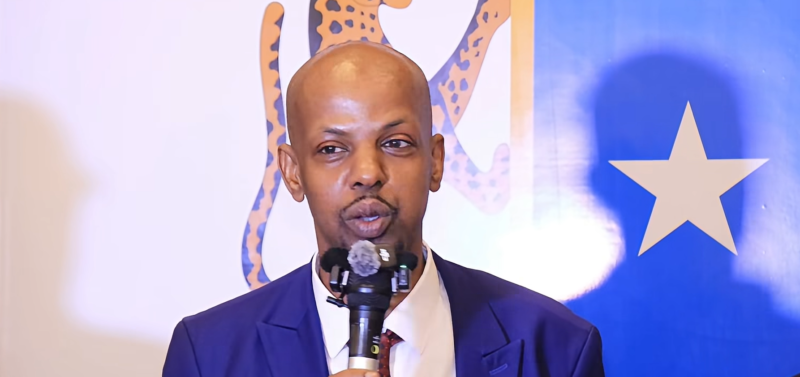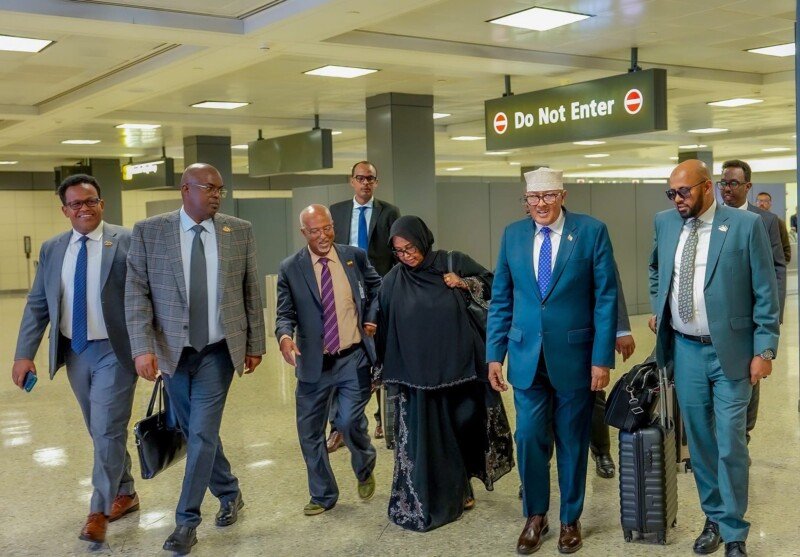
WASHINGTON — Somaliland President Abdirahman Mohamed Abdullahi (Cirro) has arrived in Washington, D.C., for his first official working visit to the United States since assuming office, leading a high-level delegation that includes the First Lady, the Speaker of the House, and several cabinet ministers. The delegation was received at Dulles International Airport by members of the Somaliland community and supporters of the breakaway region.
The trip comes after Cirro’s January 2026 meeting with Israeli President Isaac Herzog and Eric Trump at the World Economic Forum in Davos, where he used the gathering of global leaders to pitch Somaliland’s strategic assets to international investors and lawmakers. During that event, Cirro rose during a dinner reception to address the gathering, highlighting the deep-sea port of Berbera and Somaliland’s stability.
According to the Somaliland presidency, the Washington visit aims to strengthen diplomatic relations, expand cooperation on security and economic development, attract foreign investment, and advance Somaliland’s campaign for broader international recognition, particularly following Israel’s recognition of Somaliland in December 2025.
High-Level Delegation and Agenda
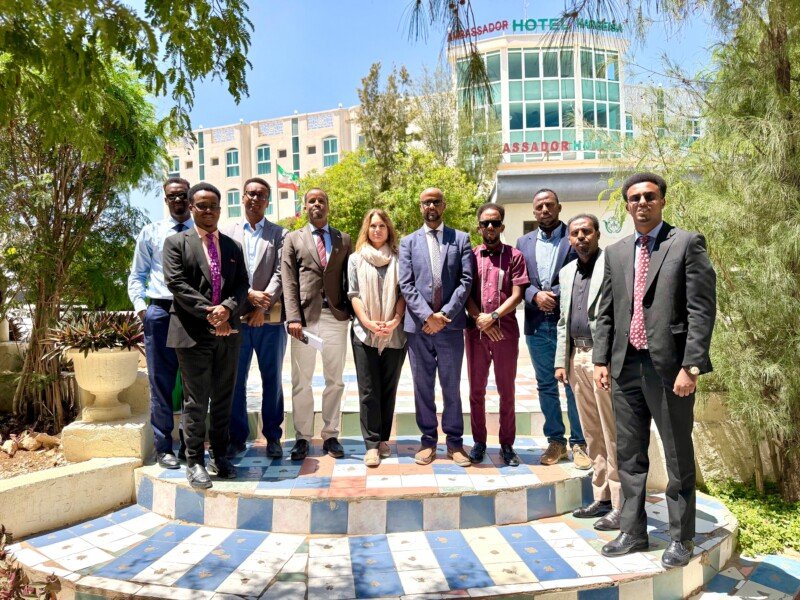
Cirro is accompanied by a large delegation that includes the First Lady, Speaker of the House of Representatives Prof. Yasin Haji Mohamoud Hiir (Faratoon), Minister of Foreign Affairs Abdirahman Adan Bakaal, Minister of Defence Mohamed Yusuf, Minister of Civil Aviation Fu’ad, and senior advisers on foreign policy and economic affairs. The delegation’s size has drawn scrutiny from some analysts, with U.S. foreign-policy analyst Michael Rubin questioning the strategy of bringing nearly 20 officials and arguing that a smaller team would present a more disciplined and professional image.
The president is expected to hold meetings with U.S. officials, members of Congress and the Senate, business leaders, and foreign-policy institutions. According to diplomatic sources, the agenda is expected to focus on political recognition, security cooperation, investment, and establishing a more institutionalized relationship between Hargeisa and Washington.
AFRICOM Commander General Dagvin Anderson has previously stated that the United States has no plans to establish a military base in Somaliland, dismissing widespread speculation that has fueled tensions in the Horn of Africa. However, Somali officials and supporters hope that high-level engagement could translate growing strategic interest in Somaliland’s location along the Gulf of Aden into tangible diplomatic outcomes.
Mogadishu’s Response
The visit has prompted a significant diplomatic response from Mogadishu. Villa Somalia has expanded its own diplomatic mission to Washington, with the delegation originally planned as a mid-level team expanded and placed under the leadership of Deputy Prime Minister Salah Ahmed Jama. The Somali delegation, scheduled to depart on September 9, will include senior officials from the presidency, with planning shifted from the Ministry of Foreign Affairs to the Office of the Prime Minister of Office of the President.
Notably, Foreign Minister Abdisalam Ahmed Ali has been excluded from the delegation, with sources confirming that the ministry has been kept out of the planning and information loop regarding the mission. The Somali government views the external moves made by Hargeisa as part of its efforts to gain international support for its secessionist stance and has stated it will continue to defend the unity and sovereignty of Somalia.
Critical Note
President Cirro’s arrival in Washington marks a significant moment in Somaliland’s decades-long campaign for international recognition. The visit, coming after Israel’s recognition of Somaliland in December 2025, provides Hargeisa with a valuable opportunity to present its case directly to U.S. officials and lawmakers.
However, the prospects for a U.S. recognition breakthrough remain uncertain. Washington has consistently reaffirmed its support for Somalia’s sovereignty and territorial integrity, and no meeting between Cirro and President Trump has been publicly confirmed. The African Union and several Arab and African countries have also rejected Israel’s recognition of Somaliland, further complicating Hargeisa’s diplomatic calculus.
The visit’s outcome will likely depend on whether Somaliland can present a compelling strategic case that convinces Washington to reconsider its longstanding policy. The composition of the delegation and the professionalism of its presentation will matter. As analyst Michael Rubin noted, Somaliland’s image as a relatively efficient and stable administration could be weakened if the visit appears overly political or driven by domestic considerations. The success of the visit will therefore be measured not by its visibility, but by whether it leaves U.S. policymakers with a clear and compelling strategic reason to deepen engagement with Hargeisa.