MOGADISHU — Somali President Hassan Sheikh Mohamud visited the Gorgor General Command on Thursday, where the 21st Brigade was handed a new batch of armored vehicles and other heavy military equipment provided by Turkey.
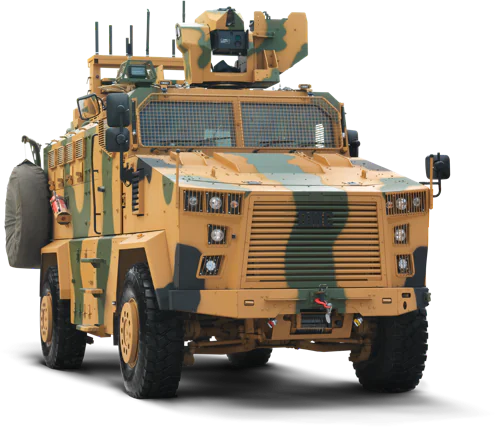
The Kirpi armored vehicles, manufactured by Turkey’s BMC, were delivered to the brigade as part of Ankara’s ongoing support to Somalia’s security forces. The Kirpi, which means “porcupine” in Turkish, is a mine-resistant ambush protected vehicle featuring a V-shaped hull designed to deflect blasts from improvised explosive devices.
Turkey has previously supplied the same type of vehicles to Somalia’s elite Gorgor special forces, with reports indicating that 20 BMC Kirpi vehicles were donated to Somalia in 2020 and 2021.
Gorgor Forces Expand to Six Brigades
The handover coincides with the return of the 21st Gorgor Commando Brigade from Turkey, where it completed approximately three months of advanced military training in Manisa. The brigade is the first fully formed Gorgor unit to complete its training at a single location, marking a shift in the training program from individual battalions to entire brigades.
The Gorgor forces have now expanded to six brigades, from the 17th to the 22nd, making it one of the largest and most combat-capable units in the Somali National Army. Turkey provides the Gorgor forces with military training, equipment and armored vehicles, while Qatar funds the program.
Colonel Mohamed Ahmed, known as “Korneyl Lacag,” commander of the 21st Brigade, thanked the officers and soldiers for their warm welcome and urged the returning troops to use the knowledge and skills gained during their training in Turkey for the benefit of Somalia and its people, while maintaining military discipline and fulfilling their responsibilities.
Deepening Turkey-Somalia Defence Ties
Turkey’s military engagement with Somalia has been comprehensive, encompassing the training of thousands of Somali soldiers, the provision of advanced weaponry, and the establishment of institutional frameworks for long-term capacity building. The TURKSOM Military Academy in Mogadishu, established in 2017 with Turkish support, has trained thousands of Somali soldiers and officers.
In July 2026, Turkey’s parliament approved a presidential memorandum extending the deployment of Turkish Armed Forces in Somalia for another two years, from July 27, 2026. The memorandum emphasized that Somalia’s security and stability are of vital importance to the entire region and that Turkey has maintained multifaceted cooperation with the Somali government since 2011.
The Turkish government has also supplied Somalia with M48 and M60 Patton tanks, with reports indicating that the Turkish Navy vessel TCG Sancaktar transported tanks to Mogadishu Port. Following this, images were published showing Gorgor forces receiving tank and armored combat training.
Turkish F-16 fighter jets and attack helicopters have also been deployed to Mogadishu, with the aircraft marking Somalia’s army anniversary in April 2026 with an aerial demonstration. The exhibition highlighted Turkey’s ongoing commitment to arming and training Somali security personnel as the nation strives to rebuild following over three decades of internal conflict.
The 2024 Defence and Economic Cooperation Framework Agreement elevated relations to a new level, with Turkey now not only training Somali soldiers but also equipping and developing the capabilities of the Somali army.
Critical Note
The delivery of Turkish armored vehicles represents a significant enhancement of the Gorgor forces’ operational capabilities, particularly in a context where Al-Shabaab frequently employs mines, ambushes, and roadside explosives. The Kirpi’s mine-resistant design provides better protection for troops during operations, potentially reducing casualties from IED attacks.
However, questions remain about the Somali National Army’s ability to maintain and operate heavy equipment in the long term. The transition from light infantry to armored warfare requires substantial logistical support, technical expertise, and maintenance infrastructure that Somalia currently lacks. The effectiveness of these vehicles will ultimately depend on the government’s ability to build the necessary support systems and ensure that the equipment is used in coordination with broader security sector reforms.
Furthermore, as Turkey deepens its military engagement in Somalia, there is a risk that the country could become drawn into wider regional rivalries, particularly given the complex geopolitical landscape of the Horn of Africa and the Red Sea. Turkey’s expanding footprint, including its naval escorts of drilling ships and its role in offshore oil exploration, positions Ankara as a major player in the region. The Somali government would be well advised to ensure that its partnership with Turkey is balanced with other international relationships and that it does not compromise Somalia’s sovereignty or long-term stability.
Recommended Reading On ftlsomalia.com
- BMC Kirpi MRAPs Unloaded at Mogadishu Port Amid Expanding Turkey-Somalia Defence Ties
- Elite Gorgor Commandos Return to Mogadishu After Completing Three-Month Turkish Training
- Somali, Turkish Officials Discuss Enhanced Military Cooperation
- President Hassan Names New Military Logistics Commander
- Turkish Jets Mark Somalia Army Anniversary