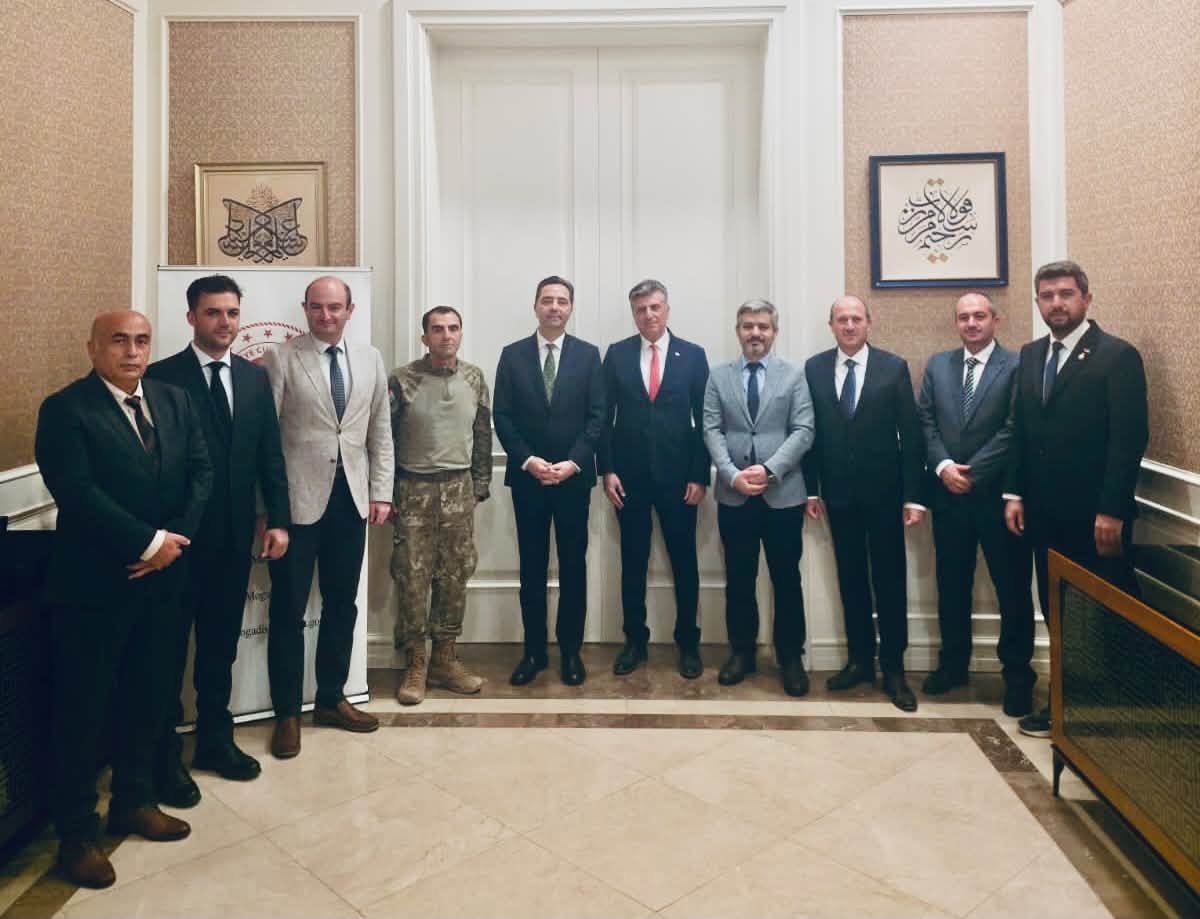
MOGADISHU, A high-level Turkish delegation led by Fatih Dulkan, Deputy Head of the Turkish Space Agency (TUA), visited Somalia this week for a series of meetings and site inspections in Mogadishu and the coastal town of Warsheikh, as the two countries expand their strategic partnership into space, advanced technology, and defence industries.
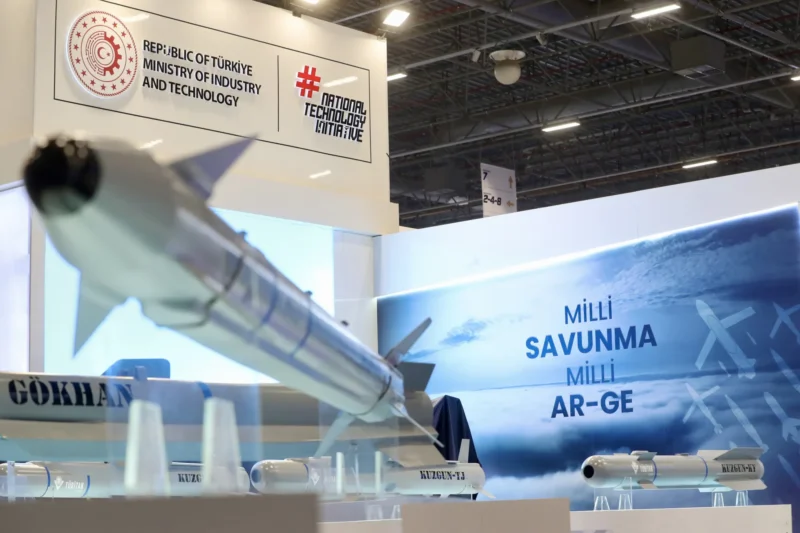
According to a report from the Somali National News Agency (SONNA), the delegation included representatives from Türkiye’s Ministry of Industry and Technology, the Ministry of Defence Industries, and Roketsan, the country’s leading defence and space technology company.
The visit comes as Türkiye and Somalia continue to broaden a relationship that has already made Ankara one of Mogadishu’s most consequential external partners, spanning security, infrastructure, education, and now the cosmos.
Warsheikh: The Centre of the Space Ambition
The delegation’s inspection of Warsheikh, a coastal town approximately 70 kilometres north of Mogadishu, is particularly significant. Warsheikh is the site of a Turkish satellite launch facility that Ankara has described as a civilian space initiative but which analysts believe may also serve military purposes.
The project, estimated at $350 million, is under construction on a stretch of Indian Ocean coastline. Its location near the equator offers technical advantages for satellite launches, reducing fuel consumption and allowing launch debris to fall into the sea rather than populated areas. Turkish officials have said the site could be ready for its first test launch in 2027.
In February, TUA’s Deputy Head Dulkan spoke at a campus event in Samsun, emphasizing Türkiye’s ambition to become a producer of space technology rather than a mere importer. “The space economy is currently worth $600 billion and is expected to exceed $1.8 trillion in the 2030s,” he said. “It is a strategic necessity for Türkiye to take a strong place in this market.”
Roketsan’s Role and the Defence Dimension
The inclusion of Roketsan in the delegation underscores the dual-use nature of the Warsheikh facility. Roketsan is Türkiye’s state-backed missile developer, and Le Monde reported in July 2026 that the Somali site could accommodate missile systems with a range of up to 2,000 kilometres, allowing Türkiye to project power across large parts of Africa, the Arabian Peninsula, and the Red Sea region.
The project would make Türkiye the 13th country in the world with a sovereign space launch base. Turkish officials have framed it as a step toward “autonomous access to space,” reducing dependence on foreign launch providers.
As reported in FTL Somalia’s coverage of the spaceport project, Turkish Ambassador Ferhat Alkan and TURKSOM Commander Major General Sabahattin Kalkan visited Warsheikh in early October to inspect educational and health facilities supported by Türkiye, as well as the space launch site. The visit was seen as a signal of Ankara’s sustained commitment to the project.
The Broader Türkiye-Somalia Partnership
The space cooperation is the latest layer in a relationship that has deepened dramatically since President Recep Tayyip Erdoğan’s 2011 visit to Mogadishu. Türkiye has built its largest overseas embassy in the Somali capital, trained Somali special forces at the TURKSOM military base, and invested in hospitals, schools, and infrastructure.
In February 2024, the two countries signed a defence and economic cooperation framework agreement that gave Türkiye responsibility for protecting Somalia’s maritime territory, as reported in FTL Somalia’s coverage of the defence agreement. The deal included provisions for Türkiye to train and equip the Somali Navy and to share revenue from Somalia’s Exclusive Economic Zone.
Somali Defence Minister Ahmed Moallim Fiqi has described relations with Türkiye as being at their highest level, noting the presence of Turkish-made military helicopters and armoured vehicles in Somali service. “We want to implement major projects together,” Fiqi said in an interview with Anadolu Agency.
The partnership has not been without controversy. Puntland has rejected Turkish maritime operations off its coastline, and the federal government’s reliance on Turkish security support has drawn criticism from political opponents who accuse Ankara of enabling a “clan-based agenda” in Somalia’s internal disputes.
Critical Note
The Turkish Space Agency delegation’s visit is a significant marker of how far the Türkiye-Somalia relationship has evolved. A decade ago, Ankara’s engagement in Somalia was defined by humanitarian aid and security training. Today, it encompasses a satellite launch facility, defence industry cooperation, and a strategic partnership that touches nearly every sector of the Somali state.
For Somalia, the spaceport represents an extraordinary opportunity and an extraordinary risk. On one hand, it places the country at the centre of a emerging space economy and gives Mogadishu leverage with one of its most important partners. On the other, it makes Somalia a potential target for actors hostile to Türkiye, and it raises questions about sovereignty and long-term control that the government has not publicly addressed.
The inclusion of Roketsan in the delegation is particularly telling. A satellite launch facility is one thing. A missile testing range is another. The Somali government has presented the Warsheikh project as a civilian space initiative. Whether that framing is accurate, and whether it serves Somalia’s interests as much as Türkiye’s, are questions that Parliament has not debated and the public has not been asked to consider. The delegation’s visit this is a technical inspection. It is also a reminder that Somalia’s strategic partnerships are deepening in ways that the country’s political system has not yet fully grappled with.
Recommended Reading On ftlsomalia.com
- Turkish Ambassador Inspects Spaceport Construction in Warsheikh
- Turkish Naval Delegation and Exploration Vessels Arrive in Mogadishu; Maritime Security Talks Held
- Former South West President Accuses Türkiye of Enabling ‘Clan-Based Agenda’ as His Forces Seize Buurhakaba
- Somalia Establishes Somtürk Fisheries Partnership with Turkey to Enhance Blue Economy