EDIT: This article is retracted due to fabricated statement. Please see this update: https://www.ftlsomalia.com/uganda-turkiye-rupture-whats-real-whats-fake-and-what-it-means-for-somalia/
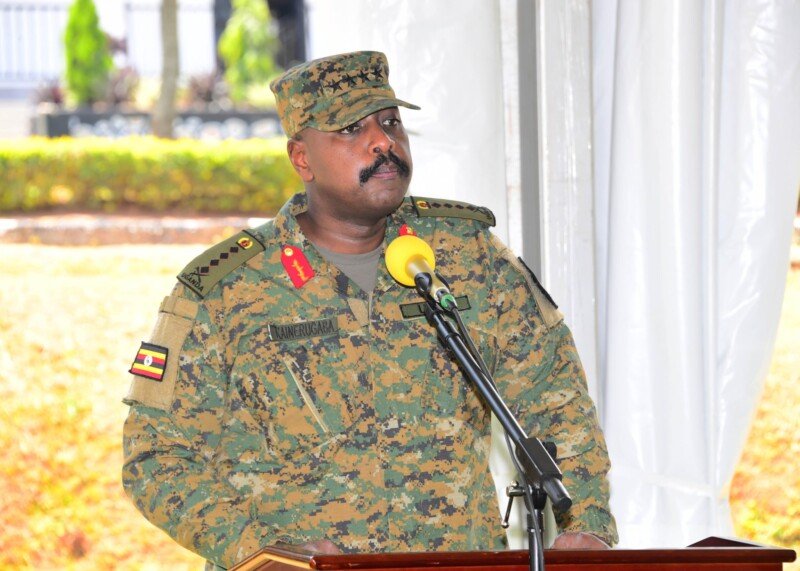
ANKARA — Türkiye’s Ministry of Foreign Affairs issued a sharply worded statement on Sunday accusing Uganda’s military chief, Muhoozi Kainerugaba, of issuing threats against Turkish citizens and diplomats, and warning of “dire” consequences if any harm comes to them.
The statement, numbered No: 81 and dated September 20, 2026, represents an unusual direct rebuke of a foreign military leader by NATO’s second-largest member. It followed Uganda’s announcement on Saturday that it had suspended all defence and military cooperation with Türkiye.
Ankara dismissed the suspension as largely symbolic, stating that “there is no ongoing co-operation with Uganda’s Military” and that any previous cooperation had been “for the exclusive benefit of Uganda, including offering its troops training at no cost.”
Türkiye’s Statement
The Turkish statement described Kainerugaba’s actions as “narcissistic crimes against humanity” and said his conduct is “well recorded and followed closely by the international community.” It accused him of abducting and torturing citizens opposed to the Ugandan government and posting their images on social media.
On the extradition dispute at the centre of the crisis, Türkiye said it “would not hand over political dissident Fred Lumbuye (who is under the protection of UNHCR) to Uganda. To do so would be to condemn him to certain death.”
The statement directly addressed Ugandan President Yoweri Museveni, saying he “must reign in his son” and that Türkiye is “not taking lightly any of his threats.”
The Lumbuye Dispute
The crisis centres on Fred Kajubi Lumbuye, a Ugandan government critic who has lived in Türkiye since 2013. Ugandan authorities have charged him with 15 offences, including incitement to violence, spreading false information, and computer misuse.
On September 18, hundreds of supporters of the Patriotic League of Uganda, a group chaired by Kainerugaba, demonstrated outside the Turkish Embassy in Kampala demanding Lumbuye’s handover. The embassy closed for the day ahead of the protest.
Kainerugaba has issued a series of demands and threats against Türkiye in recent months, including a $1 billion payment, the cancellation of a $3 billion railway contract with Turkish firm Yapı Merkezi, and the expulsion of Turkish citizens. In April 2026, he publicly demanded what he described as “the most beautiful woman” in Türkiye as his wife, as reported in FTL Somalia’s coverage of his threats.
What This Means for Somalia
The Uganda-Türkiye rupture has direct implications for Somalia, where both countries are deeply embedded in the security architecture.
Uganda is the largest troop contributor to the African Union Support and Stabilization Mission in Somalia, with Battle Group 47 currently deployed under AUSSOM. Ugandan forces have been in Somalia for nearly two decades and have played a central role in offensive operations against Al-Shabaab.
Türkiye operates its largest overseas military base, Camp TURKSOM, in Mogadishu, where it trains Somali elite units including the Gorgor commandos. Ankara has also delivered Bayraktar Akıncı drones to Somalia and signed a 10-year defence and economic cooperation agreement in 2024.
The suspension of Uganda-Türkiye military cooperation does not automatically affect either country’s engagement with Somalia, but it creates friction within the coalition that sustains Somalia’s security operations. Ugandan forces and Turkish-trained Somali units operate in overlapping areas of responsibility, and any disruption to coordination between the two partners could complicate joint operations.
Critical Note
Türkiye’s decision to publicly rebuke Uganda’s military chief is a significant escalation, but it also reveals the limits of Ankara’s leverage. The statement dismisses the suspension as inconsequential, yet it is clearly a source of irritation. More importantly, it signals that Türkiye sees the dispute as a bilateral issue with Uganda, not as something that should affect its role in Somalia.
For Somalia, the key question is whether the dispute spills over into coordination on the ground. Ugandan forces and Turkish-trained Somali units have operated alongside each other in joint operations. If Kampala and Ankara are no longer speaking, even indirectly, that coordination becomes more difficult. Somalia has not publicly commented, and neither Kampala nor Ankara has outlined how the suspension will affect third countries.
The dispute also highlights the risks of Somalia’s reliance on a coalition of partners with divergent interests. Uganda and Türkiye have different histories, different priorities, and now, a diplomatic rupture. Somalia’s security architecture depends on their continued cooperation. Whether that holds is an open question.
Recommended Reading On ftlsomalia.com
- Uganda-Türkiye Rupture Puts Somali Security Partnerships in Focus
- Ugandan Commander Threatens Somalia Troop Pullout Without Turkish Funding
- Somali President Attends Museveni’s Inauguration in Uganda
- Kampala Summit to Decide Fate of AU Mission as US Funding Cuts Bite
- Turkey’s Outgoing Ambassador Praised for Strengthening Somalia Ties Amid Growing Cooperation
- Ambassador Ferhat Alkan Set to Take Up Post in Mogadishu as Turkey Expands Diplomatic Footprint
- Hassan Sheikh Mohamud and Erdoğan Hold Strategic Meeting in Istanbul to Strengthen Somalia-Turkey Alliance