MOGADISHU — Turkish Energy Minister Alparslan Bayraktar has announced the departure of the Osman Gazi floating production platform for the Black Sea, describing the vessel as a “floating energy fortress” that will double Türkiye’s domestic natural gas output. The announcement, while focused on Türkiye’s domestic energy ambitions, carries indirect significance for Somalia as it underscores the deepening technical and military partnership between Ankara and Mogadishu.
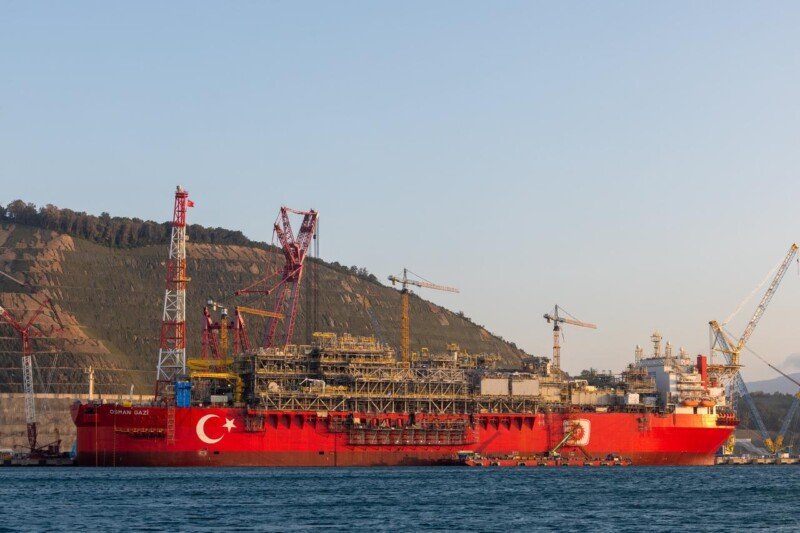
The Osman Gazi Platform
The Osman Gazi is Türkiye’s first floating production platform, measuring 298.5 metres in length, 56 metres in width, and 29.5 metres in height, with accommodation for 140 personnel. The platform departed from Filyos Port in Zonguldak on 17 October for the Sakarya Gas Field in the Black Sea, where it will operate for 20 years.
According to the Turkish Ministry of Energy and Natural Resources, the platform will increase daily natural gas production at the Sakarya field from 9.5 million cubic metres to 20 million cubic metres, meeting the gas needs of approximately 8 million households. The platform is expected to contribute approximately $3.5 billion annually to the Turkish economy.
President Recep Tayyip Erdoğan, in a video message to the departure ceremony, described the platform as “the first factory of the Blue Homeland” and said that “starting in 2027, one in every three households will use our domestic natural gas.”
The Somali Connection
While the Osman Gazi is deployed to the Black Sea, its departure is part of a broader pattern of Turkish energy expansion that includes Somalia. The same state-owned company, Turkish Petroleum Corporation (TPAO), operates the Çağrı Bey drillship, which is currently conducting Türkiye’s first overseas deep-sea drilling operation at the Curad-1 well off the Somali coast.
Energy Minister Bayraktar has previously described the Somali operation as a “game-changing” endeavor for the region. As reported in FTL Somalia’s coverage of the Somali-Turkish energy partnership, the Çağrı Bey has progressed ahead of schedule, with the operation reaching depths of approximately 4,000 metres and planned to drill to 7,500 metres. Türkiye’s growing fleet of drilling ships and production platforms, including the Osman Gazi and its planned larger twin in 2028, is part of the same strategic push to reduce import dependence and expand energy influence.
The Turkish naval task group, including TCG Göksu, TCG Gelibolu, and TCG Bartın, provides escort and protection for the Çağrı Bey and its support vessels off Somalia. As reported in FTL Somalia’s coverage of the naval escort mission, the Turkish Navy ships are also conducting training activities for Somali Navy and Coast Guard personnel, reflecting the integration of Türkiye’s energy and military strategies.
Critical Note
The Osman Gazi’s departure is a domestic Turkish story, but it is also a signal for Somalia. Türkiye’s ability to deploy a floating production platform to the Black Sea while simultaneously operating a deep-sea drillship off Somalia demonstrates a level of naval and technical capacity that few countries possess. For Mogadishu, this is both reassuring and sobering.
Reassuring, because Türkiye has the operational capability to follow through on its commitments in Somali waters, unlike many partners whose pledges remain on paper. Sobering, because the same capability that protects the Çağrı Bey also gives Ankara leverage. Türkiye is not a neutral actor in Somali politics; it is a stakeholder with its own commercial and strategic interests.
The Osman Gazi represents the culmination of Türkiye’s domestic energy strategy. If the Curad-1 well yields a commercial discovery, a similar floating production platform could eventually be deployed off Somalia. That prospect is the ultimate prize of the Turkey-Somalia energy partnership, and it explains why Ankara has invested so heavily in both the drilling operation and the military escort mission.
For Somalia, the lesson is clear: Türkiye’s partnership offers real capacity, but it also comes with real dependencies. The challenge for Mogadishu is to ensure that the benefits of this partnership, if they materialize, are managed transparently and shared equitably, rather than becoming another chapter in the country’s long history of resource-related conflict.
Share your story. FTL Somalia is continuing to investigate Türkiye’s energy partnership with Somalia. If you have information or insights to share, contact us at info@ftlsomalia.com. Your identity will be protected.
Recommended Reading On ftlsomalia.com
- Turkish Drillship Arrives in Mogadishu for Somalia’s First Offshore Oil Drilling
- Somali-Turkish Energy Partnership Reaches Milestone as Drilling Progresses Ahead of Schedule
- Turkish Navy Ships Train Somali Forces as Drilling Protection Mission Continues
- Turkey Completes 234-Day Seismic Mission in Somali Waters