HARGEISA — The British Office in Hargeisa has raised serious concerns over the arrest of journalists in Somaliland, disclosing that more than 50 cases have been recorded in less than two years, and warning that the detentions risk undermining the region’s democratic reputation.
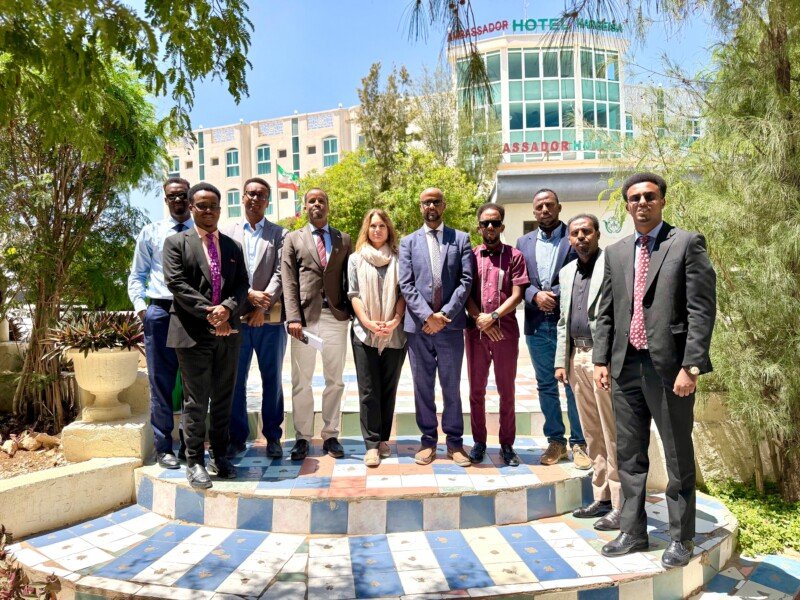
In a statement titled “UK Statement on Media Freedom in Somaliland,” the British Office said it had held recent discussions with Somaliland’s Minister of Information and media sector representatives. It said those exchanges underscored the UK’s concern over the high number of journalist arrests, and insisted that any arrest should be carried out with due process and proper judicial oversight.
“Somaliland rightly takes pride in its democratic reputation. But repeated arrests of journalists risk undermining that reputation,” the statement said. “A free media strengthens Somaliland; it does not weaken it. Independent journalism, freedom of expression and civic space are signs of confidence and resilience in a democracy.”
A Pattern of Detentions
The UK’s disclosure of more than 50 arrests in under two years aligns with documentation by press freedom organisations. As reported in FTL Somalia’s coverage of media freedom attacks, Somalia recorded at least 41 violations against media freedom between January and June 2025, with incidents concentrated in Mogadishu and parts of Somaliland. Reporters Without Borders recorded 21 journalist arrests in Somaliland in 2025 alone, seven of which lasted more than two days.
Among the most prominent cases was that of Abdimalik Muse Coldoon, a journalist and social activist arrested in Berbera. As detailed in FTL Somalia’s coverage of Coldoon’s arrest, the detention followed his criticism of Somaliland’s reported involvement in discussions to resettle Palestinian refugees from Gaza. Coldoon has a history of detentions linked to his outspoken views, including a three-and-a-half-year prison sentence in 2019 on defamation charges.
Other cases include the unlawful detention of a journalist in Sanaag region, covered in FTL Somalia’s coverage of the release, and the sentencing of a female journalist to one year in prison for publishing misleading information, as reported in FTL Somalia’s coverage of the sentence. These detentions have continued under the administration of President Abdirahman Mohamed Abdullahi, who took office in December 2024.
The UK has previously raised concerns over Somaliland’s press freedom record. As reported in FTL Somalia’s coverage of US criticism, American officials urged Somaliland to stop gagging the media following its decision to ban the BBC from operating in the region.
Media Bill Before Parliament
The UK welcomed the fact that Somaliland’s Media Bill has been brought before Parliament this week, describing it as an important opportunity to address longstanding challenges in the media sector and ensure a sustainable and independent media environment.
The British Office specifically highlighted the proposed Media Council, saying it should be genuinely impartial and empowered to independently resolve disputes. This position echoes recommendations made by media stakeholders. As detailed in FTL Somalia’s coverage of SOLJA’s media law discussions, the journalists’ association has engaged with TV station leadership on the importance of clear frameworks to safeguard media freedoms.
The new media law was first introduced to Somaliland’s Cabinet in September 2024, as reported in FTL Somalia’s coverage of the Cabinet meeting. The proposal aims to replace the outdated 2004 media law and address gaps in the current regulatory framework.
Critical Note
The British Office’s statement is a rare public accounting of Somaliland’s press freedom record from a key international partner. The UK has raised these concerns before, but the explicit disclosure of more than 50 arrests in under two years carries greater weight.
The timing is significant. The Media Bill before Parliament represents an opportunity to establish independent regulatory mechanisms, but its value depends entirely on implementation. As SOLJA and other stakeholders have argued, the proposed National Media Council must be genuinely independent, not an extension of government authority. The UK’s emphasis on impartiality reflects awareness that a council controlled by the executive would simply formalise existing patterns of pressure.
Somaliland’s democratic reputation is one of its most valuable international assets. It has been central to its campaign for recognition, and partners like the UK have consistently highlighted competitive elections and peaceful transfers of power. The growing number of journalist arrests, documented by RSF, CPJ, and SOLJA, sits uneasily alongside that reputation. The Media Bill could help resolve the tension, but only if the resulting framework protects journalists rather than constraining them. The coming weeks of parliamentary deliberation will show whether the bill becomes an instrument of reform or a codification of the status quo.
Recommended Reading On ftlsomalia.com
- Somalia Recorded 41 Media Freedom Attacks in First Half of 2025
- Somaliland Journalist Who Criticized Gaza Refugee Plans Arrested
- New Media Law Introduced to Somaliland Cabinet for Approval
- SOLJA Discusses Media Law with Top Leadership of Somaliland’s TV Stations
- Somaliland Police Release Journalist Detained for 3 Days
- US Urges Somaliland to Stop Gagging the Media