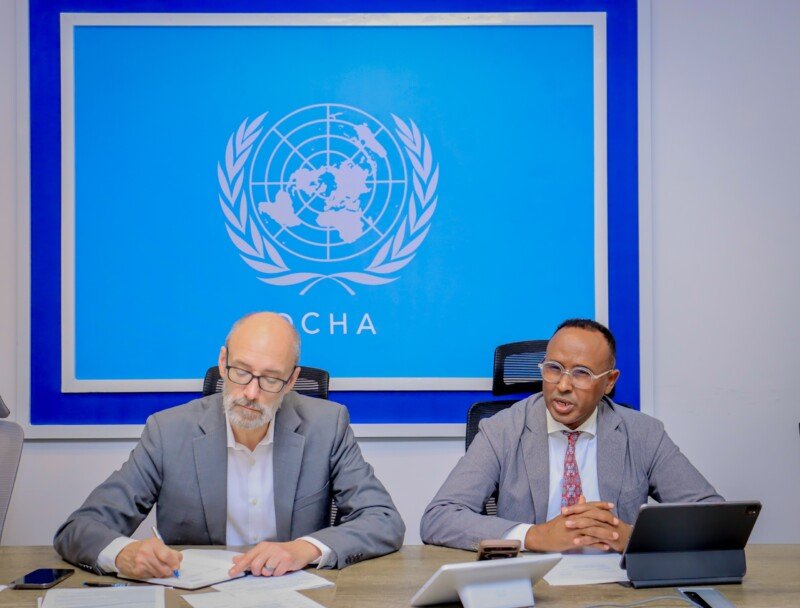
MOGADISHU — The Commissioner of the Somali Disaster Management Agency (SoDMA), Mahmoud Moallim Abdulle, held talks with George Conway, the UN Humanitarian Coordinator for Somalia, and Crispen Rukasha, Head of the UN OCHA office in Somalia, on the humanitarian situation and preparedness for the risks of heavy rains and flooding linked to Super El Niño.
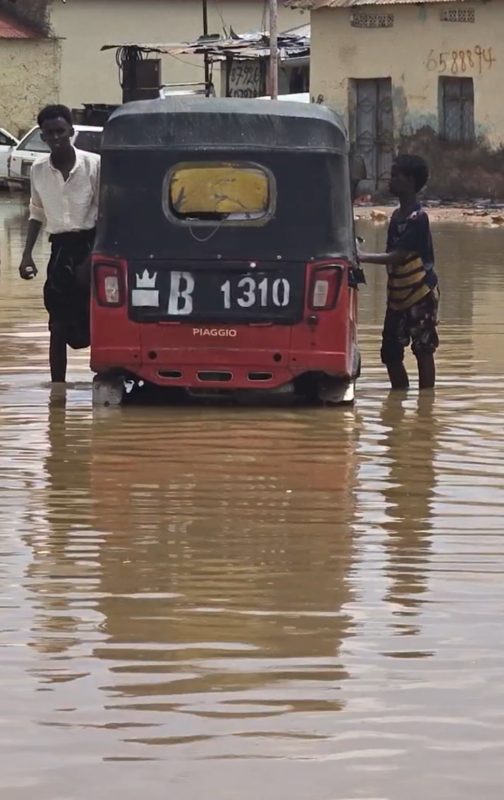
The meeting focused on the humanitarian situation and preparedness for the risks of heavy rains and flooding associated with Super El Niño. The discussions specifically addressed the threat of riverine flooding, given indications of rising water levels and flood risk in several areas of the country, according to a statement from SoDMA.
The two sides also discussed the monitoring of early warnings, emergency response, and coordination between the government and humanitarian partners to reduce the impact of floods and ensure that assistance reaches vulnerable people at risk in a timely manner. The meeting also addressed the impact that ongoing conflicts could have on the delivery of humanitarian aid to affected populations.
A Threat Forewarned for Months
The meeting comes as Somalia faces one of its most serious flood threats in years. As reported in FTL Somalia’s coverage of SoDMA’s warning, the agency has placed 29 districts across 14 regions on high alert for riverine and flash flooding, including Doolow, Luuq, Baardheere, Beledweyne, Jowhar, Mogadishu, Baidoa and Kismayo.
Meteorologists have confirmed that 2026 is a Super El Niño year, with forecasts pointing to exceptionally heavy rainfall during the October-December Deyr season. The IGAD Climate Prediction and Applications Centre has identified a 90 percent probability of above-normal rainfall over central and southern Somalia, with the strongest signal in the Juba and Shabelle river catchments.
The Shabelle River has already breached its banks at 388 critical locations, according to FAO-SWALIM. As reported in FTL Somalia’s coverage of the FAOSWALIM report, the river channel has not been consistently dredged for nearly 40 years, leaving communities along its banks acutely vulnerable.
Humanitarian Impact and Funding Gaps
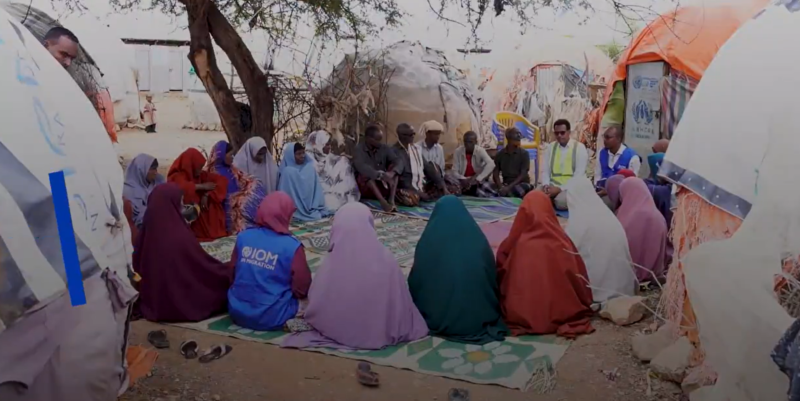
According to the United Nations, projected El Niño rains and severe flooding could affect up to 3.4 million people in Somalia across 16 regions between October and December. The International Organization for Migration and the Danish Refugee Council project that more than 800,000 people could be displaced by flooding.
The humanitarian context is particularly dire. The Integrated Food Security Phase Classification analysis projects that 5.4 million people will face crisis levels of hunger or worse between October and December 2026, including 1.5 million at emergency levels. Nearly 1.92 million under-five children will require treatment for acute malnutrition, including 433,000 with severe acute malnutrition.
As reported in FTL Somalia’s coverage of the SoDMA-WFP agreement, the agency has signed a two-year cooperation agreement with the World Food Programme to strengthen disaster preparedness and early warning systems.
However, the response faces severe funding constraints. The 2026 Somalia Humanitarian Needs and Response Plan is only 15.2 percent funded, and at least 380 health facilities have closed or scaled back operations due to funding shortages. The International Committee of the Red Cross has warned that while preparation and data are better than in 2023, “humanitarian funding and capacity in general have seriously decreased.”
Coordination and Anticipatory Action
SoDMA and its partners have taken several preparatory steps. FAO’s SWALIM programme has mapped flood-prone areas and potential safe high grounds, identified evacuation routes, and analyzed vulnerable river breakage points along the Juba and Shabelle rivers. IOM is working with SoDMA and local authorities on flood risk assessments, early warning messages, evacuation planning, and pre-positioning of emergency supplies.
FAO has emphasized that the current climate conditions bear “important similarities” to 1997 and 2023, both of which produced severe flooding. The 1997 floods caused more than 2,300 deaths in Somalia, while the 2023 Deyr brought widespread displacement, infrastructure damage, crop and livestock losses, and disease outbreaks.
River levels are already rising. As reported in FTL Somalia’s coverage of the Shabelle River levels, the river at Jowhar rose from 2.48 metres to 4.70 metres in a single week, an increase of 2.22 metres, and is now just 30 centimetres below the moderate flood-risk threshold. FAO-SWALIM has warned that rainfall in the Ethiopian highlands can raise the Shabelle and Juba rivers in Somalia even when local rainfall is limited.
The UN Office for Disaster Risk Reduction has warned that a credible risk of severe flooding exists in the Juba and Shabelle river corridors if El Niño strengthens alongside a positive Indian Ocean Dipole. The report emphasized the value of early action given the lead time available and Somalia’s limited capacity to absorb additional shocks.
Critical Note
The meeting between SoDMA Commissioner Mahmoud Moallim Abdulle and UN Humanitarian Coordinator George Conway reflects a shared recognition that Somalia is facing a potential disaster of significant magnitude. The coordination between government agencies and humanitarian partners is essential, and the early warning systems and anticipatory action frameworks that have been put in place represent real progress compared to previous flood events.
However, the gap between preparedness and resources remains stark. The warnings have been issued, the maps have been drawn, and the evacuation routes have been identified. What is missing is the funding to act at scale. With the humanitarian response plan only 15 percent funded and health facilities closing due to lack of resources, the capacity to respond to a major flood event is severely constrained.
The meeting also highlighted a critical challenge: the impact of ongoing conflicts on the delivery of humanitarian aid. In areas controlled or influenced by Al-Shabaab, access for humanitarian agencies is limited, and maintenance of flood defenses like the Shabelle River embankments is impossible. This means that some of the communities most at risk may be the hardest to reach.
For Somalia, the coming weeks will test whether the lessons of 2023 have been learned. The forecasts are clear, the risks are documented, and the coordination mechanisms are in place. The question now is whether the international community will provide the resources needed to prevent a predictable disaster from becoming a catastrophic one.
Share your story. FTL Somalia is continuing to investigate flood preparedness and response across Somalia. If you have information or insights to share, contact us at info@ftlsomalia.com. Your identity will be protected.
Recommended Reading On ftlsomalia.com
- SoDMA Urges 29 Districts Across 14 Regions to Prepare for Super El Niño Flooding
- SoDMA and WFP Sign Two-Year Deal to Strengthen Somalia’s Disaster Preparedness
- Over 300 Sites on Shabelle River Identified as Flood-Prone, FAOSWALIM Reports
- Shabelle River Nears Flood Alert Level at Jowhar as El Niño Rains Intensify