MOGADISHU — US Secretary of State Marco Rubio spoke with Ethiopian Prime Minister Abiy Ahmed on Tuesday, urging de-escalation in the escalating confrontation between Ethiopia and Eritrea and warning that the Horn of Africa “cannot tolerate more conflict,” according to a State Department readout.
Rubio stressed that “all countries in the Horn of Africa must respect the sovereignty and territorial integrity of their neighbors and avoid cross-border incursions.” He said the “only sustainable solution to internal and external tensions is achieved through dialogue and engagement as agreed to in the 2018 Ethiopia-Eritrea peace framework.”
Prime Minister Abiy described the call as “very fruitful,” saying the two discussed “key bilateral, regional and multilateral issues of mutual interest.” He welcomed “the assurance of continued U.S. support for Ethiopia and our shared commitment to advancing bilateral cooperation.”
A Deepening Crisis on Somalia’s Doorstep
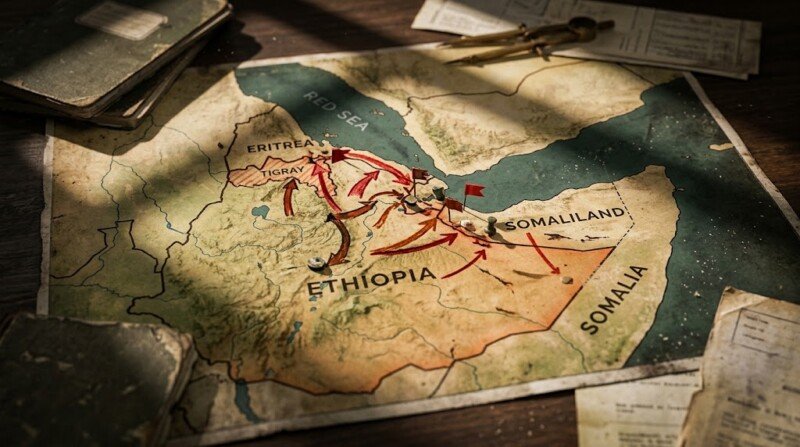
The Rubio-Abiy call comes amid the most serious escalation between Ethiopia and Eritrea since the 2018 peace agreement ended two decades of hostility. Ethiopia has accused Eritrea of supporting the Tigray People’s Liberation Front (TPLF), which resumed fighting against federal forces in late September. Eritrea has denied the allegations and accused Ethiopia of seeking a pretext for military action.
As reported in FTL Somalia’s coverage of the Eritrea-Ethiopia standoff, Eritrean troops have reportedly deployed into northern Ethiopia, with witnesses describing soldiers moving south through the town of Adigrat, approximately 115 kilometers north of Mekelle and 40 kilometers from the Eritrean border. One estimate placed the number of Eritrean soldiers in Tigray at between 5,000 and 8,000.
Eritrea formally asked the UN Security Council to take “deterrent measures” against Ethiopia after what it called a “declaration of war.” Ethiopia, in turn, wrote to the Security Council invoking its right to self-defense.
Rubio’s Warning and the Somaliland Sea Access Dispute
Rubio’s emphasis on respecting neighbors’ sovereignty and avoiding cross-border incursions is partly a direct reference to the diplomatic crisis that erupted in January 2024, when Ethiopia signed a memorandum of understanding with Somaliland to lease a 20-kilometer stretch of coastline for maritime and potentially military purposes, in exchange for a move toward recognizing Somaliland’s independence.
Under the MoU, Ethiopia was to lease a coastal strip for at least fifty years, with plans to establish a naval base in Lughaya. Somalia rejected the agreement as a violation of its sovereignty and territorial integrity, describing it as having “no legal force.” The dispute triggered a diplomatic crisis.
Rubio’s statement that Horn of Africa countries “must respect the sovereignty and territorial integrity of their neighbors and avoid cross-border incursions” is a pointed reference to this dispute. For Somalia, the MoU represented exactly the kind of unilateral cross-border arrangement that Rubio is now warning against. Mogadishu has consistently argued that any Ethiopian access to the sea must be negotiated directly with the federal government, not with regional administrations and in line with UNCLOS.
The dispute was partially defused through the Ankara Declaration in December 2024, brokered by Turkey. Under that framework, Ethiopia and Somalia reaffirmed their commitment to each other’s sovereignty, unity, and territorial integrity while recognizing the potential benefits of Ethiopia having reliable access to the sea. The declaration called for technical negotiations, facilitated by Türkiye, to translate the agreement into concrete arrangements.
State Minister for Foreign Affairs Ali Mohamed Omar said in September 2026 that the Ankara Declaration now governs relations between Somalia and Ethiopia, and that the disputed MoU with Somaliland “no longer carries significance.” President Hassan Sheikh Mohamud has said Somalia is open to allowing Ethiopia to use one, two, or even three Somali ports for commercial purposes, provided any arrangement is negotiated directly with Mogadishu and remains under Somali sovereignty.
Despite the Ankara framework, Ethiopia has continued to push for Red Sea access. On 5 October 2026, Prime Minister Abiy told parliament that Ethiopia would continue working to secure an outlet to the sea based on the principle of “give and take,” describing maritime access as important to the country’s development.
What This Means for Somalia
The crisis poses direct and immediate risks to Somalia’s security, economy, and regional standing.
Ethiopian troop withdrawal from Somalia. Ethiopia is reportedly planning to withdraw more than 3,000 troops from Somalia to redeploy them to the northern front. As reported in FTL Somalia’s coverage of the withdrawal plans, a Somali Defence Ministry official said Mogadishu had received no official notification of the plan. Ethiopia maintains approximately 2,500 troops under AUSSOM and additional forces under bilateral security arrangements. The withdrawal, if confirmed, would create a security gap in areas currently secured by Ethiopian forces, potentially benefiting Al-Shabaab.
Somalia’s neutrality under scrutiny. Somalia’s Deputy Foreign Minister Hassan Mohamed Ali Nadaar told the BBC that Mogadishu remains neutral in the Ethiopia-Eritrea dispute and maintains good relations with both countries. As detailed in FTL Somalia’s coverage of the neutrality debate, Somalia’s participation in the Alamein summit with Egypt, Eritrea, and Sudan has raised questions about whether its actions align with its declared neutrality. Security analyst Ahmed Kabole questioned the consistency of Somalia’s position, while scholar Liban Igal urged Mogadishu to avoid taking sides in rival regional alliances.
Regional alignment risks. Somalia’s growing defence cooperation with Egypt and its participation in the Alamein Declaration have created the impression of alignment with the Egypt-Eritrea bloc, even as Mogadishu insists it maintains good relations with Ethiopia. As reported in FTL Somalia’s coverage of the Alamein Declaration, the four countries formalised coordination on regional security, Red Sea governance, and the Nile dispute in October 2026.
Economic and security spillover. Nadaar warned that further escalation in Ethiopia could affect Somalia’s security, economy, and transport links, given the countries’ shared border and close economic ties. A weakened Ethiopian state could mean greater instability along the border, refugee movements, illicit arms flows, and increased opportunities for Al-Shabaab.
Regional and International Response
The African Union, United States, and United Nations have all called for restraint. The UN Security Council has received letters from both Ethiopia and Eritrea, each accusing the other of aggression.
The US has maintained a dual-track posture in the Horn, supporting Somalia’s central government while building direct relationships with regional authorities. As reported in FTL Somalia’s coverage of Egypt’s troop deployment, Cairo has accelerated its military presence in Somalia, positioning forces at the Ceelcade site in Middle Shabelle, farther from the Ethiopian border than earlier reported locations.
The regional crisis has also affected Somalia’s broader diplomatic engagement. As detailed in FTL Somalia’s coverage of the political standoff in Mogadishu, the federal government has been simultaneously managing a domestic political crisis involving former President Sharif Sheikh Ahmed, further complicating its capacity to respond to regional developments.
Critical Note
Secretary Rubio’s call with Prime Minister Abiy reflects growing US concern that the Ethiopia-Eritrea confrontation could spiral into a wider regional war. The language of the readout, emphasizing respect for sovereignty, avoidance of cross-border incursions, and the region’s inability to tolerate more conflict, is a signal that Washington views the situation as dangerous and potentially destabilizing for the entire Horn.
The linkage between Rubio’s call and the Somaliland MoU is not speculative; it is the central context of the current crisis. Ethiopia’s pursuit of sea access through Eritrea and or Somaliland was the original trigger for the diplomatic rupture with Somalia, and it remains the underlying issue that the Ankara Declaration was designed to address. Rubio’s insistence that all countries respect sovereignty and avoid cross-border incursions is a signal that Washington views unilateral arrangements like the MoU as destabilizing. For Somalia, this is a welcome reaffirmation of a principle it has defended since January 2024. For Ethiopia, it is a reminder that its maritime ambitions must be pursued through negotiated agreements with Mogadishu, not through arrangements that bypass the federal government.
The most immediate risk for Somalia is the potential Ethiopian troop withdrawal. Ethiopia has been a key contributor to AU missions and bilateral security operations against Al-Shabaab. If Ethiopian forces redeploy to the northern front, Somali and other AUSSOM forces will be stretched to fill the gap. The timing is particularly difficult given the ongoing standoff between the federal government and opposition figures in Mogadishu, which has already diverted security resources and attention.
Somalia’s long-term interest lies in de-escalation and dialogue. A wider war between Ethiopia and Eritrea would destabilize the entire region, disrupt trade routes, and create new opportunities for Al-Shabaab. Mogadishu should use its relationships with all parties to encourage restraint, while preparing for the possibility that Ethiopian forces may be unavailable for operations in Somalia in the coming months. The window for contingency planning is narrowing.
Share your story. FTL Somalia is continuing to investigate the regional crisis and its implications for Somalia’s security and diplomatic position. If you have information or insights to share, contact us at info@ftlsomalia.com. Your identity will be protected.
Recommended Reading On ftlsomalia.com
- Eritrea-Ethiopia Standoff Escalates as Somalia Watches Its Regional Partners Confront Each Other
- Somalia Tells BBC It Is Neutral in Ethiopia-Eritrea Crisis, Analysts Disagree
- Ethiopia’s Troop Withdrawal and the Egypt-Eritrea Alignment: What It Means for Somalia
- Alamein Declaration: Egypt, Eritrea, Sudan and Somalia Unite on Red Sea, Nile and AUSSOM
- Egypt Prepares to Deploy Troops to Somalia as Horn of Africa Tensions Escalate
- President Sharif Documents Siege of His Home, Denies NISA Claims