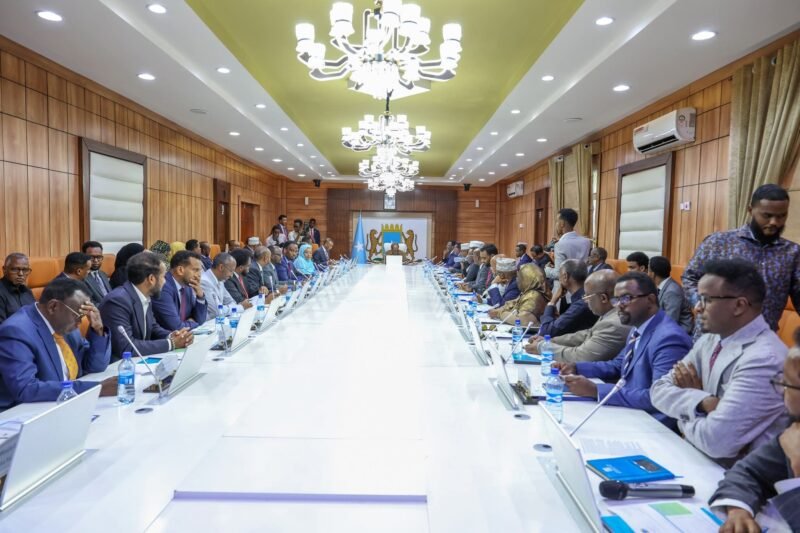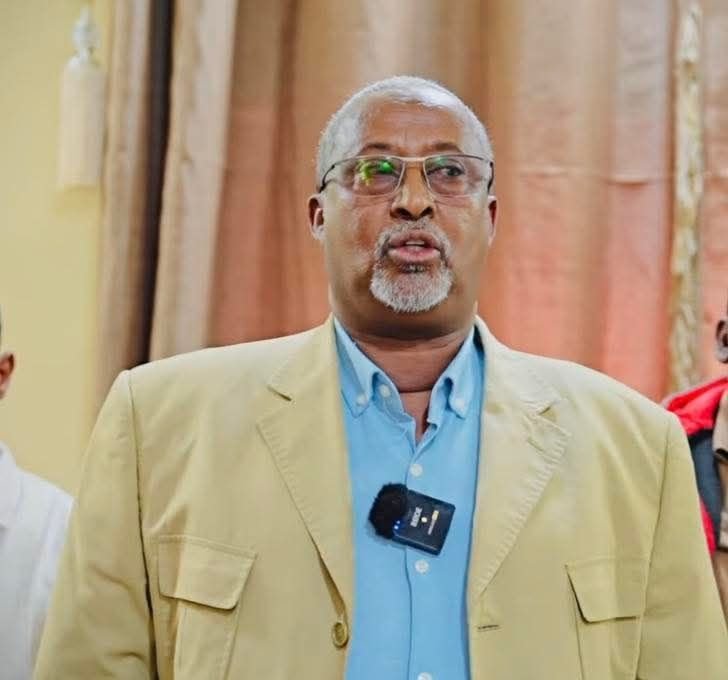
MOGADISHU — Somalia’s Federal Parliament has officially approved comprehensive amendments to the National Constitution, marking a historic and highly polarized milestone that formally ends the country’s 14-year provisional era.
A Transition to Full Legal Legitimacy
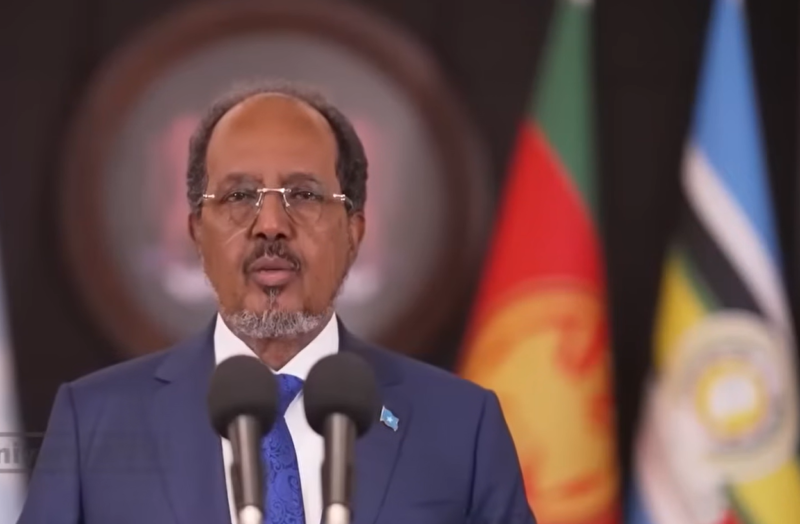
In a televised address to the nation on Wednesday evening, President Hassan Sheikh Mohamud praised the bicameral legislature for their majority vote. He declared the development a long-awaited national achievement that transitions Somalia from a provisional system—in place since 2012—to a fully established constitutional order with a firm legal foundation.
The Ministry of Justice and Constitutional Affairs, alongside the Ministry of Interior, echoed these sentiments, calling the ratification the foundation for a new phase of state-building. Officials emphasized that the updated framework clearly outlines the allocation of federal powers, which is crucial for fostering national unity and culminating the exhaustive, 13-year review process.
Key Concessions
The amendments received notable backing from the “Rescue Council,” a coalition of senior political leaders who welcomed specific concessions made during the drafting process. In a joint statement, the group praised the decision to preserve Somalia’s traditional parliamentary governance system, ensuring the president continues to be elected by lawmakers and the prime minister remains subject to a parliamentary vote of no confidence.
Furthermore, the leaders welcomed the removal of a controversial proposal that would have limited the country to only three national political parties. They noted that allowing unlimited parties will actively promote political pluralism, democratic competition, and broader representation across the nation.
Fierce Opposition and a Fractured Landscape
Despite the government’s declarations of progress, the approval follows weeks of intense parliamentary turmoil. Dozens of opposition lawmakers were reportedly barred from attending sessions after staging protests, arguing that the legislative term had already concluded and the ongoing debate was therefore illegal.
President Mohamud directly addressed the fallout, accusing dissenting voices—specifically the regional administrations of Jubaland and Puntland—of seeking to preserve the status quo. He noted that recent high-stakes talks collapsed because the opposition rigidly insisted on excluding the constitution from the negotiations.
Consequently, the Somali Future Council—a prominent opposition bloc uniting Puntland, Jubaland, and other key political figures—strongly condemned the vote. The council alleges the measure failed to secure the constitutionally required two-thirds majority from the bicameral legislature and accused the federal government of utilizing intimidation and coercion. The bloc declared it will continue to recognize only the 2012 Provisional Constitution, underscoring a deepening political fracture as Somalia attempts to finalize its state-building efforts.